
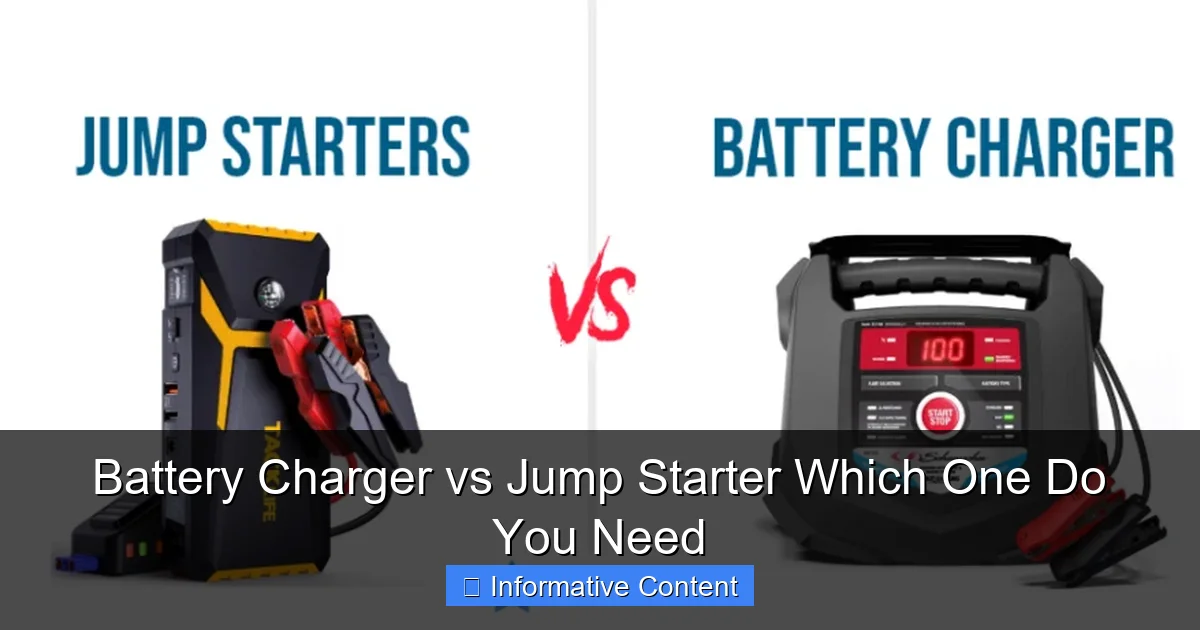
Featured image for battery charger vs jump starter
Image source: static.bestviewsreviews.com
Choosing between a battery charger and a jump starter depends on your immediate needs: a jump starter delivers instant power to get your dead battery running, while a charger replenishes and maintains battery health over time. If you’re stranded and need a quick fix, a jump starter is your go-to; for long-term vehicle care and preventing future failures, a battery charger is the smarter investment. Understanding the difference ensures you’re prepared—whether for an emergency or routine maintenance.
Key Takeaways
- Choose a jump starter for quick, portable power to start a dead battery.
- Use a battery charger to fully recharge and maintain long-term battery health.
- Jump starters are safer for emergencies—no need for another vehicle.
- Chargers offer precision with adjustable voltage and trickle-charge options.
- Own both if possible to handle emergencies and routine maintenance.
- Check amperage needs—higher cranking amps work for larger engines.
- Prioritize portability with compact jump starters for on-the-go reliability.
📑 Table of Contents
- Battery Charger vs Jump Starter: Understanding the Basics
- What Is a Battery Charger and How Does It Work?
- What Is a Jump Starter and How Does It Work?
- Key Differences: Battery Charger vs Jump Starter
- Pros and Cons: A Balanced View
- Hybrid Solutions: Jump Starter/Charger Combos
- Making the Right Choice: Which One Do You Need?
Battery Charger vs Jump Starter: Understanding the Basics
Ever been stranded in a parking lot with a dead car battery? You’re not alone. A silent engine, dim headlights, and the dreaded click-click-click of a failed start—it’s enough to ruin anyone’s day. I remember my first time. I was late for work, my phone was dying, and I had no jumper cables. The tow truck cost me a small fortune, and I vowed never to be caught unprepared again. That’s when I started exploring my options: battery charger vs jump starter. At first glance, they seem similar, but they serve very different purposes. One helps you recover from a dead battery, while the other keeps your battery healthy over time. Knowing which one you need—or if you need both—can save you time, money, and stress.
Today, we’re diving deep into the world of automotive power tools. Whether you’re a new driver, a DIY enthusiast, or just someone who wants to be ready for anything, this guide will help you make an informed choice. We’ll explore how each device works, when to use them, their pros and cons, and real-world scenarios where one beats the other. Think of this as your friendly, no-nonsense conversation about car battery tools—no sales pitch, no jargon overload, just honest, practical advice.
What Is a Battery Charger and How Does It Work?
Understanding the Core Function
A battery charger is like a slow, steady nurse for your car battery. It delivers a controlled electrical current to recharge a depleted battery over several hours. Unlike a jump starter, it doesn’t provide a quick burst of power to start the engine. Instead, it restores the battery’s charge so it can function properly again. This is especially useful if your battery died due to leaving lights on, a faulty alternator, or extended periods of inactivity (like during winter).
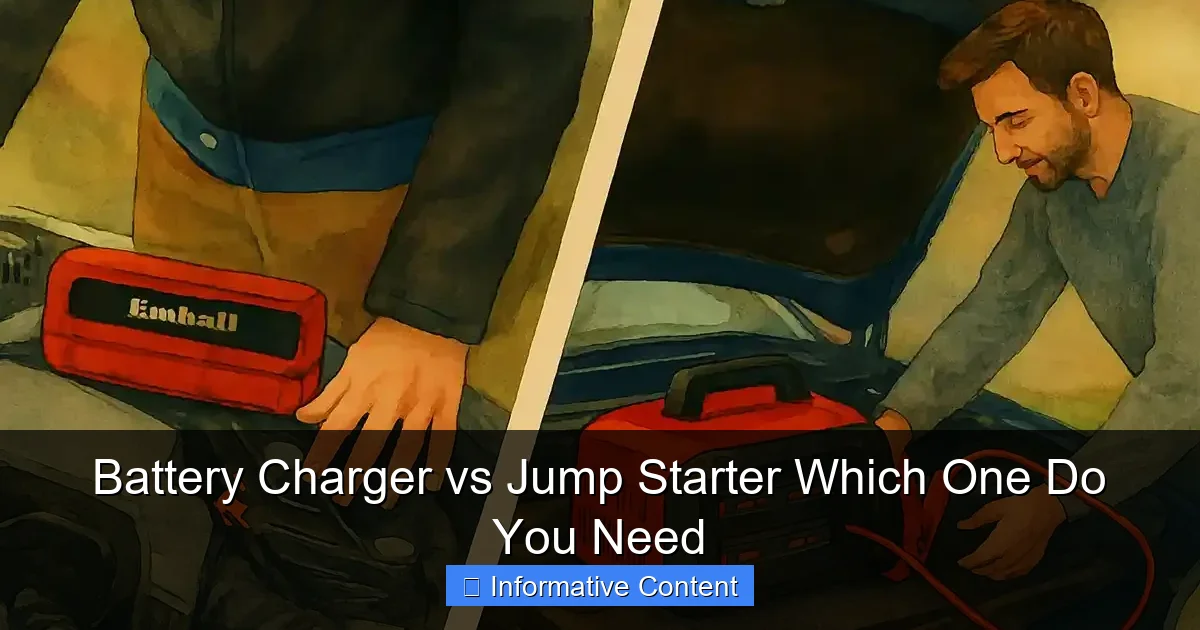
Visual guide about battery charger vs jump starter
Image source: wheelspick.com
Most modern battery chargers are “smart” or “automatic.” They detect the battery’s charge level and adjust the output accordingly. Once the battery reaches full charge, they switch to a “maintenance” or “trickle” mode to prevent overcharging. Some even have desulfation modes to help revive old, sulfated batteries—a common issue in batteries left discharged for too long.
Types of Battery Chargers
Not all chargers are created equal. Here are the most common types:
- Trickle Chargers: Deliver a low, continuous current (usually 1–2 amps). Great for long-term maintenance but slow. Ideal for classic cars or vehicles stored for months.
- Smart/Automatic Chargers: Adjust voltage and amperage based on battery condition. Safer and more efficient. Many have LCD screens showing charge status.
- Multi-Stage Chargers: Use a sequence of charging phases (bulk, absorption, float) for optimal battery health. Best for deep-cycle batteries or frequent use.
- Portable Jump Charger/Charger Combos: Hybrid devices that both charge and jump start. More on these later.
For example, I keep a 10-amp smart charger in my garage. It’s perfect for topping off my car’s battery after a long road trip or recharging my motorcycle battery over a weekend. It takes about 6–8 hours, but I know the battery will be healthier in the long run.
When to Use a Battery Charger
Use a battery charger when:
- Your battery is completely dead but the car won’t start (after confirming it’s not the starter or alternator).
- You’ve left lights or accessories on overnight.
- Your car sits unused for weeks (e.g., vacation, winter storage).
- You want to maintain battery health and extend its lifespan.
Tip: Always disconnect the battery before charging (remove negative terminal first, then positive) unless the charger specifies it’s safe to charge while connected. Most modern smart chargers are safe for this, but it’s better to be cautious.
What Is a Jump Starter and How Does It Work?
The Instant Lifesaver
A jump starter is like an adrenaline shot for your car. It’s a portable power bank designed to deliver a high burst of current (measured in cranking amps or CA) to start your engine when the battery is too weak to do so. Unlike a battery charger, it doesn’t recharge the battery—it just gives it enough juice to turn the starter motor.
Jump starters come in various sizes, from pocket-sized units (good for small engines) to heavy-duty models (for trucks and SUVs). They usually have built-in lithium-ion batteries, jumper cables (sometimes detachable), and safety features like reverse polarity protection and spark-proof clamps.
Types of Jump Starters
- Portable Lithium Jump Starters: Compact, lightweight, and easy to store. Most have 12V output, USB ports, and LED flashlights. Best for everyday drivers.
- Heavy-Duty Jump Starters: Larger capacity (15,000–20,000 mAh or more). Can jump start diesel engines or multiple vehicles. Ideal for mechanics or off-roaders.
- Jump Starter/Compressor Combos: Include an air compressor for inflating tires. A great all-in-one tool for emergencies.
- Jump Starter/Charger Combos: Offer both jump-starting and slow charging. More versatile but usually pricier.
I keep a 10,000 mAh portable jump starter in my glove box. It’s about the size of a paperback book and has saved me twice—once at a gas station and once during a winter storm. It’s charged via USB and lasts months on a single charge.
When to Use a Jump Starter
Use a jump starter when:
- Your car won’t start due to a weak or dead battery.
- You’re in a remote area or don’t have another vehicle to jump from.
- You’re in a hurry and can’t wait for a charger.
- You want a self-contained, no-hassle solution (no need for another car or cables).
Important: After jumping, drive for at least 20–30 minutes to recharge the battery. If the car stalls again, the alternator may be failing—time for a mechanic.
Key Differences: Battery Charger vs Jump Starter
Speed vs Sustainability
The biggest difference? Speed and purpose. A jump starter gives you instant power to get moving. A battery charger gives you long-term battery health.
- Jump Starter: Fast (under 1 minute), temporary fix. Doesn’t recharge the battery fully. Great for emergencies.
- Battery Charger: Slow (hours to days), permanent solution. Fully recharges and maintains the battery. Great for routine care.
Think of it like this: If your phone dies, a jump starter is like borrowing a friend’s phone to make a call. A battery charger is like plugging your phone in to charge overnight.
Portability and Convenience
- Jump Starter: Highly portable. Fits in a glove box, backpack, or toolbox. No external power source needed. Easy to use—just clamp and start.
- Battery Charger: Less portable. Usually requires access to an electrical outlet. Takes longer to set up and use. Best kept in a garage or workshop.
I once used my jump starter to help a neighbor in a parking lot. Within 2 minutes, their car was running. If I’d used a charger, they’d have been waiting in the cold for hours.
Cost and Value
Jump starters are generally cheaper (starting at $50) and offer more immediate value for most drivers. Battery chargers start around $30 for basic models and go up to $200+ for advanced units.
But consider this: A good charger can extend your battery’s life by 1–2 years, saving you $100+ on a new battery. A jump starter prevents towing fees ($75–$150 per tow) and the hassle of waiting for help.
Use Case Scenarios
- You’re late for work and your car won’t start: Jump starter wins. You’re on the road in minutes.
- Your car sat for a month and the battery is flat: Battery charger wins. It safely restores the battery without risking damage from a jump.
- You’re a road tripper or off-roader: Jump starter (or combo unit) is essential. Chargers are too bulky and power-dependent.
- You own a classic car or multiple vehicles: Battery charger is a must for long-term maintenance.
Pros and Cons: A Balanced View
Jump Starter: The Good and the Not-So-Good
Pros:
- Instant power: No waiting. Start your car in under a minute.
- Portable: Fits in your car, no outlet needed.
- Multi-functional: Many include USB ports, flashlights, and even air compressors.
- Safe: Modern models have protection against reverse polarity, overcurrent, and short circuits.
- No helper needed: You don’t need another car or jumper cables.
Cons:
- Not a long-term fix: Doesn’t recharge the battery fully. You still need to drive to recharge it.
- Battery degrades: Like any lithium battery, it loses capacity over time (2–3 years).
- Cost: High-quality models can be expensive ($100+).
- Not for all engines: Smaller units may struggle with V8 or diesel engines.
Battery Charger: The Long Game
Pros:
- Full recharge: Restores battery to 100%, extending its life.
- Smart technology: Prevents overcharging and desulfates old batteries.
- Versatile: Can charge car, motorcycle, boat, and lawn mower batteries.
- Low maintenance: Once charged, the battery stays healthy for weeks.
Cons:
- Slow: Takes hours or days. Not ideal for emergencies.
- Less portable: Needs an electrical outlet. Not for roadside use.
- Setup required: Disconnecting battery, connecting charger, waiting.
- Not for jump-starting: Can’t start a car if the battery is too far gone.
Real talk: I love my jump starter for emergencies, but I rely on my charger for peace of mind. Knowing my battery is fully charged and healthy makes me a better driver.
Hybrid Solutions: Jump Starter/Charger Combos
The Best of Both Worlds?
What if you could have both? Enter jump starter/charger combos. These hybrid devices offer the portability and instant power of a jump starter with the long-term charging capability of a battery charger.
How they work: The device acts as a jump starter first. Once the car is running, you can use it to slowly recharge the battery (usually via a trickle charge mode). Some even have AC outlets or USB-C ports to charge other devices.
Who Should Consider a Combo?
- Frequent travelers: You want one tool for all battery issues.
- DIY mechanics: You work on multiple vehicles and need flexibility.
- Off-grid adventurers: You camp or drive in remote areas with no power.
- Minimalists: You want to reduce clutter and carry fewer tools.
Example: The NOCO Boost Plus GB40 is a popular combo. It can jump start a 6.0L gas engine and has a 12V trickle charge mode. It’s a bit pricey ($150+), but it’s saved me from buying both a jump starter and a charger.
Trade-Offs to Consider
- Size and weight: Combos are larger and heavier than standalone jump starters.
- Charging speed: The charging function is usually slower than a dedicated charger.
- Cost: You pay a premium for versatility.
Tip: If you’re on a budget, consider buying a mid-range jump starter and a basic trickle charger. It’s cheaper than a combo and gives you more control.
Making the Right Choice: Which One Do You Need?
Assess Your Lifestyle and Needs
Here’s how to decide:
- Most drivers (90%): A portable jump starter is the best choice. It’s affordable, easy to use, and solves 95% of dead battery problems.
- Car enthusiasts, collectors, or multi-vehicle owners: Add a battery charger to your garage. It’s worth the investment for battery health.
- Frequent travelers or off-roaders: A jump starter/charger combo is ideal. You get versatility in one tool.
- You’re forgetful or leave lights on: A smart charger with maintenance mode is a lifesaver.
- You live in a cold climate: A jump starter is essential. Cold kills batteries fast.
Data table: Quick comparison of key features
| Feature | Jump Starter | Battery Charger | Combo Unit |
|---|---|---|---|
| Speed | Instant (seconds) | Slow (hours/days) | Instant + slow |
| Portability | High (glove box) | Low (needs outlet) | Medium (bulkier) |
| Battery Recharge | No (temporary) | Yes (full) | Yes (slow) |
| Best For | Emergencies, portability | Long-term care, maintenance | All-in-one solution |
| Avg. Price | $50–$150 | $30–$200+ | $100–$250 |
Final Tips and Real-World Advice
- Charge your jump starter every 3–6 months. Even if unused, lithium batteries degrade.
- Use a charger after a jump start. Driving alone may not fully recharge the battery.
- Check battery health annually. Most auto shops do this for free.
- Store chargers in a dry, cool place. Moisture and heat shorten lifespan.
- Read the manual. Every device is different. Follow safety guidelines.
At the end of the day, the battery charger vs jump starter debate isn’t about which is better—it’s about which fits your life. For most people, a jump starter is the hero of the story. But a battery charger? It’s the unsung hero who keeps everything running smoothly behind the scenes.
So, what’s your move? If you’re ready to be prepared, start with a jump starter. It’s the tool you’ll reach for most. Then, if you want to go the extra mile, add a charger to your toolkit. Together, they’re a powerhouse team—like Batman and Robin, but for your car battery.
Frequently Asked Questions
What’s the main difference between a battery charger and a jump starter?
A battery charger replenishes a dead or weak battery over time using a steady electrical current, while a jump starter delivers a quick, high-power burst to start a vehicle immediately. Jump starters are portable, whereas chargers often require an outlet and longer charging periods.
Can a jump starter replace a battery charger for regular maintenance?
No, a jump starter is designed for emergency use to start a vehicle with a dead battery, but it doesn’t recharge a battery fully. For regular maintenance, a battery charger is better to restore and maintain optimal battery health over time.
Is a battery charger or jump starter better for long-term storage?
A battery charger is ideal for long-term storage because it can slowly recharge and maintain the battery at a proper voltage. Jump starters aren’t built for prolonged charging and won’t prevent battery drain over weeks or months.
Do jump starters work on all vehicle types?
Most modern jump starters work on common 12V vehicles like cars, trucks, and SUVs, but check the peak amps and compatibility with diesel engines or high-performance batteries. Some heavy-duty models are required for larger engines.
Can I use a battery charger in cold weather?
Yes, but ensure the charger has a “cold weather” or “winter mode” setting to prevent overcharging, as batteries behave differently in low temperatures. A jump starter may struggle in extreme cold due to reduced internal battery performance.
Which is safer: a battery charger or a jump starter?
Both are safe when used properly, but jump starters carry higher risks due to the sudden power surge. Modern battery charger vs jump starter models include safety features like reverse polarity protection, but always follow the manufacturer’s instructions.