
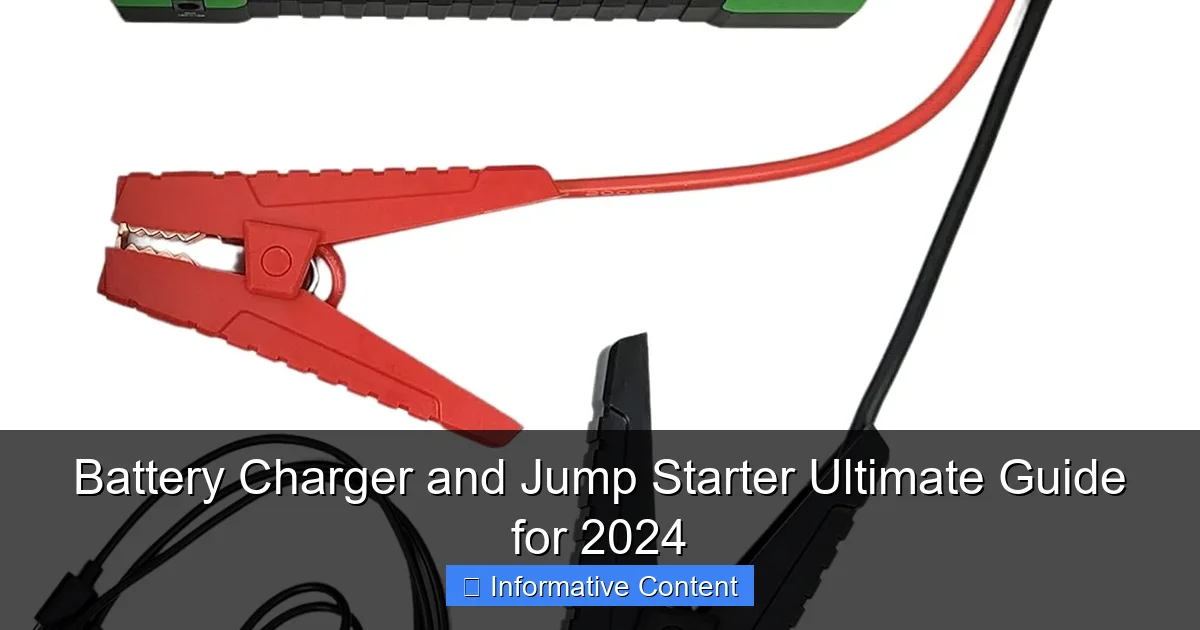
Featured image for battery charger and jump starter
Image source: m.media-amazon.com
The ultimate battery charger and jump starter guide for 2024 reveals the most reliable, high-performance tools to keep your vehicle powered in any situation. Whether you’re facing a dead battery or need a portable energy solution, today’s advanced models combine fast-charging technology, safety features, and multi-functionality in one compact device. Stay prepared—this year’s top picks deliver unmatched power, durability, and smart diagnostics for cars, trucks, and even power sports equipment.
Key Takeaways
- Choose a charger with automatic voltage detection to prevent overcharging and extend battery life.
- Prioritize jump starters with safety features like reverse polarity protection and spark-proof technology.
- Opt for lithium-ion jump starters for lightweight, compact, and reliable performance in emergencies.
- Match charger amperage to your battery type—lower amps for maintenance, higher for faster charging.
- Check compatibility with your vehicle’s battery—AGM, gel, and standard batteries require specific settings.
- Keep a portable jump starter in your car for roadside emergencies, especially in cold climates.
📑 Table of Contents
- Introduction: Why Every Driver Needs a Battery Charger and Jump Starter
- Understanding Battery Chargers: The Silent Guardians of Your Car’s Health
- Jump Starters: Your On-the-Go Lifesaver
- Battery Charger vs. Jump Starter: Which One Do You Need?
- Top Battery Chargers and Jump Starters of 2024
- Essential Tips for Using and Maintaining Your Devices
- Final Thoughts: Invest in Peace of Mind
Introduction: Why Every Driver Needs a Battery Charger and Jump Starter
Picture this: It’s a cold winter morning, you’re running late for work, and you turn the key—only to hear that dreaded clicking sound. Your car won’t start. Again. You’re stranded, frustrated, and wondering why your battery keeps dying. Sound familiar? If you’ve ever been stuck in a parking lot or driveway because of a dead battery, you know how inconvenient—and sometimes dangerous—it can be.
That’s where a reliable battery charger and jump starter comes in. These handy devices aren’t just for emergencies—they’re essential tools for maintaining your vehicle’s health and avoiding unexpected breakdowns. Whether you drive a daily commuter, a weekend off-roader, or a classic car that sits idle for weeks, having the right equipment can save you time, money, and stress. In this ultimate guide for 2024, we’ll walk you through everything you need to know about battery chargers and jump starters—how they work, what to look for, and how to choose the best one for your needs.
Understanding Battery Chargers: The Silent Guardians of Your Car’s Health
A battery charger is a device that replenishes the charge in your car’s battery by supplying it with electrical energy. Unlike a jump starter, which gives your battery a quick burst of power to start the engine, a battery charger works slowly and steadily to restore full charge over time. Think of it as a long-term health plan for your battery—while a jump starter is an emergency rescue, a charger is preventive care.
Visual guide about battery charger and jump starter
Image source: images-na.ssl-images-amazon.com
How Battery Chargers Work
Battery chargers connect directly to your car’s battery terminals and deliver a controlled flow of electricity. Most modern chargers are “smart,” meaning they monitor the battery’s voltage and adjust the charging rate accordingly. This prevents overcharging, which can damage the battery, and ensures a safe, efficient charge. Some chargers even have built-in diagnostics to detect issues like sulfation (a common cause of battery failure) and attempt to reverse them.
For example, if you have a classic car that you only drive a few times a year, a smart charger can keep the battery topped up during storage. Similarly, if you live in a cold climate where batteries lose charge faster, regular charging can extend battery life significantly.
Types of Battery Chargers
Not all chargers are created equal. Here are the most common types you’ll find in 2024:
- Trickle Chargers: These provide a slow, steady charge—ideal for long-term maintenance. They’re affordable and great for seasonal vehicles, but they don’t offer fast charging or advanced features.
- Smart Chargers: The gold standard in 2024. These use microprocessors to analyze battery condition and adjust charging stages (bulk, absorption, float). Many include safety features like reverse polarity protection and spark-proof technology.
- Multi-Bank Chargers: Perfect for households with multiple vehicles or marine/RV use. These can charge several batteries at once, each independently.
- Solar Chargers: Eco-friendly and portable, these use solar panels to maintain battery charge. Great for remote locations or off-grid setups, though they’re slower than plug-in models.
When to Use a Battery Charger
You don’t need to wait for a dead battery to use a charger. In fact, regular charging can prevent problems before they start. Here are a few scenarios where a charger is especially useful:
- Your car sits unused for more than a week (common with second cars or motorcycles).
- You live in an area with extreme temperatures—cold weather drains batteries faster.
- You’ve recently replaced your battery and want to ensure it reaches full capacity.
- You’re preparing for a long road trip and want peace of mind.
Pro tip: Even if you have a jump starter, pairing it with a smart charger gives you the best of both worlds—emergency power and long-term battery care.
Jump Starters: Your On-the-Go Lifesaver
While battery chargers are great for maintenance, jump starters are your go-to solution when you’re stranded with a dead battery. A portable jump starter is a self-contained power pack that can jump-start your car without needing another vehicle or jumper cables. It’s like having a roadside assistance team in your glove compartment.
How Jump Starters Work
A jump starter contains a high-capacity lithium-ion battery (similar to what’s in your phone or laptop, but much more powerful). When your car battery is dead, you connect the jump starter’s clamps to your battery terminals—red to positive, black to negative—and turn on the device. It delivers a surge of power to crank the engine, allowing you to start your car.
Modern jump starters are incredibly compact and lightweight. Many are small enough to fit in a backpack or glove box, yet powerful enough to start large engines, including trucks and SUVs. Some even include USB ports, LED flashlights, and air compressors, making them multi-functional emergency tools.
Key Features to Look For in a Jump Starter
Not all jump starters are built the same. Here’s what to consider when shopping in 2024:
- Peak Amps: This measures the maximum power output. For most cars, 400–600 peak amps are sufficient. Trucks and larger vehicles may need 1000+ amps.
- Cranking Amps (CA) and Cold Cranking Amps (CCA): These indicate how well the device performs in normal and cold conditions. Higher is better, especially if you live in a cold climate.
- Safety Features: Look for reverse polarity protection, short-circuit protection, and spark-proof clamps. These prevent damage to your vehicle and reduce the risk of injury.
- Battery Type: Lithium-ion is the standard in 2024—lightweight, fast-charging, and long-lasting. Avoid older lead-acid models, which are heavier and less efficient.
- Additional Functions: Many jump starters double as power banks, flashlights, or tire inflators. These extras can be lifesavers in a pinch.
Real-Life Example: The Winter Morning Rescue
Let’s say it’s -10°C outside, and your car won’t start. You grab your portable jump starter, connect the clamps (making sure the polarity is correct), and press the power button. Within seconds, your engine turns over and starts. No waiting for a tow truck, no calling a friend—just quick, reliable power when you need it most. That’s the magic of a good jump starter.
And the best part? Most jump starters hold their charge for months, so you don’t have to worry about it dying when you need it. Just remember to recharge it every 3–6 months to keep it ready.
Battery Charger vs. Jump Starter: Which One Do You Need?
This is one of the most common questions we hear: “Do I need a battery charger and jump starter, or both?” The answer depends on your lifestyle, driving habits, and vehicle type. Let’s break it down.
When to Choose a Battery Charger
A battery charger is ideal if:
- You want to maintain your battery’s health over time.
- Your car sits unused for long periods (e.g., seasonal vehicles, motorcycles, RVs).
- You’re concerned about battery longevity and want to avoid premature replacement.
- You have access to an outlet and can charge your battery overnight.
For example, if you own a vintage Mustang that you only drive in the summer, a smart charger is a must. It will keep the battery charged and healthy during the off-season, so it’s ready to go when warm weather returns.
When to Choose a Jump Starter
A jump starter is essential if:
- You frequently drive in remote areas or bad weather.
- You want a portable solution for emergencies.
- You don’t always have access to another vehicle or power outlet.
- You want a multi-functional tool (e.g., flashlight, phone charger).
Imagine you’re on a road trip through the mountains, and your battery dies at a rest stop with no other cars around. A jump starter lets you get back on the road without waiting for help.
The Best of Both Worlds: Combo Units
In 2024, many manufacturers offer combo units that combine a battery charger and jump starter in one device. These are perfect for drivers who want both preventive care and emergency power. While they may be slightly more expensive, they save space and offer unmatched versatility.
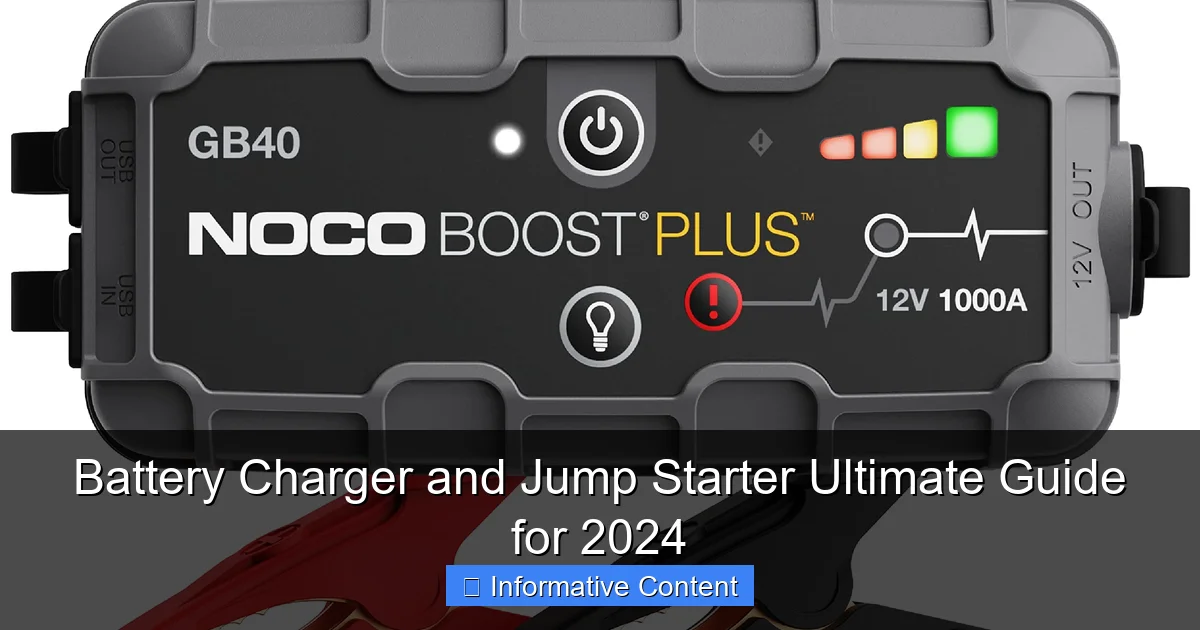
For instance, the NOCO Boost Plus GB40 is a popular combo model. It can jump-start vehicles up to 6.0L gas and 3.0L diesel engines and includes a USB port for charging devices. Some models even come with built-in battery chargers that plug into a wall outlet.
Top Battery Chargers and Jump Starters of 2024
With so many options on the market, it can be hard to know which products are worth your money. Based on performance, safety, and user reviews, here are some of the top picks for 2024.
Best Overall Jump Starter: NOCO Boost Plus GB70
The NOCO Boost Plus GB70 is a powerhouse in a compact design. With 2000 peak amps, it can jump-start everything from compact cars to full-size trucks. It features spark-proof technology, reverse polarity protection, and a built-in LED flashlight with multiple modes. Plus, it doubles as a 12V power source and USB charger. Users love its reliability and ease of use—even in freezing conditions.
Best Smart Battery Charger: CTEK MXS 5.0
This 12V smart charger is a favorite among car enthusiasts. It uses an 8-step charging process to safely restore and maintain batteries, including desulfation and reconditioning modes. It’s compatible with all lead-acid and lithium batteries and can even charge deeply discharged batteries. The MXS 5.0 is weatherproof, making it great for garage or outdoor use.
Best Budget Jump Starter: Tacklife T8
If you’re looking for affordability without sacrificing quality, the Tacklife T8 is a solid choice. With 800 peak amps, it handles most cars and SUVs with ease. It includes a bright LED flashlight, two USB ports, and a digital display that shows battery level. At under $100, it’s a great entry-level option.
Best Combo Unit: Schumacher SC1359
This 2-in-1 device functions as both a 6-amp battery charger and a 1200-peak-amp jump starter. It’s perfect for home use, offering slow charging for maintenance and quick power for emergencies. The SC1359 also includes a built-in voltmeter and automatic voltage detection, so you don’t have to guess the settings.
Best for RVs and Boats: Battery Tender 021-0128
Designed for larger batteries, this 5-amp charger is ideal for RVs, boats, and classic cars. It’s fully automatic and includes a 4-step charging process with float mode to prevent overcharging. The compact design and quick-disconnect harness make it easy to use and store.
Essential Tips for Using and Maintaining Your Devices
Owning a battery charger or jump starter is only half the battle—using it correctly is just as important. Here are some expert tips to get the most out of your equipment.
Safe Jump-Starting Procedure
Always follow these steps to avoid damage or injury when using a jump starter:
- Turn off the engine and all electronics in both vehicles (if using jumper cables).
- Connect the red clamp to the dead battery’s positive terminal.
- Connect the black clamp to a grounded metal surface (not the negative terminal) to reduce sparking.
- Turn on the jump starter (if portable) or start the donor vehicle.
- Wait 2–3 minutes, then try starting the dead vehicle.
- Once running, disconnect the clamps in reverse order.
Never connect the black clamp directly to the negative terminal of a dead battery—this can cause sparks and potentially ignite hydrogen gas.
Charging Best Practices
When using a battery charger:
- Always charge in a well-ventilated area.
- Remove the battery caps (if applicable) to allow gas to escape.
- Don’t leave a charger unattended for long periods—most smart chargers are safe, but it’s still good practice.
- Charge at room temperature for best results.
Maintenance and Storage
To keep your devices in top condition:
- Recharge your jump starter every 3–6 months, even if you haven’t used it.
- Store chargers and jump starters in a cool, dry place.
- Clean the clamps and terminals regularly to ensure good contact.
- Check the manufacturer’s warranty and follow recommended service intervals.
Final Thoughts: Invest in Peace of Mind
A dead battery can happen to anyone, anytime. But with the right tools, you don’t have to panic. Whether you choose a standalone battery charger, a portable jump starter, or a combo unit, you’re investing in reliability, safety, and peace of mind. In 2024, these devices are more advanced, affordable, and user-friendly than ever before.
Remember, the best battery charger and jump starter is the one that fits your lifestyle. If you drive daily and park in a garage, a smart charger might be all you need. If you’re often on the road or in remote areas, a high-capacity jump starter is a must-have. And if you want maximum versatility, a combo unit offers the best of both worlds.
Don’t wait until you’re stranded in the cold or stuck in a parking lot. Take control of your vehicle’s health today. With the right equipment and a little know-how, you’ll never have to fear a dead battery again.
Frequently Asked Questions
What is the best battery charger and jump starter combo for 2024?
The best battery charger and jump starter combos in 2024 combine high cranking power (12V/24V), smart charging technology, and portability. Top picks include models with lithium-ion batteries, safety features like spark-proof clamps, and USB ports for device charging.
How does a battery charger and jump starter work?
A battery charger and jump starter delivers a surge of power to revive a dead battery, while the charger function replenishes the battery over time using controlled voltage. Modern units use smart sensors to prevent overcharging and reverse polarity damage.
Can I use a portable jump starter as a regular battery charger?
Most portable jump starters include trickle-charge modes for regular battery maintenance, but dedicated battery chargers offer longer, more precise charging cycles. For occasional use, a combo unit works well, but frequent charging demands a standalone charger.
Are battery charger and jump starter units safe for all vehicles?
Yes, quality units are safe for cars, trucks, motorcycles, and marine batteries, thanks to built-in protections like overcurrent, short-circuit, and reverse polarity alerts. Always verify the device’s voltage (12V/24V) matches your vehicle’s requirements.
How long does a jump starter take to fully charge?
Charging times vary by capacity: compact lithium-ion jump starters take 2–4 hours via USB-C, while higher-capacity models may need 6–8 hours. Fast-charging tech in 2024 units can reach 80% in under 2 hours.
What features should I look for in a 2024 battery charger and jump starter?
Prioritize peak amps (1000+ for trucks), smart diagnostics, USB-C/PD ports, LED work lights, and rugged, compact designs. Advanced models now include jump-start counters, Bluetooth battery health tracking, and solar charging compatibility.