
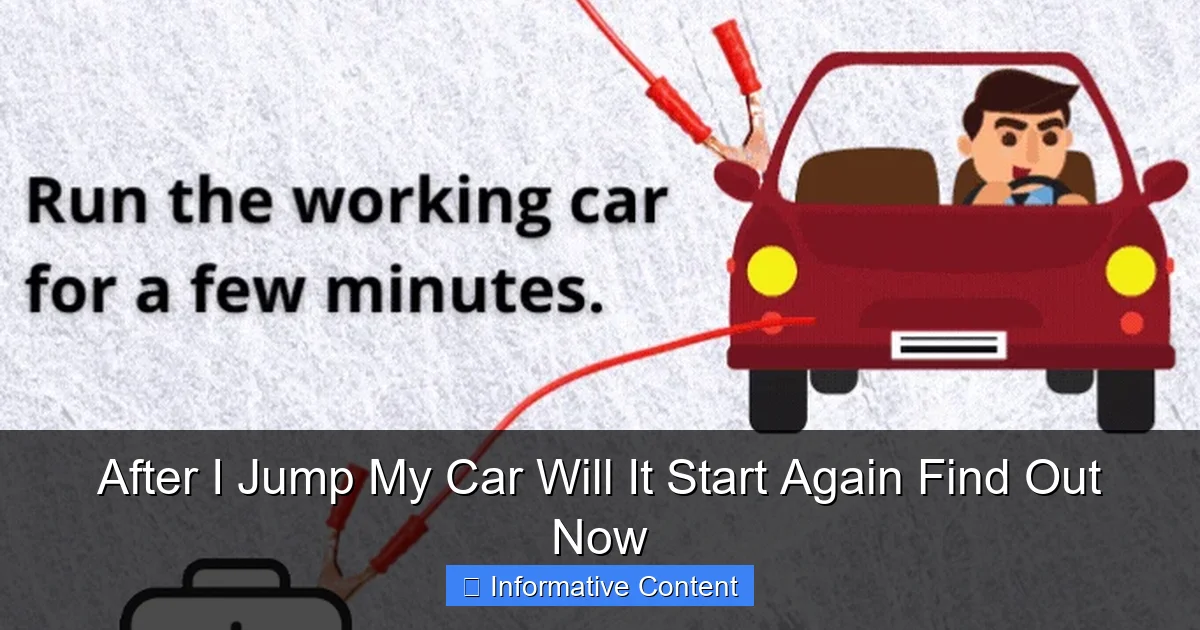
Featured image for after i jump my car will it start again
Image source: peruzzinissan.com
Yes, your car should start again after a jump—if the battery was the only issue. Once the engine runs, the alternator recharges the battery, allowing normal restarts—but if it doesn’t, the battery may be damaged or the charging system faulty.
Key Takeaways
- Jumpstarts work temporarily: Your car may start but needs a full battery recharge.
- Drive immediately after: Run the engine 20+ minutes to restore battery charge.
- Check battery health: Old or damaged batteries won’t hold a charge effectively.
- Inspect alternator: A faulty alternator can prevent battery recharging post-jump.
- Prevent future issues: Test electrical systems and replace weak components proactively.
📑 Table of Contents
- Why Your Car Won’t Start After a Jump: Common Reasons Explained
- How a Jump Start Works: The Science Behind the Spark
- Will Your Car Start Again? 5 Scenarios to Consider
- How to Diagnose the Real Problem (Without a Mechanic)
- Data Table: Battery Voltage Guide
- Prevention Tips: Keep Your Car Starting Every Time
- Conclusion: The Truth About Jump Starts and Reliability
Why Your Car Won’t Start After a Jump: Common Reasons Explained
Imagine this: You’re late for work, rushing out the door, and you turn the key in your car’s ignition—only to hear that dreaded click. No engine roar, no dashboard lights. Just silence. Your battery’s dead. Again. You grab jumper cables, flag down a neighbor, and successfully jump your car. The engine starts. Relief washes over you. But then a nagging question hits: After I jump my car, will it start again?
It’s a question that haunts drivers everywhere. You’ve got places to be, and the last thing you need is another no-start situation in a few hours. The good news? In most cases, yes, your car should start again after a jump—but there are important caveats. It’s not just about the jump itself; it’s about what caused the dead battery in the first place and whether your charging system is working properly. I’ve been in your shoes—stuck in a parking lot, late for a meeting, wondering if the car would even start the next day. So let’s break down what happens after a jump, why your car might (or might not) start again, and what you can do to avoid being stranded.
How a Jump Start Works: The Science Behind the Spark
What Happens When You Jump a Car?
Jumping a car isn’t magic—it’s physics. A dead battery can’t deliver enough voltage to turn the starter motor, which is what spins the engine to life. When you connect jumper cables to a working battery, you’re essentially “borrowing” its power. The donor battery sends a surge of electricity to your car, giving the starter enough juice to crank the engine.
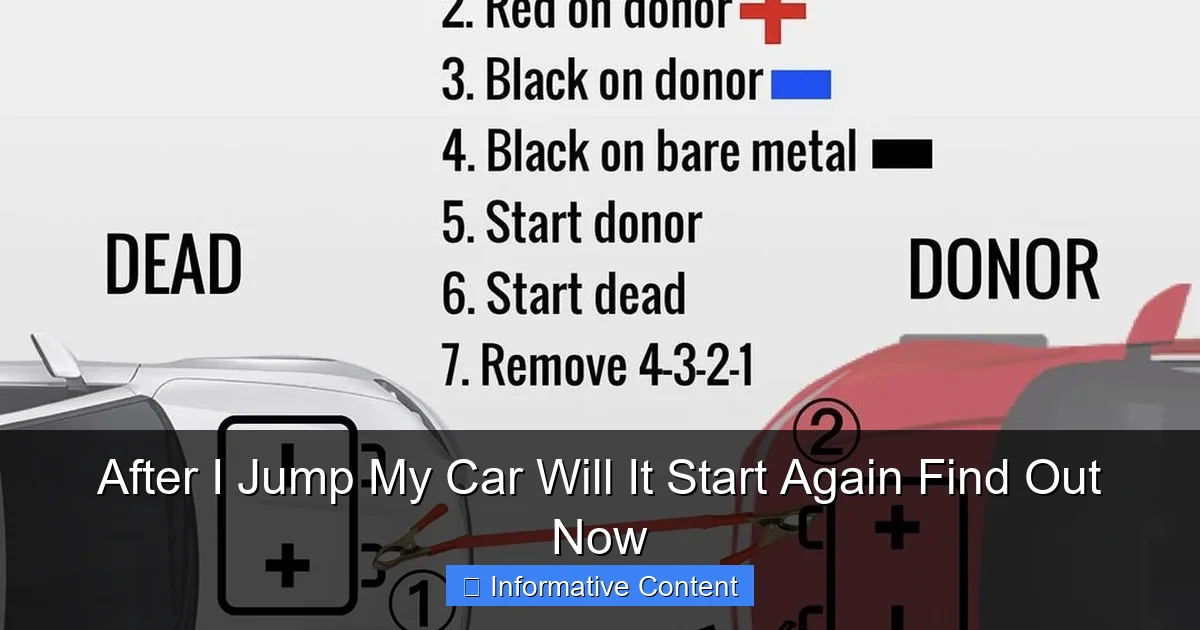
Visual guide about after i jump my car will it start again
Image source: themanual.com
Think of it like a jump rope. The dead battery is a limp rope—no movement. The donor battery is someone spinning it fast. Once it gets going, your car’s alternator (the device that charges the battery while the engine runs) takes over, keeping the engine running and recharging the battery.
Why the Alternator Matters
Here’s the key: after I jump my car, will it start again depends heavily on the alternator. This little workhorse generates electricity while your engine runs, keeping your battery charged and powering all the electrical systems. If the alternator is failing or dead, your car might start with a jump—but it won’t recharge the battery properly. That means when you turn the engine off, the battery won’t have enough power to start the car again.
For example, I once helped a friend jump their 2010 Honda Civic. It started fine, but they turned it off after 10 minutes to “save gas.” When they tried to restart it, nothing. Dead again. Why? The alternator wasn’t charging the battery. The jump had given it a temporary boost, but without a working alternator, the battery drained quickly.
How Long Should You Drive After a Jump?
A common rule of thumb: drive for at least 30 minutes after a jump. This gives the alternator enough time to recharge the battery. Short trips (like driving to the gas station and back) often aren’t enough. The alternator needs sustained engine operation to do its job.
Tip: If you’re in a rush, avoid turning off the engine. Keep it running until you’ve driven for at least 20–30 minutes. Even better, take a longer route home. Every mile helps recharge the battery.
Will Your Car Start Again? 5 Scenarios to Consider
Scenario 1: Healthy Battery, Just Drained
Maybe you left your headlights on overnight, or you used the radio with the engine off. The battery is fine—it just needs a recharge. In this case, a jump should get you going, and after 30 minutes of driving, your car should start again without issues.
Example: My neighbor once left her trunk light on for three days. The battery was stone dead. We jumped it, she drove to work (35-minute commute), and her car started every time for the next week. No problems.
Scenario 2: Weak or Old Battery
Batteries don’t last forever. Most car batteries last 3–5 years. If yours is older, it might hold a charge poorly, even after a jump. The jump gets you started, but the battery can’t retain the charge. When you turn the engine off, it dies again.
Signs of a failing battery:
- Slow cranking (engine turns over sluggishly)
- Dim headlights
- Frequent jump starts
- Swollen battery case (indicates overheating)
Tip: Check your battery’s age. Most have a date code stamped on the case (e.g., “A23” means January 2023). If it’s over 4 years old, consider replacing it—even if it works after a jump.
Scenario 3: Faulty Alternator
This is the big one. If the alternator isn’t charging, your car runs on battery power alone. A jump gives you a temporary boost, but once the battery drains, you’re stranded. The car might start after the jump, but after I jump my car, will it start again? Not if the alternator is broken.
Warning signs of alternator failure:
- Dashboard battery warning light (red icon that looks like a battery)
- Electrical issues (flickering lights, power windows moving slowly)
- Smell of burning rubber (from a failing alternator belt)
- Car dies while driving (battery drains completely)
Example: A friend’s alternator failed while driving. The car started fine with a jump, but within 20 minutes, the battery died, and the engine cut out. We had to call a tow truck.
Scenario 4: Parasitic Drain
Some devices keep drawing power even when the car is off (e.g., alarm systems, GPS trackers, aftermarket radios). If there’s a “parasitic drain,” the battery dies quickly. A jump might work, but if the drain continues, the battery will die again—sometimes within hours.
How to test for parasitic drain:
- Turn off all electronics (lights, radio, AC).
- Disconnect the negative battery cable.
- Use a multimeter to measure current draw between the cable and terminal.
- A normal draw is 20–50 milliamps. Over 100 mA suggests a problem.
Tip: If you suspect a drain, check aftermarket devices first. They’re common culprits.
Scenario 5: Corroded or Loose Battery Connections
Corrosion (white or green crust on terminals) or loose cables prevent proper charging. Even if the battery and alternator work, poor connections can stop the jump from doing its job. The car might start, but the battery won’t recharge.
Fix it:
- Clean terminals with a wire brush and baking soda/water mix.
- Tighten connections securely.
- Apply dielectric grease to prevent future corrosion.
How to Diagnose the Real Problem (Without a Mechanic)
Step 1: Test the Battery Voltage
Grab a cheap multimeter ($15–$20 at auto stores). Here’s how to use it:
- Turn the car off and open the hood.
- Set the multimeter to DC voltage (20V range).
- Connect red probe to positive (+) terminal, black to negative (−).
- Read the voltage:
- 12.6V or higher: Battery is charged.
- 12.0–12.5V: Battery is partially discharged.
- Below 12.0V: Battery is dead or failing.
- Start the engine and recheck. Voltage should rise to 13.5–14.5V (indicating alternator is charging).
If voltage doesn’t rise after starting, the alternator might be bad.
Step 2: Listen for Unusual Sounds
While driving after a jump, listen for:
- Grinding or whining noise: Could mean alternator bearing failure.
- Clicking when turning key: Often a sign of a weak battery or poor connection.
- Buzzing from under hood: Could indicate a failing alternator or loose belt.
Example: I once heard a high-pitched whine after a jump. The alternator was failing. I replaced it the next day, and the problem vanished.
Step 3: Check the Battery Warning Light
If the battery icon on your dashboard lights up while driving, stop immediately. It means the alternator isn’t charging. Driving further could drain the battery completely, leaving you stranded.
Step 4: Perform a “Load Test”
Some auto parts stores (like AutoZone or O’Reilly) offer free battery/alternator testing. They simulate heavy electrical load (like headlights and AC) to see if the battery holds up. This is a great way to confirm if the battery or alternator is weak.
Data Table: Battery Voltage Guide
| Battery State | Voltage (Engine Off) | Voltage (Engine Running) | What It Means |
|---|---|---|---|
| Fully Charged | 12.6V or higher | 13.5–14.5V | Battery and alternator are healthy. |
| Partially Discharged | 12.0–12.5V | 13.5–14.5V | Battery needs charging; alternator works. |
| Dead or Failing | Below 12.0V | Below 13.5V | Battery needs replacement; alternator may be failing. |
| Alternator Failure | Any | Below 13.5V | Alternator isn’t charging the battery. |
This table is a quick reference. If your readings match the “Alternator Failure” row, stop driving and get it checked.
Prevention Tips: Keep Your Car Starting Every Time
1. Replace Your Battery on Time
Don’t wait for a jump to remind you. Replace your battery every 4–5 years. If you live in extreme climates (very hot or cold), consider replacing it every 3 years.
2. Drive Regularly
If your car sits for long periods (e.g., vacations, work from home), the battery can drain. Start it at least once a week and drive for 20–30 minutes. A battery maintainer (trickle charger) is even better—it keeps the battery at optimal charge without overcharging.
3. Avoid Short Trips
Short drives (under 10 minutes) don’t give the alternator enough time to recharge the battery. Combine errands or take a longer route home.
4. Turn Off Electronics
Before exiting the car, double-check that lights, radio, and AC are off. Even small drains (like a trunk light) can kill a battery overnight.
5. Inspect Connections Monthly
Pop the hood and:
- Check for corrosion on terminals.
- Ensure cables are tight.
- Look for frayed wires or cracked insulation.
6. Keep a Portable Jump Starter
Modern lithium jump starters (like NOCO or DBPOWER) are lightweight, affordable, and don’t need another car. Keep one in your trunk. It’s a lifesaver when no one’s around to help.
Example: I keep a NOCO Boost Plus in my car. It’s saved me twice—once in a remote parking lot, once during a snowstorm. No waiting for help!
Conclusion: The Truth About Jump Starts and Reliability
So, after I jump my car, will it start again? The answer is: it depends. If your battery is healthy and your alternator works, yes—your car should start again after a jump, especially if you drive for 30 minutes. But if the battery is old, the alternator is failing, or there’s a parasitic drain, you’re just buying time. The car might start, but it’ll die again soon.
The real lesson here? A jump start is a temporary fix, not a solution. Use it to get to a mechanic, replace the battery, or diagnose the real problem. Don’t assume everything’s fine because the engine roared to life. Listen to your car. Test the voltage. Watch for warning lights. And remember: prevention is always better than a jump.
Next time you’re tempted to jump and forget, pause. Ask yourself: “Is this a one-time drain, or a sign of bigger trouble?” Because the difference could be the convenience of a quick fix—and the frustration of being stranded in a dark parking lot at midnight. Stay safe, stay informed, and keep that battery charged!
Frequently Asked Questions
After I jump my car, will it start again on its own?
If your car starts successfully after a jump, the alternator should recharge the battery while driving, allowing it to start again later. However, if the battery is old or damaged, it may not hold a charge, and the car might not restart.
How long should I drive after jumping my car to ensure it starts again?
Drive for at least 20-30 minutes after a jump start to let the alternator recharge the battery. For severely drained batteries, longer driving or a battery charger may be needed for a full charge.
Can a bad battery still start after a jump but fail to start again?
Yes, a failing battery can accept a temporary charge from a jump but won’t retain it. This is a common sign you need a replacement—especially if the car struggles to start again later.
Why does my car die again right after I jump it and turn it off?
This usually points to a dead battery or faulty alternator. The jump provides initial power, but if the battery can’t hold a charge or the alternator isn’t working, the car won’t restart.
Is it safe to keep jump-starting my car instead of replacing the battery?
Repeatedly jump-starting a car is risky and inconvenient. It can damage electrical systems and leaves you stranded if the battery fails completely. Replace the battery if it’s older than 3-5 years.
Will jump-starting my car fix other issues that prevent it from starting again?
No—a jump only addresses battery-related problems. If the starter, alternator, or fuel system is faulty, the car may not start again even after a jump. Get a professional diagnosis for persistent issues.