
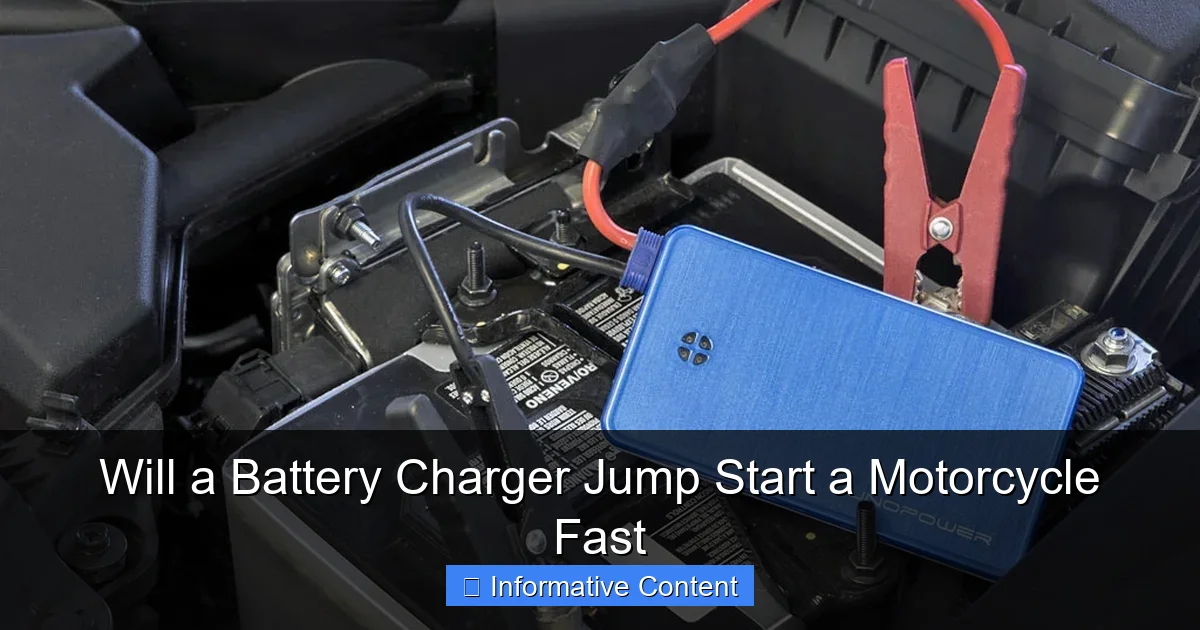
Featured image for will a battery charger jump start a motorcycle
Image source: advpulse.com
Yes, a battery charger can jump start a motorcycle—but only if it has a jump-start or boost mode. Standard chargers lack the instant high current needed, while smart chargers with jump-start features deliver a quick, safe surge to revive dead batteries fast. Always check your charger’s specifications to ensure it’s compatible with motorcycle batteries.
Key Takeaways
- Most chargers can’t jump start: Standard chargers lack the instant high current needed for starting.
- Use a jump starter pack: Portable jump starters deliver the required power instantly and safely.
- Check compatibility first: Ensure the device supports motorcycle batteries (12V, AGM, lithium).
- Smart chargers help recovery: Use them after a jump to recharge and extend battery life.
- Prevent future issues: Regularly charge and maintain your battery to avoid dead starts.
- Never force a charge: Slow charging won’t help—use a proper jump solution instead.
📑 Table of Contents
- Understanding How a Battery Charger Works
- Can a Battery Charger Jump Start a Motorcycle?
- Why a Dedicated Jump Starter Is Often Faster
- How to Use a Battery Charger for a Jump Start (If You Must)
- Comparing Battery Chargers and Jump Starters: Which Is Right for You?
- Final Thoughts: Making the Right Choice for Your Needs
Understanding How a Battery Charger Works
Basics of a Battery Charger
When your motorcycle’s battery is dead, the first thought might be to reach for a battery charger. But how exactly does it work? A battery charger is designed to replenish the electrical energy stored in your battery by sending a controlled current through it. Think of it like refueling your motorcycle, but instead of gas, you’re topping up the battery’s charge. Most modern chargers use a multi-stage process: bulk charging, absorption, and float. This ensures the battery isn’t overcharged or undercharged, which could damage it or reduce its lifespan.
For instance, if your battery is completely dead, the charger will start with a higher current in the bulk stage to quickly bring it back to about 80% capacity. Then, it switches to a lower current in the absorption stage to top off the remaining 20%. Finally, it enters the float stage to maintain the battery’s charge without overdoing it. This process is ideal for long-term charging, but it’s not always the fastest solution for a quick jump start. For example, if you’re stranded in a parking lot, waiting for a charger to bring your battery back to life might not be practical.
Types of Battery Chargers
Not all battery chargers are the same. Some are designed for slow, steady charging, while others are built for speed. Here’s a quick breakdown of the most common types:
- Trickle Chargers: These deliver a very low current, often around 1-2 amps, making them perfect for long-term maintenance but too slow for a quick jump start. If you’re using this, you might as well go grab a coffee and wait a few hours.
- Smart Chargers: These adjust their output based on the battery’s condition. They’re faster than trickle chargers and safer, as they prevent overcharging. However, they’re still not ideal for instant jump starts.
- Jump Starters (Portable Power Banks): These are essentially mini batteries with high cranking amps (CA) or cold cranking amps (CCA). They’re designed to deliver a quick burst of power to start your motorcycle, making them a better choice for emergencies.
I once tried using a trickle charger to jump my bike in a hurry. Needless to say, I ended up late for work. Lesson learned: know your charger’s capabilities before relying on it in a pinch.
Can a Battery Charger Jump Start a Motorcycle?
Short Answer: It Depends
The million-dollar question: can a battery charger jump start your motorcycle? The answer isn’t a simple yes or no. It depends on the type of charger, the condition of your battery, and how much time you have. If your battery is completely dead (0% charge), a standard charger won’t give you an instant jump. It’ll take time to build up enough charge to start the engine. However, if your battery has a partial charge (say, 30-50%), a smart charger might be able to top it off enough to get you going in 30-60 minutes.
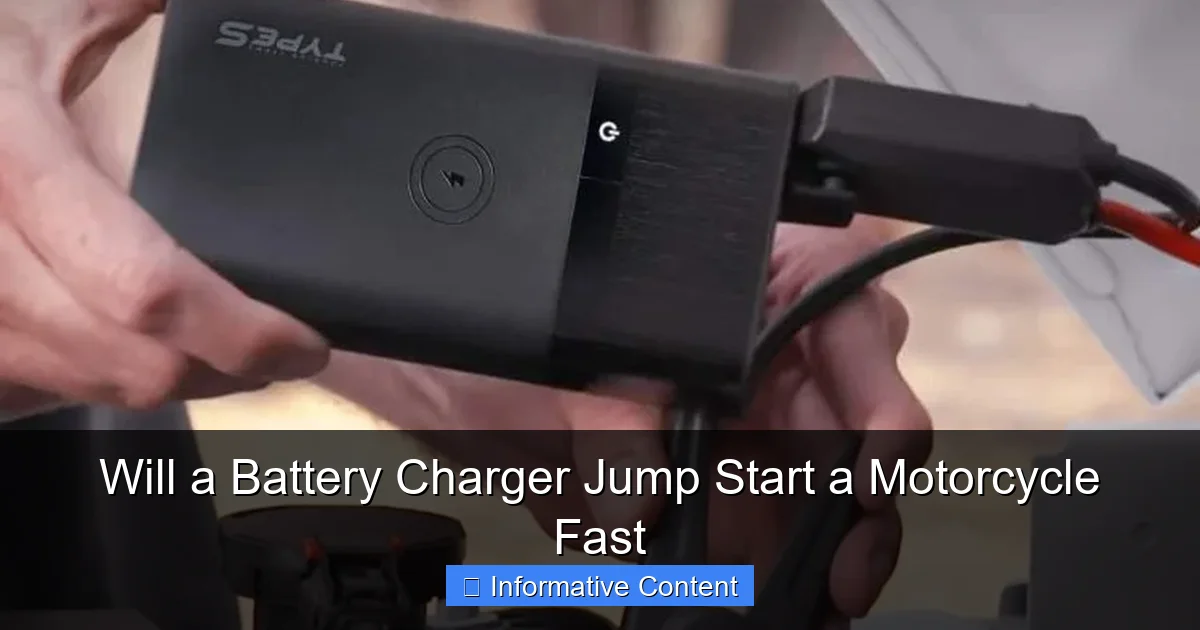
Visual guide about will a battery charger jump start a motorcycle
Image source: everstartjumpstarter.com
For example, let’s say your bike won’t start in the morning because the battery drained overnight from leaving the lights on. A smart charger could bring it back to life in under an hour. But if the battery is completely flat, you’re looking at several hours of charging. In this case, a portable jump starter or jumper cables would be a faster solution.
Real-World Scenarios
Here’s a practical example: Imagine you’re on a road trip and your battery dies at a gas station. You have two options:
- Option 1: Use a battery charger. If it’s a smart charger, you might get enough charge to start the bike in 30-60 minutes. But if it’s a trickle charger, you’re stuck for hours.
- Option 2: Use a portable jump starter. These devices deliver high current instantly, giving you a jump start in seconds. They’re like a spare battery you can carry with you.
I’ve been in both situations. Once, I used a smart charger and waited 45 minutes before my bike roared back to life. Another time, I used a jump starter, and my bike started right away. The takeaway? A battery charger can work, but it’s not always the fastest option.
Why a Dedicated Jump Starter Is Often Faster
Instant Power vs. Gradual Charging
A dedicated jump starter (or portable power bank) is designed to deliver a high burst of power instantly. Most jump starters have a CA (cranking amps) rating between 300-1000, which is more than enough to start a motorcycle. In contrast, a battery charger works by gradually restoring charge, which takes time. Even the fastest smart chargers can’t match the immediacy of a jump starter.
Think of it like this: a jump starter is like a shot of espresso—it gives you a quick boost. A battery charger is like brewing a full pot of coffee—it’s effective, but it takes longer. If you need to get moving fast, the espresso wins every time.
Portability and Convenience
Another advantage of portable jump starters is their portability. They’re compact, lightweight, and easy to carry in your saddlebag or backpack. Many also come with USB ports to charge your phone, which is a handy bonus. Battery chargers, on the other hand, are often bulky and require access to a power outlet. If you’re on the road, that’s not always practical.
I keep a motorcycle jump starter in my motorcycle’s storage compartment. It’s saved me more than once when my battery died unexpectedly. Plus, it doubles as a phone charger when I’m out on long rides. It’s one of those tools you hope you’ll never need, but you’ll be glad you have when the time comes.
How to Use a Battery Charger for a Jump Start (If You Must)
Step-by-Step Guide
If you don’t have a jump starter, a battery charger can still work—just not as quickly. Here’s how to do it:
- Check the Battery Voltage: Use a multimeter to check if the battery is completely dead (below 10V) or just low (10-12V). If it’s completely dead, you’ll need to charge it for at least 2-3 hours before it can start the bike.
- Connect the Charger: Attach the red (positive) clamp to the battery’s positive terminal and the black (negative) clamp to the negative terminal. Make sure the connections are secure.
- Set the Charger Mode: If you have a smart charger, set it to the appropriate mode (e.g., “motorcycle” or “AGM” if your battery is AGM type). For manual chargers, use a low amp setting (2-4 amps) to avoid damaging the battery.
- Wait and Test: Let the charger work for at least 30-60 minutes. Then, try starting the bike. If it doesn’t start, wait longer and try again.
Pro tip: If the battery is severely depleted, you might need to charge it for several hours. In that case, it’s better to leave it overnight and try again in the morning.
Common Mistakes to Avoid
- Using a High-Amp Charger: High-amp chargers (e.g., 10 amps) can overheat and damage your battery. Stick to low-amp settings for safety.
- Ignoring Battery Type: Not all batteries are the same. AGM batteries require a special charging mode, so make sure your charger supports it.
- Forgetting to Disconnect: Once the bike starts, disconnect the charger immediately to avoid overcharging the battery.
I once left a charger connected for too long, and it fried my battery. It was an expensive lesson, but it taught me to always monitor the charging process.
Comparing Battery Chargers and Jump Starters: Which Is Right for You?
Pros and Cons
Here’s a quick comparison of battery chargers and jump starters to help you decide which one suits your needs:
| Feature | Battery Charger | Jump Starter |
|---|---|---|
| Speed | Slow (30+ minutes) | Instant (seconds) |
| Portability | Bulky, requires power outlet | Compact, portable |
| Cost | $20-$100 | $50-$200 |
| Versatility | Only charges batteries | Can charge phones, laptops, etc. |
| Best For | Long-term battery maintenance | Emergency jump starts |
Which Should You Choose?
If you’re looking for a fast solution to jump start your motorcycle, a portable jump starter is the way to go. It’s quick, convenient, and reliable in emergencies. However, if you’re more concerned about long-term battery health, a smart charger is a great investment. It’ll keep your battery in top condition and prevent unexpected failures.
Personally, I use both. I have a smart charger at home for maintenance and a jump starter in my bike for emergencies. It’s the best of both worlds—and it gives me peace of mind knowing I’m covered no matter what happens.
Final Thoughts: Making the Right Choice for Your Needs
Key Takeaways
To wrap things up, here’s what you need to remember about using a battery charger to jump start a motorcycle:
- A battery charger can work, but it’s not the fastest option. It’s better suited for long-term charging.
- For quick jump starts, a portable jump starter is the better choice. It delivers instant power and is easy to carry.
- Always use the right charger for your battery type (e.g., AGM, lead-acid) to avoid damage.
- Keep a jump starter in your motorcycle’s storage compartment for emergencies. It’s a small investment that can save you a lot of hassle.
At the end of the day, the best tool for the job depends on your situation. If you’re in a hurry, reach for a jump starter. If you have time to spare, a battery charger will do the trick. And if you’re like me, you’ll keep both on hand just in case. After all, it’s better to be prepared than stranded with a dead battery.
So, the next time your motorcycle won’t start, don’t panic. Take a deep breath, assess your options, and choose the right tool for the job. Whether it’s a battery charger or a jump starter, you’ve got this. And remember: a little preparation today can save you a lot of stress tomorrow. Ride safe!
Frequently Asked Questions
Will a battery charger jump start a motorcycle instantly?
A standard battery charger typically won’t jump start a motorcycle instantly because it delivers power slowly to avoid damaging the battery. For a fast jump, you’ll need a high-amp jump starter or a jump box designed for motorcycles.
Can I use a car battery charger to jump start a motorcycle?
Using a car battery charger is not recommended, as their higher voltage and amperage can damage your motorcycle’s smaller battery. Always opt for a motorcycle-specific charger or a smart charger with a low-amp setting.
What type of battery charger can safely jump start a motorcycle?
Look for a smart charger with a “jump start” mode or a portable lithium jump starter rated for 12V motorcycle batteries. These deliver a quick, controlled burst of power without overcharging the battery.
Is it faster to jump a motorcycle with a charger or jumper cables?
Jumper cables connected to another vehicle provide faster results than a charger, but a dedicated jump starter (with the right amps) is the quickest and safest option. Chargers are better for long-term maintenance than emergency jumps.
How long does a battery charger take to start a motorcycle?
Most standard chargers take 10–30 minutes to deliver enough charge to start the bike, depending on the battery’s condition. Fast chargers with boost modes can reduce this time to under 5 minutes.
Will a battery charger revive a completely dead motorcycle battery?
A regular charger may not revive a deeply discharged battery, but a smart charger with a “recondition” mode or a jump starter can often restore it. For best results, use a charger designed for motorcycle batteries with recovery features.