
Yes, your car can jump start if the battery is dead, but only if the battery still holds some charge and the issue isn’t a deeper electrical or mechanical failure. Jump-starting works best for sulfation or minor drain issues, not for completely failed batteries or damaged alternators—so assess the symptoms first to avoid further damage.
Key Takeaways
- Jump starters work: They can revive a dead battery if connections are clean and secure.
- Safety first: Always follow proper jump-starting steps to avoid electrical damage or injury.
- Battery health matters: A jump start won’t fix a severely degraded or faulty battery.
- Check alternator: Ensure it’s charging the battery properly post-jump to prevent repeat failures.
- Use quality cables: Thick, undamaged jumper cables improve success rates and safety.
- Wait before driving: Let the engine run 10+ minutes post-jump to recharge the battery.
📑 Table of Contents
- Will My Car Jump Start If the Battery Is Dead? Find Out Now
- How Jump Starting Works (And Why It’s Usually Successful)
- When a Jump Start Won’t Work (And What to Do Instead)
- How to Safely Jump Start Your Car (Step-by-Step Guide)
- Portable Jump Starters: The Modern Alternative
- Preventing a Dead Battery: Smart Habits to Avoid the Jump
- Conclusion: Be Prepared, Stay Safe, and Keep Rolling
Will My Car Jump Start If the Battery Is Dead? Find Out Now
We’ve all been there—rushing to get to work, school, or an important appointment, only to find your car won’t start. You turn the key (or push the button) and instead of the familiar engine roar, you’re greeted with silence or a weak click-click-click. Your heart sinks. Is the battery dead? And more importantly: will my car jump start if the battery is dead?
It’s a common and stressful situation, but the good news is that in most cases, yes—your car can jump start even if the battery is dead. But it’s not always that simple. There are nuances, safety precautions, and exceptions you need to understand before grabbing a pair of jumper cables. I’ve been stranded in parking lots, helped friends in the rain, and even learned a few hard lessons along the way. In this guide, I’ll walk you through everything you need to know—from how jump starting works to why sometimes it doesn’t, and what you can do to avoid getting stuck in the first place.
How Jump Starting Works (And Why It’s Usually Successful)
Let’s start with the basics. Jump starting is like giving your car a “second chance” at life when the battery is too weak to start the engine. But how does it actually work?
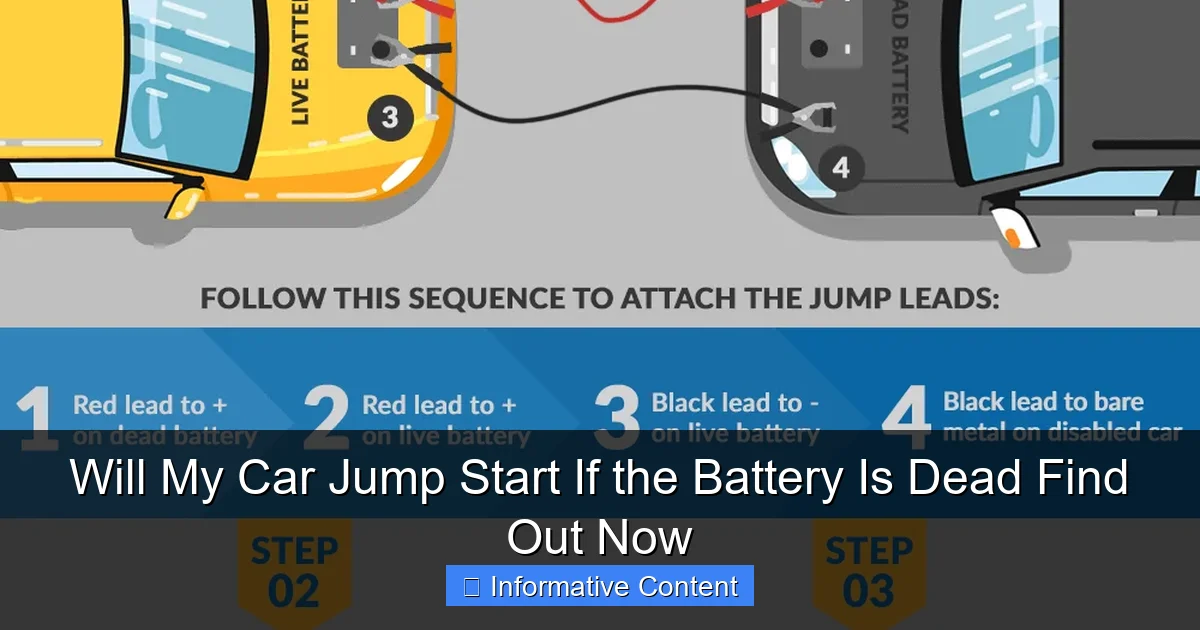
Visual guide about will my car jump start if the battery is dead
Image source: bookmygarage.com
The Science Behind Jump Starting
Your car’s battery provides the electrical power needed to crank the starter motor, which turns the engine. When the battery is dead or low, it can’t deliver enough current to start the engine. A jump start uses another vehicle’s battery (or a portable jump starter) to supply that missing power.
The process connects the two batteries in parallel using jumper cables. This allows the good battery to “lend” its charge to the dead one, boosting the voltage and current available to the starter motor. Once the engine turns over, the car’s alternator kicks in and takes over, recharging the battery as you drive.
Why Jump Starting Usually Works
In most cases, a jump start works because:
- The battery isn’t completely destroyed—just discharged due to lights left on, cold weather, or a faulty alternator.
- The starter and electrical systems are still functional—the issue is power supply, not hardware failure.
- Modern vehicles are designed for jump starting—most have accessible terminals and clear instructions in the manual.
For example, I once left my interior light on overnight. My car wouldn’t start the next morning, but after a 2-minute jump from a neighbor’s SUV, it fired right up. No damage, no drama. That’s the ideal scenario.
Real-World Success Rate
According to AAA, jump starting resolves about 80-90% of no-start issues related to battery problems. That means if your car won’t start and the battery is the culprit, there’s a very good chance a jump will fix it—if done correctly.
When a Jump Start Won’t Work (And What to Do Instead)
Now, let’s talk about the 10-20% of cases where jump starting fails—even when the battery seems dead. This is where things get tricky, and knowing the exceptions can save you time, frustration, and even safety risks.
The Battery Is Completely Dead or Damaged
Sometimes, a battery isn’t just discharged—it’s dead. This can happen if:
- The battery is more than 4–5 years old (average lifespan).
- It has internal damage, such as a shorted cell or cracked case.
- It’s been deeply discharged too many times (e.g., repeated jump starts without proper charging).
If the battery is physically damaged or has a dead cell, no amount of jump starting will help. The voltage won’t stabilize, and the car may crank slowly or not at all—even with jumper cables attached.
Tip: If you jump start and the car dies again after turning it off, the battery likely needs replacement.
Alternator Failure: The Hidden Culprit
Here’s a common mistake: assuming the battery is the problem when it’s actually the alternator. The alternator charges the battery while the engine runs. If it fails, the battery drains quickly—even if it’s new.
Signs of alternator trouble:
- Dim headlights or flickering dashboard lights.
- Warning lights (like the battery or ALT symbol).
- Car starts fine with a jump but dies after 10–20 minutes of driving.
I once jumped a friend’s car, and it ran fine for 15 minutes—then sputtered and died on the highway. The alternator was toast. A jump start won’t fix this. You’ll need a mechanic or a tow.
Electrical or Starter Motor Issues
Even with a good battery, a jump won’t help if the starter motor is faulty or there’s a wiring problem. Symptoms include:
- No sound at all when turning the key.
- Clicking noise but no cranking.
- Engine cranks but won’t fire (could also be fuel or ignition issues).
If you hear a single loud click, it’s often the starter relay or solenoid. Multiple clicks? Could be a weak connection or bad starter.
Corroded or Loose Battery Connections
Sometimes, the battery has power, but the terminals are so corroded or loose that electricity can’t flow. A jump might not help because the cables can’t make proper contact.
Pro tip: Before jumping, clean the terminals with a wire brush and tighten the clamps. You might not even need a jump!
How to Safely Jump Start Your Car (Step-by-Step Guide)
Now that you know when jump starting works—and when it doesn’t—let’s talk about how to do it safely. A wrong move can damage your car, cause sparks, or even lead to injury. Here’s how I’ve done it hundreds of times, with zero mishaps.
What You’ll Need
- Jumper cables (4-6 gauge, 10–20 feet long).
- A second vehicle with a working battery (or a portable jump starter).
- Rubber gloves and safety glasses (optional but smart).
- Owner’s manual (for terminal locations and warnings).
Note: Avoid cheap, thin cables. They can’t handle the current and may overheat.
Step-by-Step Jump Starting Process
- Park the working car close (but not touching) so the jumper cables can reach both batteries. Turn off both engines and set parking brakes.
- Identify the battery terminals in both cars. Look for the red (+) and black (-) markings. If terminals are hard to reach, some cars have jump posts under the hood—check your manual.
- Connect the red (positive) clamp to the dead battery’s positive terminal. Then connect the other red clamp to the good battery’s positive terminal.
- Connect the black (negative) clamp to the good battery’s negative terminal. Important: Connect the other black clamp to an unpainted metal surface on the dead car’s engine block—not the dead battery’s negative terminal. This prevents sparks near the battery, which can cause an explosion.
- Start the working car and let it run for 2–3 minutes. Rev the engine slightly (1,500–2,000 RPM) to increase charging.
- Try starting the dead car. If it doesn’t start, wait 30 seconds and try again. If it still won’t start, check connections and try revving the donor car more.
- Once started, remove cables in reverse order: Black from engine block → Black from good battery → Red from good battery → Red from dead battery.
- Let the jumped car run for at least 15–30 minutes to recharge the battery. Avoid turning it off until you’ve driven a few miles.
Common Mistakes to Avoid
- Reverse polarity: Connecting red to black can fry your car’s electronics.
- Connecting negative to the dead battery: Increases risk of explosion from hydrogen gas.
- Starting the dead car too soon: Wait a few minutes to let the battery charge slightly.
- Not driving after the jump: The alternator needs time to recharge the battery.
I once saw a guy connect both black clamps to the battery terminals—and a spark flew right at the battery. Scary! Always use the engine block for the final ground.
Portable Jump Starters: The Modern Alternative
Gone are the days when you had to rely on another car to get moving. Portable jump starters (also called battery boosters or jump packs) have become a game-changer—especially for solo drivers or those in remote areas.
How Portable Jump Starters Work
These devices are essentially compact lithium-ion batteries with jumper cable attachments. You charge them at home, keep them in your trunk, and use them like a mini power bank for your car.
Most can jump 4–6-cylinder engines, and some heavy-duty models handle V8s. They’re safe, easy to use, and eliminate the need for another vehicle.
Pros and Cons of Portable Jump Starters
| Pros | Cons |
|---|---|
| No need for another car | Must be charged regularly (every 3–6 months) |
| Lightweight and compact | Lower power than a car battery (may struggle with large engines) |
| Built-in safety features (reverse polarity, overload protection) | Can’t fix alternator or starter issues |
| Often include USB ports, flashlights, and air compressors | Higher upfront cost ($50–$200) |
Real-World Example
Last winter, I was stuck in a snowy parking lot at night. My battery died, and no one was around to help. I pulled out my portable jump starter, connected it in 30 seconds, and my car started on the first try. It saved me a $100 tow. Now, I keep it in my car year-round.
Tip: Choose a model with at least 10,000–15,000 mAh capacity and a peak current of 1,000+ amps for reliability.
Preventing a Dead Battery: Smart Habits to Avoid the Jump
The best jump start is the one you never need. While batteries do fail, many dead battery situations are preventable. Here’s how to keep your car starting reliably.
Regular Battery Maintenance
- Inspect terminals monthly for corrosion. Clean with a mix of baking soda and water if needed.
- Tighten loose cables—vibrations can loosen connections over time.
- Check battery age—most last 3–5 years. Replace if it’s older or showing signs of weakness.
I once ignored a slightly corroded terminal. A month later, I was stranded. A 10-minute cleaning could’ve saved me hours of hassle.
Smart Driving and Parking Habits
- Drive at least 20–30 minutes weekly to keep the battery charged.
- Turn off lights, radio, and AC before exiting—even if you’re just running inside for 5 minutes.
- Use a battery maintainer if storing the car—especially in winter. These trickle-charge the battery to prevent discharge.
Parking in a garage helps too—extreme heat and cold both reduce battery life.
Use a Battery Monitor
Small, affordable battery monitors plug into your OBD2 port or connect to the terminals. They track voltage, charge level, and even send alerts to your phone if the battery drops below a safe level.
I installed one after a close call. Now I get a text if the battery is low—before it dies.
Know Your Car’s Warning Signs
Listen to your car:
- Slow cranking? Battery or starter issue.
- Dim lights when idling? Alternator problem.
- Clicking when turning the key? Weak battery or bad starter.
Catching these early means you can fix the problem before it leaves you stranded.
Conclusion: Be Prepared, Stay Safe, and Keep Rolling
So, will my car jump start if the battery is dead? In most cases, yes—especially if the battery is just discharged and not damaged. Jump starting is a reliable, time-tested solution that can get you back on the road quickly and safely. For help choosing the right equipment, check out our guide to the best jump starters for 2026.
But remember: it’s not a cure-all. If the battery is physically bad, the alternator is failing, or there’s an electrical issue, a jump won’t help. Knowing the difference saves you time, money, and stress.
My best advice? Be prepared. Keep a set of jumper cables or a portable jump starter in your car. Know how to use them. Maintain your battery. And if you’re ever unsure, don’t hesitate to call for help—better safe than stranded.
At the end of the day, a dead battery is annoying, but it doesn’t have to ruin your day. With the right knowledge and tools, you’ll never have to wonder, “Will my car jump start?” You’ll already know the answer—and you’ll be ready to handle it.
Frequently Asked Questions
Will my car jump start if the battery is completely dead?
If your battery is fully dead (no lights or sounds), a jump start may still work if the alternator and starter are functional. However, severely sulfated or damaged batteries might not hold a charge, making a replacement necessary.
How do I know if my car battery is dead or just needs a jump start?
Check for dim lights, clicking noises when turning the key, or no response at all—these are signs of a dead battery. If jump-starting restarts the engine, your battery likely needs recharging or replacement soon.
Can a jump start fix a battery that won’t hold a charge?
A jump start will get your car running, but it won’t fix an old or damaged battery that can’t retain power. If the battery drains quickly after driving, it’s time to replace it to avoid future issues.
Is it safe to jump start a car with a dead battery frequently?
Repeated jump starts strain your car’s electrical system and indicate a failing battery or alternator. While occasional use is safe, relying on jump starts means you should have your battery and charging system inspected immediately.
Will my car jump start if the battery terminals are corroded?
Corroded terminals can prevent proper electrical contact, making jump-starting difficult. Clean the terminals with a wire brush before attempting a jump start to ensure a strong connection.
How long should I drive after a jump start to recharge the battery?
Drive for at least 30–60 minutes at highway speeds to allow the alternator to recharge the battery. Short trips may not fully restore the charge, especially if the battery is old or damaged.