
Featured image for will car jump start if battery is dead
Image source: team-bhp.com
Yes, a car can typically be jump-started if the battery is dead, as long as the battery still holds some charge and the issue isn’t a completely failed cell or internal damage. Using jumper cables and a working vehicle or portable jump starter delivers the necessary voltage to crank the engine and recharge the system. However, repeated jump-starts may signal deeper electrical problems that require professional inspection.
Key Takeaways
- Jump-starting works if the battery is dead but not damaged.
- Use proper cables to avoid electrical system harm.
- Check connections for corrosion or looseness first.
- Run the engine 15+ minutes to recharge the battery.
- Test battery health post-jump to prevent repeat issues.
- Call a pro if jump-starting fails repeatedly.
📑 Table of Contents
- Will a Car Jump Start If the Battery Is Dead? Let’s Settle This Once and For All
- How Jump Starting Actually Works (And Why It Sometimes Fails)
- Signs Your Battery Is Truly Dead (And When a Jump Won’t Help)
- Step-by-Step Guide: How to Jump Start a Car Safely (And Avoid Common Mistakes)
- Portable Jump Starters vs. Traditional Jumper Cables: Which Is Better?
- How to Prevent a Dead Battery (And Avoid the Jump Start Dilemma Altogether)
- Battery Health and Jump Start Success: A Quick Reference Table
- Final Thoughts: Yes, a Car Can Jump Start If the Battery Is Dead—But It’s Not a Guarantee
Will a Car Jump Start If the Battery Is Dead? Let’s Settle This Once and For All
Imagine this: you’re running late for work, you hop into your car, turn the key, and… nothing. The engine doesn’t crank. The lights flicker weakly. Your heart sinks. “Not again,” you mutter, already picturing the tow truck and a hefty repair bill. But then you remember—someone once told you, “Just jump start it.” You’ve seen it in movies. You’ve heard stories. But does it really work when your car battery is completely dead?
We’ve all been there. Whether it’s a cold winter morning, a forgotten headlight, or just an old battery finally giving up, a dead battery is one of the most common car troubles. And yes—jump starting is the go-to solution for most people. But here’s the thing: not all “dead” batteries are the same. Some can be revived with a jump start. Others? Not so much. And if you don’t know the difference, you could waste time, damage your car, or even put yourself in danger.
In this guide, we’re going to break it all down. We’ll answer the big question: Will a car jump start if the battery is dead? We’ll look at what makes a battery truly dead, how jump starting works, when it’s effective, and when it’s not. We’ll even share real-life examples, practical tips, and a handy data table to help you make the right call—fast.
How Jump Starting Actually Works (And Why It Sometimes Fails)
Let’s start with the basics. Jump starting isn’t magic. It’s physics. And understanding how it works is the key to knowing when it will—and won’t—help you.
The Science Behind Jump Starting
Your car’s battery stores electrical energy. When you turn the key, that energy flows to the starter motor, which cranks the engine. A healthy battery delivers around 12.6 volts. When it drops below 12 volts, your car might struggle to start. Below 10 volts? You’re in trouble.
Jump starting uses another vehicle’s battery (or a portable jump starter) to send a surge of electricity to your dead battery. This temporary boost provides enough power to turn the starter motor and get the engine running. Once the engine is on, the alternator takes over, recharging the battery and powering the car’s electrical systems.
Think of it like giving your car a temporary energy drink. It won’t fix the underlying problem, but it can get you back on the road—long enough to drive to a mechanic or a parts store.
Why Jump Starting Sometimes Fails
Here’s the catch: a jump start only works if your battery can still hold a charge. If the battery is truly dead—meaning it’s chemically degraded, sulfated, or has internal shorts—no amount of jump starting will help. It’s like trying to fill a cracked water bottle. The energy just leaks out.
Other reasons jump starts fail:
- Corroded or loose terminals: Dirt, grease, or rust on the battery terminals can block the flow of electricity, even if the battery has some charge left.
- Faulty alternator: If the alternator isn’t working, your car won’t charge the battery while running—even after a successful jump start.
- Parasitic drain: Some electrical systems (like a glovebox light or alarm) continue to draw power even when the car is off. Over time, this can kill a weak battery.
- Extreme cold: Cold temperatures slow down chemical reactions in the battery, reducing its ability to hold and deliver charge. A jump start might work in summer but fail in winter.
Real-life example: Sarah tried to jump start her car three times on a freezing January morning. Each time, the engine turned over but died immediately. She assumed the battery was dead and bought a new one. But the real problem? Her alternator had failed months earlier. The new battery died within a week. A jump start would’ve worked—if the alternator had been working to recharge it.
So, jump starting isn’t a guaranteed fix. It’s a temporary solution—but only if the battery and charging system are still functional.
Signs Your Battery Is Truly Dead (And When a Jump Won’t Help)
Not every “no-start” situation means your battery is dead. And not every dead battery can be jump started. Knowing the difference saves time, money, and frustration.
How to Tell If the Battery Is Just Weak vs. Dead
Here’s a quick test: when you turn the key, what happens?
- Weak but functional battery: The engine cranks slowly, the lights dim, but the car eventually starts. This is a classic sign of a battery that needs a jump—or replacement soon.
- Completely dead battery: No cranking. No lights. No radio. Just silence. This might still be jump-startable—if the battery isn’t internally damaged.
- No electrical activity at all: Even the dashboard lights don’t turn on. This could mean a completely dead battery, a blown fuse, or a wiring issue.
Use a multimeter to check the battery voltage:
- 12.6V or higher: Fully charged.
- 12.0–12.5V: Partially discharged. Might start with a jump.
- Below 12.0V: Severely discharged. Jump start possible, but not guaranteed.
- Below 10.0V: Likely internal damage. Jump start probably won’t work.
When a Jump Start Is a Waste of Time
There are situations where jump starting is pointless—even dangerous. Avoid it if:
- The battery is cracked or leaking: This is a fire and chemical hazard. Do not attempt a jump. Replace the battery immediately.
- You see white/green powder (corrosion) on terminals: Clean it first with baking soda and water. Jump starting with corroded terminals can cause sparks or poor connections.
- The car won’t stay running after a jump: If the engine starts but dies within seconds, the alternator or voltage regulator may be faulty. The battery isn’t holding a charge.
- The battery is over 4–5 years old: Most car batteries last 3–5 years. If yours is older, it’s likely reached the end of its life. A jump might work once, but it’s a band-aid on a sinking ship.
Practical tip: If you jump start your car and it runs fine for 20 minutes, then dies again when you turn it off, the battery isn’t the only issue. The alternator or another electrical component is likely failing.
Step-by-Step Guide: How to Jump Start a Car Safely (And Avoid Common Mistakes)
Jump starting isn’t rocket science—but doing it wrong can damage your car, hurt you, or even cause an explosion. Follow these steps carefully.
What You’ll Need
- Another running vehicle (or a portable jump starter)
- Jumper cables (at least 10 feet long, 4–6 gauge)
- Safety gloves and glasses (optional but recommended)
- Owner’s manual (to locate battery terminals)
Step 1: Park the Cars Correctly
Position the working car close to yours—but not touching. Make sure both vehicles are off, in park (or neutral with parking brake), and keys removed. Turn off all lights, radio, and accessories.
Pro tip: If you’re using a portable jump starter, you don’t need another car. Just place the jump starter on a stable surface near your battery.
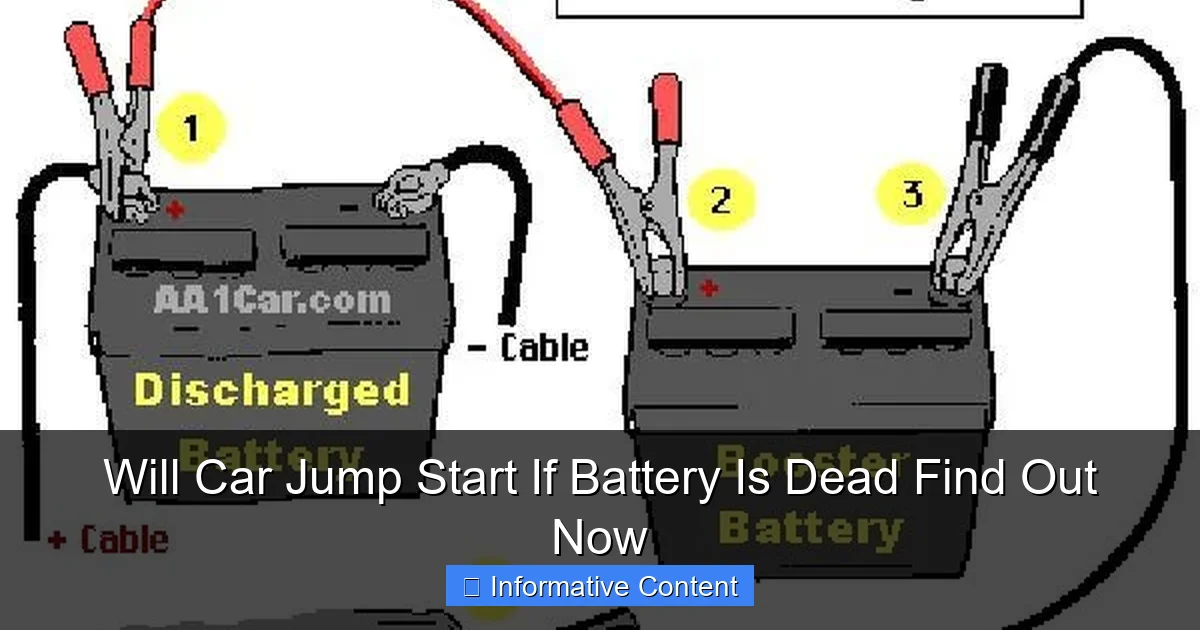
Step 2: Connect the Jumper Cables (In the Right Order!)
Follow this sequence to avoid sparks and damage:
- Connect the red (positive) clamp to the positive terminal of the dead battery.
- Connect the other red clamp to the positive terminal of the working battery.
- Connect the black (negative) clamp to the negative terminal of the working battery.
- Connect the last black clamp to an unpainted metal surface on the dead car—like a bolt or bracket. This grounds the circuit and reduces spark risk.
Important: Never connect the last black clamp to the dead battery’s negative terminal. Sparks near a battery can ignite hydrogen gas—a real explosion hazard.
Step 3: Start the Working Car
Start the engine of the working car. Let it run for 2–3 minutes at idle. This helps transfer charge to the dead battery.
Step 4: Try Starting the Dead Car
Attempt to start the dead car. If it doesn’t start, wait another minute and try again. If it still won’t start, the battery may be too far gone—or there’s another issue.
Step 5: Disconnect in Reverse Order
Once the car is running, disconnect the cables in reverse order:
- Remove the black clamp from the grounded metal on the jumped car.
- Remove the black clamp from the working battery.
- Remove the red clamp from the working battery.
- Remove the red clamp from the jumped battery.
Let the jumped car run for at least 15–20 minutes to recharge the battery. Take a short drive if possible—this helps the alternator recharge the battery faster.
Common mistake: People often leave their lights or radio on while jump starting. This drains the battery faster. Always turn off all accessories before starting.
Portable Jump Starters vs. Traditional Jumper Cables: Which Is Better?
Gone are the days when you needed a friend with a car to jump start yours. Portable jump starters (also called jump boxes or battery boosters) are now affordable, reliable, and incredibly convenient.
Traditional Jumper Cables: Pros and Cons
- Pros:
- Cheap (often under $30)
- Can transfer more power than most portable units
- Works with any car that has a battery
- Cons:
- Requires another vehicle
- Bulky and heavy to store
- Risk of improper connection (sparks, damage)
- No help if you’re alone
Portable Jump Starters: Pros and Cons
- Pros:
- No need for another car
- Compact and lightweight (fits in glovebox)
- Built-in safety features (reverse polarity protection, spark prevention)
- Many include USB ports, LED lights, and air compressors
- Cons:
- More expensive ($60–$150)
- Needs to be charged regularly (loses charge over time)
- Lower power than some cables (may struggle with large trucks or diesels)
Which Should You Choose?
If you live in a city with frequent traffic or roadside assistance, cables might be enough. But if you:
- Drive alone often
- Live in a rural area
- Own an older car with battery issues
- Want peace of mind
…a portable jump starter is worth the investment. Think of it like a fire extinguisher—you hope you never need it, but when you do, you’ll be glad it’s there.
Real-life example: Mike, a delivery driver, kept a jump starter in his van. One winter morning, his car wouldn’t start. No one was around to help. He used the jump starter, got the engine running, and made his deliveries. He later found out his alternator was failing—but the jump starter bought him time to get it fixed.
How to Prevent a Dead Battery (And Avoid the Jump Start Dilemma Altogether)
The best jump start is the one you never need. Preventing a dead battery is easier than you think.
Regular Maintenance Tips
- Check battery terminals monthly: Clean off corrosion with a mix of baking soda and water. Use a wire brush for stubborn buildup.
- Test the battery annually: Most auto parts stores offer free battery testing. Do this every fall, before winter hits.
- Drive your car regularly: Short trips (under 20 minutes) don’t give the alternator enough time to recharge the battery. Take longer drives when possible.
- Turn off all electronics before exiting: Double-check lights, radio, phone chargers, and glovebox lights.
- Use a battery maintainer in winter: If your car sits for weeks (e.g., vacation), use a smart charger or maintainer to keep the battery charged.
Upgrade Your Battery (If Needed)
Not all batteries are created equal. If you live in a cold climate, consider an AGM (Absorbent Glass Mat) battery. These are more resistant to cold, vibration, and deep cycling—perfect for frequent jump starts or stop-and-go driving.
Know When to Replace
Even with perfect care, batteries don’t last forever. Replace yours every 3–5 years. Signs it’s time:
- Slow cranking in the morning
- Dim headlights or interior lights
- Frequent jump starts (more than once a year)
- Battery case looks bloated or cracked
Practical tip: Keep a battery log. Note the install date, voltage readings, and any jump starts. This helps you track battery health over time.
Battery Health and Jump Start Success: A Quick Reference Table
Use this table to assess whether a jump start is likely to work—based on battery voltage and symptoms.
| Battery Voltage | Likely Condition | Jump Start Success? | Recommended Action |
|---|---|---|---|
| 12.6V+ | Fully charged | Yes (if no other issues) | Check starter, alternator, or ignition |
| 12.0–12.5V | Partially discharged | Very likely | Jump start, then drive 20+ minutes |
| 11.0–11.9V | Severely discharged | Possible, but not guaranteed | Jump start; replace battery soon |
| 10.0–10.9V | Deeply discharged | Unlikely | Try jump start; if fails, replace battery |
| Below 10.0V | Likely internal damage | Very unlikely | Do not jump; replace battery |
| No voltage (0V) | Dead or disconnected | No | Check connections; replace battery |
Remember: this table is a guide. Other factors (temperature, alternator health, corrosion) also affect jump start success.
Final Thoughts: Yes, a Car Can Jump Start If the Battery Is Dead—But It’s Not a Guarantee
So, back to the big question: Will a car jump start if the battery is dead? The answer is: it depends.
If the battery is simply discharged—due to leaving a light on, cold weather, or a short trip—a jump start will likely work. It’s a quick, effective fix that gets you back on the road.
But if the battery is old, cracked, deeply sulfated, or paired with a faulty alternator, jump starting might fail. In those cases, you’re better off replacing the battery or getting professional help.
The key is knowing the difference. Test the voltage. Inspect the terminals. Watch for warning signs. And don’t rely on jump starts as a long-term solution.
Keep a set of jumper cables or a portable jump starter in your trunk. Learn how to use them safely. And most importantly—take care of your battery. A little prevention goes a long way.
Because the next time you turn that key and hear silence, you’ll know exactly what to do—and whether a jump start will save the day.
Frequently Asked Questions
Will a car jump start if the battery is completely dead?
In most cases, yes—a jump start can revive a dead battery by using power from another vehicle or a portable jump starter. However, if the battery is severely damaged or sulfated, a jump may not work, and replacement might be necessary.
How long should I let my car run after a jump start to recharge the battery?
Let your car run for at least 20–30 minutes after a jump start to allow the alternator to recharge the battery. For a full charge, drive for 30–60 minutes or consider using a battery charger for best results.
Can jump-starting a car damage the electrical system?
When done correctly, jump-starting is safe and won’t harm your car’s electrical system. Always follow proper procedures—connect the cables in the right order and avoid short circuits to prevent damage.
Why won’t my car jump start even with another battery connected?
If your car won’t jump start, the issue might be a faulty battery, corroded terminals, a bad alternator, or a deeper electrical problem. Check connections first, and if problems persist, have a mechanic inspect the system.
Is it better to use a jump starter or jumper cables for a dead battery?
Portable jump starters are safer and more convenient, especially if no other vehicle is available. Jumper cables work well but require another running car and careful handling to avoid sparks or incorrect connections.
How many times can you safely jump start a car battery?
You can safely jump start a car battery multiple times if needed, but frequent jump starts may signal a failing battery or charging system. Replace the battery if it fails to hold a charge after a few attempts.