
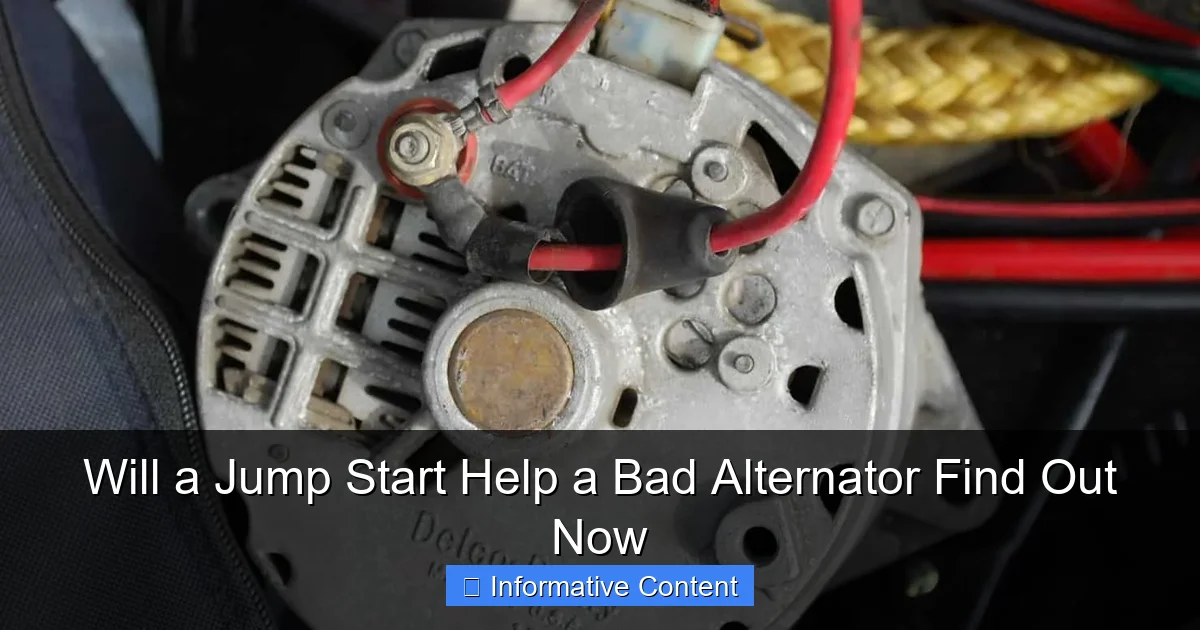
Featured image for will a jump start help a bad alternator
Image source: autoily.com
A jump start will not fix a bad alternator—it may get your car running temporarily, but the underlying issue will persist. The alternator charges the battery and powers electrical systems, so if it’s failing, repeated jump starts won’t solve the root problem and could leave you stranded again.
Key Takeaways
- Jump starts won’t fix a bad alternator—only temporary relief.
- Test voltage output to confirm alternator failure (below 13.5V is bad).
- Dimming lights or stalling signal alternator issues, not just a dead battery.
- Replace the alternator promptly to avoid total breakdowns.
- Use a battery charger for short-term power, not a permanent fix.
- Inspect wiring and fuses to rule out other electrical causes.
📑 Table of Contents
- Will a Jump Start Help a Bad Alternator? Find Out Now
- Understanding the Alternator and Its Role
- Can a Jump Start Fix a Bad Alternator?
- How to Diagnose an Alternator Problem (Before Jumping)
- What to Do After a Jump Start (If the Alternator Is Failing)
- Alternator Repair vs. Replacement: What’s the Better Option?
- Prevention and Maintenance: Keeping Your Alternator Healthy
- Final Thoughts: Jump Start or Not?
Will a Jump Start Help a Bad Alternator? Find Out Now
Imagine this: you’re rushing to get to work, and your car sputters to a stop in the middle of traffic. You turn the key again—nothing. The engine won’t crank, and the battery light is glaring at you from the dashboard. Your first instinct? Call a friend or grab a jump starter to get back on the road. But here’s the million-dollar question: will a jump start help a bad alternator? It’s a common dilemma, and the answer isn’t always straightforward.
We’ve all been there—stuck, frustrated, and just wanting a quick fix. The truth is, a jump start can be a lifesaver in many situations, but it’s not a magic wand. If your alternator is failing, the solution might be more involved than a simple battery boost. In this article, we’ll dive deep into how alternators work, when a jump start might help (and when it won’t), and what you should do next. Think of this as your friendly, no-nonsense guide to understanding car electrical systems without needing an engineering degree.
Understanding the Alternator and Its Role
The alternator is like the heart of your car’s electrical system. It doesn’t just keep the battery charged—it powers everything from your headlights to your radio while the engine is running. Without it, your car would quickly run out of juice, even if the battery were brand new.
What Does the Alternator Do?
When your engine runs, the alternator spins and generates electricity. This electricity serves two main purposes:
- Charges the battery: Replenishes the energy used during startup and keeps the battery ready for the next ignition.
- Powers electrical components: Supplies energy to lights, climate control, infotainment, and more.
If the alternator fails, the battery takes over temporarily. But batteries aren’t designed to power your entire car for long. They’re meant to start the engine, not run it.
Signs of a Failing Alternator
Before we answer the big question, let’s identify when an alternator is the culprit. Here are common warning signs:
- Dim or flickering lights: Headlights, dashboard lights, or interior lights that pulse or dim when you accelerate or use accessories.
- Warning lights on the dashboard: The battery or alternator light (often shaped like a battery) may glow or flash.
- Strange noises: A grinding or whining sound from the engine bay—often a sign of worn bearings or a slipping belt.
- Electrical failures: Power windows, radio, or AC acting up or not working.
- Dead battery: A battery that dies repeatedly, even after being charged or replaced.
For example, Sarah noticed her headlights dimming every time she turned on the AC. At first, she thought it was just an old battery. But after her mechanic checked the alternator output, it was clear the alternator wasn’t producing enough voltage. The battery was being overworked—and that’s a classic sign of alternator trouble.
Can a Jump Start Fix a Bad Alternator?
Now, let’s cut to the chase: will a jump start help a bad alternator? The short answer: sometimes, but not for long. It depends on the severity of the alternator’s failure and how much charge the battery still holds.
When a Jump Start Might Work
A jump start can help in these scenarios:
- The alternator is failing but still working partially: If it’s producing some electricity (e.g., 12.5–13.5 volts), a jump can get you started and keep the car running long enough to reach a repair shop.
- The battery is drained but the alternator is intact: Sometimes, a weak alternator doesn’t charge the battery fully, leaving it low. A jump can give it a boost, and the alternator takes over once the engine runs.
- You’re stranded and need to get to safety: A jump is a temporary fix to get you off the road or to a mechanic.
Think of it like using a defibrillator on someone with a weak heart. It can restart the system, but if the heart isn’t pumping properly, the person will crash again soon.
When a Jump Start Won’t Help (Or Makes Things Worse)
Unfortunately, a jump start is useless—or even risky—if:
- The alternator is completely dead: No electricity is being generated. The battery will drain quickly after the jump, and the car will stall again.
- The alternator is overcharging or undercharging: Some alternator failures cause voltage spikes or drops, which can damage electronics or fry the battery.
- There’s a short circuit or wiring issue: A jump could cause sparks, overheating, or even a fire in rare cases.
Take Mark, for example. He jumped his car after it wouldn’t start, and it ran for 10 minutes before dying at a red light. He tried again, but the engine sputtered and wouldn’t restart. His alternator was completely shot—no amount of jump starting could save it.
How to Diagnose an Alternator Problem (Before Jumping)
Before you reach for jumper cables, take a few minutes to diagnose the issue. This can save you time, money, and frustration.
Step 1: Check the Battery Voltage
Use a multimeter (available at auto stores for $10–$20) to measure the battery voltage:
- Engine off: A healthy battery should read 12.4–12.7 volts.
- Engine running: With the alternator working, voltage should be 13.8–14.4 volts.
If the voltage stays below 13.5 volts with the engine running, the alternator isn’t charging properly.
Step 2: Listen and Look for Clues
Pay attention to:
- Dashboard lights: If the battery light is on, it’s a red flag.
- Belt condition: A loose or cracked serpentine belt can prevent the alternator from spinning.
- Smell: A burning odor could mean a short or overheating alternator.
Step 3: Test the Alternator Output
Here’s a simple test you can do in your driveway:
- Start the car and let it idle.
- Turn on high-draw accessories (headlights, AC, radio, defroster).
- Measure battery voltage again. It should stay above 13.5 volts.
- If voltage drops below 13 volts, the alternator isn’t keeping up.
Pro tip: If you don’t have a multimeter, many auto parts stores offer free charging system tests. Just drive in and ask!
What to Do After a Jump Start (If the Alternator Is Failing)
So, you jumped the car and it started. Now what? Don’t celebrate yet. You’re on borrowed time.
Drive Directly to a Repair Shop
Your priority should be getting the alternator checked or replaced. The longer you drive with a bad alternator:
- The more likely you are to get stranded again.
- The higher the risk of damaging other components (e.g., voltage regulators, ECUs).
- The greater the chance of a dead battery, which could require replacement.
Try to drive straight to a mechanic. Avoid detours, long trips, or using high-power accessories (like heated seats or a powerful sound system).
Monitor the Voltage
Keep an eye on your dashboard. If the battery light comes on again, or if the voltage drops (check with a multimeter if you have one), pull over safely. Continuing to drive could cause a breakdown or damage.
Keep the Engine Running
Never turn the engine off if you’re unsure whether it will restart. If you must stop (e.g., at a gas station), try to keep the engine idling. If you turn it off, you may not get it started again without another jump.
Example: A Real-World Scenario
Lisa jumped her car after it died in a parking lot. She drove straight to her mechanic, but stopped at a store on the way. When she came out, the car wouldn’t start. Why? The alternator wasn’t charging, so the battery drained while the engine was off. Lesson learned: minimize stops and avoid turning the engine off until repairs are made.
Alternator Repair vs. Replacement: What’s the Better Option?
Once you’ve confirmed the alternator is the problem, you’ll face a choice: repair or replace?
Repairing the Alternator
Some alternators can be fixed, especially if:
- The issue is a worn-out voltage regulator (a common failure point).
- Brushes or bearings need replacing.
- There’s a minor wiring or connector problem.
Pros:
- Cheaper than full replacement.
- Faster turnaround if parts are in stock.
Cons:
- Not all alternators are repairable (especially modern, integrated units).
- Repairs may not last as long as a new alternator.
Replacing the Alternator
A full replacement is often the better long-term solution. Modern alternators are more efficient and durable, and many come with warranties.
Pros:
- Longer lifespan (typically 80,000–150,000 miles).
- Better performance and reliability.
- Warranty coverage (often 1–3 years).
Cons:
- Higher upfront cost ($200–$600 for parts and labor).
- May require a few hours of labor.
Data Table: Repair vs. Replacement Comparison
| Factor | Repair | Replacement |
|---|---|---|
| Cost | $50–$200 | $200–$600 |
| Time | 1–3 hours | 2–4 hours |
| Lifespan | 1–3 years (varies) | 5–10 years |
| Warranty | Rarely offered | Common (1–3 years) |
| Best for | Older cars, budget fixes | Newer cars, long-term reliability |
For example, Tom repaired his alternator for $120. It lasted 18 months before failing again. His friend, Alex, replaced his for $400 and it’s still going strong after 4 years. The choice depends on your budget, car age, and how long you plan to keep the vehicle.
Prevention and Maintenance: Keeping Your Alternator Healthy
The best way to avoid alternator problems? Prevention. A little maintenance goes a long way.
Regular Inspections
Have your charging system checked during routine maintenance (oil changes, tune-ups). Many shops include a free battery and alternator test.
Belt and Tensioner Care
The serpentine belt drives the alternator. If it’s cracked, loose, or slipping, the alternator won’t spin properly. Inspect it every 12,000–15,000 miles and replace it every 60,000–100,000 miles.
Battery Health
A weak or old battery can strain the alternator. Replace your battery every 3–5 years, and keep terminals clean and tight.
Avoid Electrical Overload
Don’t add high-power aftermarket accessories (e.g., subwoofers, extra lights) without upgrading the alternator. Stock alternators are designed for factory loads.
Tip: Listen to Your Car
Strange noises, flickering lights, or a dead battery? Don’t ignore them. Early detection can prevent a full breakdown and save you from being stranded.
Remember, the alternator isn’t a part you can ignore. It’s essential for your car’s operation, and a failure can leave you in a tough spot. But with the right knowledge—like understanding will a jump start help a bad alternator—you can make smart decisions and stay safe on the road.
Final Thoughts: Jump Start or Not?
So, back to our original question: will a jump start help a bad alternator? The answer is nuanced. A jump can buy you time if the alternator is failing but still functional. It’s a temporary fix—like putting a band-aid on a broken bone. But if the alternator is completely dead, a jump won’t solve the problem. In fact, it might give you a false sense of security.
The key takeaway? Use a jump start as a short-term solution to get to a mechanic, not as a long-term fix. Diagnose the issue early, act quickly, and invest in proper repairs. Your car (and your wallet) will thank you.
And remember: your alternator is working hard every time you drive. Treat it well, and it’ll keep your car powered for years to come. Whether you’re a DIY enthusiast or prefer to leave repairs to the pros, understanding how your car’s electrical system works empowers you to make informed choices—no matter what the road throws at you.
Frequently Asked Questions
Will a jump start help a bad alternator?
A jump start may temporarily power your car if the battery is dead, but it won’t fix a failing alternator. The alternator recharges the battery while driving, so if it’s bad, the battery will drain again quickly.
How long can I drive after a jump start with a bad alternator?
You might drive 30 minutes to an hour before the battery dies, depending on its remaining charge. However, a bad alternator means the battery won’t recharge, leaving you stranded eventually.
Can a bad alternator ruin a jump-started car?
Yes. If the alternator isn’t working, the battery will keep discharging, potentially leaving you stranded. Continued driving with a bad alternator can also damage the battery or electrical system.
Is a jump start a sign of a bad alternator?
Frequent jump starts could indicate a bad alternator, especially if the battery keeps dying despite being new. Test the alternator’s output voltage to confirm.
What are the symptoms of a bad alternator after a jump start?
Dim lights, a whining noise, or a battery warning light on the dashboard are common signs. If the car stalls shortly after a jump start, the alternator likely needs replacement.
Can you recharge a battery with a bad alternator?
No. Even with an external charger, the battery will drain again if the alternator isn’t functioning. Replacing or repairing the alternator is the only permanent fix.