
Featured image for will a dead battery start with a jump
Image source: thumbs.dreamstime.com
Yes, a dead battery can usually start with a jump if the issue is solely a discharged battery and not internal damage. The jump provides the necessary electrical current to crank the engine, but if the battery is old, sulfated, or has a dead cell, a jump may only offer a temporary fix—or fail entirely.
Key Takeaways
- Jump-starts work: A dead battery can start with a jump if terminals are clean and connections secure.
- Check for damage: Inspect battery for leaks or cracks—jumping won’t help if internal cells are compromised.
- Run the engine: After a jump, drive for 20+ minutes to recharge the battery fully.
- Alternator matters: A faulty alternator may prevent proper charging, even after a successful jump.
- Prevent repeats: Test battery health regularly to avoid future jump-start situations.
- Safety first: Always wear gloves and eye protection when handling batteries or jumper cables.
📑 Table of Contents
- Will a Dead Battery Start with a Jump? Here’s What Happens
- How a Jump Start Works: The Science Behind the Spark
- When a Jump Start Will Work (and When It Won’t)
- Step-by-Step: How to Jump-Start a Dead Battery Safely
- What If the Jump Doesn’t Work? Troubleshooting the Failure
- Alternatives to Jump-Starting: When Cables Aren’t an Option
- Prevention: How to Avoid a Dead Battery in the First Place
- Battery and Jump-Start Data: Quick Reference Table
Will a Dead Battery Start with a Jump? Here’s What Happens
Imagine this: You’re late for work, the kids are already in the car, and you turn the key—only to hear a faint *click* and nothing more. Your heart sinks. The battery is dead. Again. You remember seeing jump-start cables in your trunk, but now you’re wondering: Will a dead battery start with a jump? You’re not alone. Thousands of drivers face this every day, and the short answer is: Yes, in many cases, it will. But there’s more to it than just connecting cables and hoping for the best.
Jump-starting a car isn’t magic—it’s science and a bit of automotive know-how. Whether you’re stranded in a grocery store parking lot or just trying to get your daily driver back on the road, understanding how jump-starting works—and when it won’t work—can save you time, stress, and even money. In this post, I’ll walk you through exactly what happens when you try to jump-start a dead battery, the conditions that make it successful, and the common pitfalls that can leave you even more stuck. Think of this as a friendly chat over coffee, where I share what I’ve learned (and a few mistakes I’ve made) over years of dealing with car troubles.
How a Jump Start Works: The Science Behind the Spark
Let’s start with the basics. A jump start is like giving your car’s battery a temporary energy boost using another vehicle’s working battery. But how does that actually work? It’s all about electrical current, voltage, and a little teamwork between two cars.
The Role of the Battery in Your Car
Your car battery is more than just a power source for the radio and lights. It’s the heart of your vehicle’s electrical system. When you turn the key (or press the start button), the battery sends a surge of electricity to the starter motor. This motor spins the engine, creating the combustion needed to start the car.
Most car batteries are 12-volt lead-acid batteries. A fully charged battery reads around 12.6 volts when the engine is off. If it drops below 12 volts, your car might struggle to start. Below 10.5 volts? You’re likely in the “dead battery” zone. At this point, the battery can’t deliver enough current to power the starter motor effectively.
So, when your battery is dead, it’s not that it has zero power—it’s that it doesn’t have enough power to do its job. That’s where a jump start comes in.
How Jump-Starting Delivers the Power
Jump-starting uses jumper cables to connect your dead battery to a working battery in another vehicle (or a portable jump starter). Here’s what happens step by step:
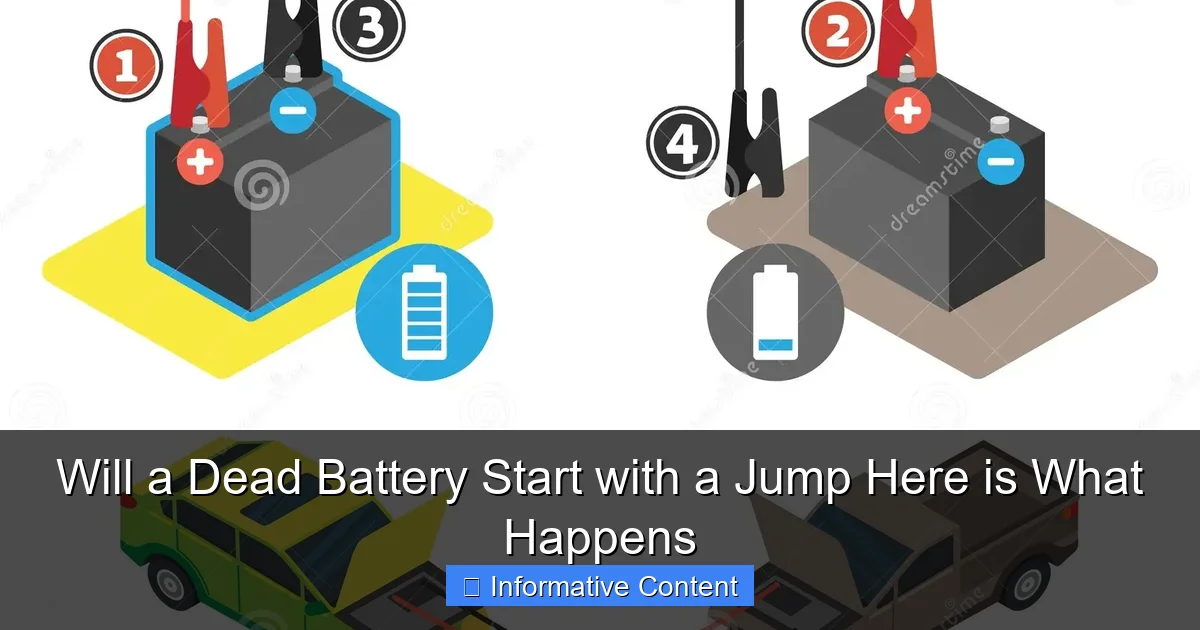
- The positive (red) cable connects the dead battery’s positive terminal to the donor battery’s positive terminal.
- The negative (black) cable connects the donor battery’s negative terminal to a grounded metal point on the dead car—like an unpainted engine bracket or frame (not the dead battery’s negative terminal, for safety).
- This creates a complete circuit. The donor battery “donates” electrical current to your battery, boosting its voltage and current output.
- After a few minutes of charging (usually 2–5), the dead battery reaches a usable state, and you can try starting the engine.
Once the engine runs, the alternator takes over, charging the battery and powering the electrical system. The jump-start was just the kickstart needed to get things going.
Real-World Example: The Morning Coffee Run
Last winter, my neighbor Sarah tried to start her SUV after leaving the lights on overnight. Nothing. She called me, and we hooked up my truck using jumper cables. After three minutes of charging, her engine turned over with a roar. Success! But it wasn’t just luck. The battery still had a bit of charge—enough to accept the boost. If it had been completely fried, it wouldn’t have helped. More on that later.
When a Jump Start Will Work (and When It Won’t)
Not every dead battery responds to a jump. Knowing the difference between a fixable issue and a deeper problem can save you from frustration—and a costly tow. Here’s what determines whether a jump start will bring your car back to life.
Battery Age and Health
Car batteries typically last 3–5 years. If yours is pushing 5 years or older, a jump might work once… but it’s likely a sign of an aging battery. Older batteries lose their ability to hold a charge, even after a jump. Think of it like an old phone battery—it charges, but the battery drains faster.
Here’s a quick rule of thumb: If your battery is more than 4 years old and has needed multiple jump starts, it’s probably time for a replacement—even if a jump works this time.
Type of Battery Failure
Not all “dead” batteries are the same. There are two main types of failure:
- Discharge (temporary failure): Caused by leaving lights on, a faulty alternator, or extreme cold. The battery is low on charge but still functional. A jump start will usually work.
- Internal failure (permanent damage): Caused by sulfation (buildup of lead sulfate crystals), a cracked case, or a shorted cell. The battery can’t hold a charge at all. A jump might start the car, but it’ll die again immediately after disconnecting the cables.
For example, if your car starts with a jump but dies as soon as you unhook the cables, the battery is likely beyond repair. The alternator can’t keep the car running without a working battery to regulate voltage.
Environmental Factors
Temperature plays a big role. Cold weather slows down the chemical reactions inside the battery, reducing its power output. A battery that works fine in summer might seem “dead” in winter. A jump start often helps here—but only temporarily. The real fix? A battery warmer or replacement with a cold-cranking amps (CCA) rated battery.
On the flip side, extreme heat can evaporate battery fluid or accelerate corrosion. Both reduce lifespan and jump-start success.
Alternator and Charging System Health
Here’s a common mistake: assuming a jump means the battery is the problem. But if your alternator is failing, the battery will keep dying—even after a jump. The alternator charges the battery while driving. If it’s weak or broken, the battery never gets fully recharged.
After a jump, drive for at least 30 minutes and test the battery voltage with a multimeter. A healthy charging system should show 13.8–14.4 volts with the engine running. Lower? You’ve got an alternator issue.
Step-by-Step: How to Jump-Start a Dead Battery Safely
Jumping a car seems simple, but doing it wrong can damage electronics, spark fires, or even injure you. Let’s walk through the safest, most effective way to do it—based on real-world experience.
Gather the Right Tools
You’ll need:
- Jumper cables (at least 10 feet long, 4-gauge or thicker)
- Another vehicle with a working 12V battery
- Safety gloves and glasses (optional but recommended)
- A multimeter (optional, for testing)
Pro tip: Cheap, thin cables (like those included with some emergency kits) can overheat or deliver too little current. Invest in quality cables—they’re worth it.
Position the Vehicles
Park the donor car close to yours, but don’t let them touch. Turn off both engines, set the parking brakes, and put both vehicles in park (or neutral for manual transmissions).
Make sure the area is well-ventilated. Batteries emit hydrogen gas, which is flammable. No smoking or sparks nearby!
Connect the Cables in the Right Order
Follow this exact sequence:
- Connect the red (+) clamp to the dead battery’s positive terminal.
- Connect the other red (+) clamp to the donor battery’s positive terminal.
- Connect the black (-) clamp to the donor battery’s negative terminal.
- Connect the other black (-) clamp to a ground point on the dead car—like a bare metal bracket on the engine block. Avoid the dead battery’s negative terminal to reduce sparking risk.
Why ground? Because the negative terminal on a dead battery might be corroded or have a poor connection. Grounding to the engine ensures a solid path for current.
Start the Donor Car and Wait
Start the donor vehicle and let it run for 2–5 minutes. This gives the dead battery time to absorb some charge. Rev the engine slightly (to about 1,500 RPM) to increase alternator output.
After waiting, try starting the dead car. If it doesn’t start, wait another 2–3 minutes and try again. Don’t crank for more than 5–10 seconds at a time—overheating the starter motor can damage it.
Disconnect Safely
Once the car starts, disconnect in reverse order:
- Remove the black (-) clamp from the ground point on the dead car.
- Remove the black (-) clamp from the donor battery.
- Remove the red (+) clamp from the donor battery.
- Remove the red (+) clamp from the dead battery.
Let the jumped car run for at least 20–30 minutes to recharge the battery. If possible, drive it—idling charges the battery slowly.
What If the Jump Doesn’t Work? Troubleshooting the Failure
You followed every step, but the engine still won’t turn over. Don’t panic. There are several possible reasons—and solutions.
Check for Loose or Corroded Connections
Even a small amount of corrosion on battery terminals can block current flow. Look for white, green, or blue crust on the terminals. Clean them with a wire brush or a mix of baking soda and water. Tighten the clamps securely.
Pro tip: If the terminals are too corroded to connect, use a battery terminal cleaner tool. It’s a small investment that saves a lot of hassle.
Test the Donor Battery
Sometimes, the donor battery is weak too—especially if the donor car is old or hasn’t been driven recently. Test it with a multimeter. A healthy battery should read 12.4–12.7 volts when off, and 13.8–14.4 volts when running.
Alternatively, try starting the donor car. If it cranks slowly, it might not have enough power to jump-start yours.
Inspect the Jumper Cables
Damaged cables—frayed wires, loose clamps, or internal breaks—won’t deliver enough current. Look closely. If the cables feel warm during use, they’re likely too thin or damaged. Replace them.
Look for Other Issues
A jump only fixes battery-related problems. If the engine still won’t start, consider:
- Faulty starter motor: You’ll hear a single click but no cranking.
- Ignition switch problems: No lights or dashboard power.
- Fuel system issues: The engine cranks but won’t fire (e.g., clogged fuel filter, bad fuel pump).
- Blown fuse or relay: Check the fuse box for signs of damage.
In these cases, a jump won’t help. You’ll need a mechanic or roadside assistance.
Alternatives to Jump-Starting: When Cables Aren’t an Option
What if there’s no other car around? Or you’re in a remote area? Modern tech offers several alternatives to traditional jump-starting.
Portable Jump Starters (Lithium Battery Packs)
These compact devices store enough power to jump-start a car—no donor vehicle needed. Just connect the clamps to your battery, press a button, and start the engine.
Pros:
- No need for another car
- Small and easy to store
- Many include USB ports, flashlights, and air compressors
Cons:
- Need to be charged regularly
- Can’t jump very large engines (e.g., trucks) unless high-powered
I keep a NOCO Boost Plus GB40 in my trunk. It’s saved me twice—once in a parking garage, once during a ski trip. Worth every penny.
Battery Maintainers and Trickle Chargers
These plug into a wall outlet and slowly charge a dead battery over hours or days. Great for batteries that are deeply discharged but still functional.
Use them if you have time to wait. Not a quick fix, but excellent for long-term battery health.
Push-Starting (For Manual Transmission Cars)
If your car has a manual transmission, you can “push start” it:
- Turn the ignition to “on.”
- Put the car in second gear.
- Have someone push the car (or roll down a hill).
- Release the clutch quickly to engage the engine.
It works because the wheels turn the engine, which powers the alternator and starts the car. Not for automatics or hybrids!
Prevention: How to Avoid a Dead Battery in the First Place
The best jump start is the one you never need. A few simple habits can keep your battery healthy and reliable.
Regular Maintenance
- Check battery terminals for corrosion every 6 months.
- Test battery voltage annually (or use a battery tester).
- Replace batteries every 4–5 years, even if they seem fine.
Driving Habits
- Drive for at least 20–30 minutes weekly to fully charge the battery.
- Avoid short trips—they don’t give the alternator enough time to recharge.
- Turn off all lights, radio, and accessories before exiting.
Seasonal Tips
- In winter: Use a battery blanket or park in a garage.
- In summer: Keep the car in shade or use a sunshade to reduce heat.
- If leaving the car unused for weeks, use a battery maintainer.
Battery and Jump-Start Data: Quick Reference Table
| Factor | Jump-Start Success? | Notes |
|---|---|---|
| Battery age < 4 years | Yes (usually) | Check for corrosion and charge level |
| Battery age > 5 years | Maybe (temporary) | Likely needs replacement soon |
| Deep discharge (left lights on) | Yes | Drive 30+ minutes after jump |
| Internal battery damage | No (or dies immediately) | Replace battery |
| Faulty alternator | No (car dies when cables removed) | Test alternator voltage |
| Extreme cold (below 0°F) | Maybe (with high-CCA battery) | Use battery warmer if possible |
So, will a dead battery start with a jump? Most of the time, yes—if the battery is simply discharged, not internally damaged. But it’s not a cure-all. Jump-starting is a temporary fix, not a long-term solution. It’s like using a crutch: helpful in the moment, but you still need to address the underlying issue.
The key is understanding your battery’s health, knowing when to jump, and when to replace. Keep quality cables or a portable starter in your car, maintain your battery, and pay attention to warning signs—like slow cranking or dim lights. With a little knowledge and preparation, you’ll never be stranded for long. And next time someone asks, “Will a dead battery start with a jump?” you can smile, hand them a set of cables, and say, “Let’s find out.”
Frequently Asked Questions
Can a completely dead battery start with a jump?
Yes, a jump start can often revive a dead battery by transferring power from a donor battery or portable jump starter. However, if the battery is damaged or deeply sulfated, it may not hold a charge even after a jump.
How long should I wait after a jump start before turning on the engine?
Wait 2–5 minutes after connecting the jumper cables to allow the dead battery to stabilize and absorb some charge. This reduces strain on the starter motor and improves the odds of a successful start.
Will a jump start work if the battery is old or damaged?
A jump start may temporarily start the engine, but if the battery is physically damaged, leaking, or over 3–5 years old, it likely won’t hold a charge long-term. The underlying issue (e.g., a faulty alternator) should also be checked.
Is it safe to jump-start a frozen or swollen battery?
No, never jump a frozen or swollen battery—it could leak acid or explode. Warm the battery to above freezing first, or replace it entirely for safety.
What happens if my car starts with a jump but dies again immediately?
This usually indicates a faulty alternator (not charging the battery) or a dead cell in the battery. Use a multimeter to test the alternator’s output (should be 13.5–14.5V when running).
Can a jump start revive a battery that’s been dead for weeks?
A jump might start the engine, but prolonged inactivity can cause sulfation, reducing the battery’s capacity. After a jump, drive for 30+ minutes to recharge, but consider replacing the battery if it fails to hold a charge.