
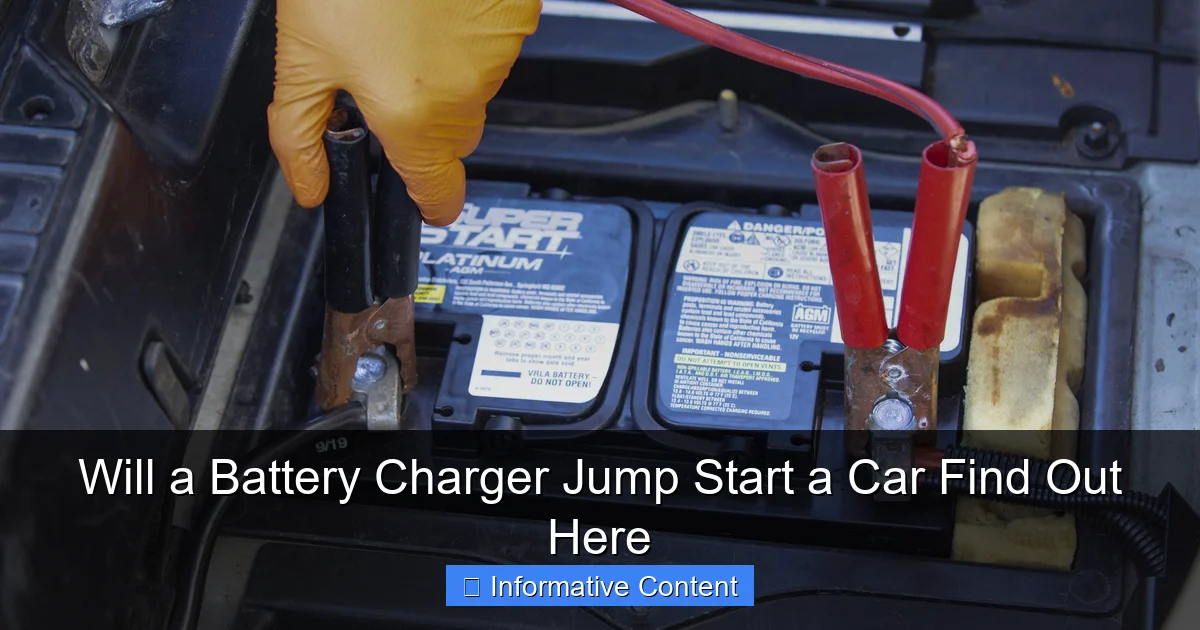
Featured image for will a battery charger jump start a car
Image source: hips.hearstapps.com
A battery charger cannot jump start a car the way a jump starter or jumper cables do, as it’s designed to slowly recharge a depleted battery over time, not deliver the immediate high-current burst needed to crank an engine. Attempting to use a standard charger as a jump starter is ineffective and potentially dangerous, risking damage to the charger, battery, or vehicle electronics—always rely on a proper jump starter or roadside assistance for quick restarts.
Key Takeaways
- Most chargers can’t jump start: Standard trickle chargers lack instant power for jump starting.
- Use a jump starter or charger with boost mode: These deliver high current needed to start a dead battery.
- Check your charger’s specs first: Look for 10-20A output or dedicated “jump start” functionality.
- Connect properly to avoid damage: Follow red/black terminal order and safety precautions strictly.
- Charge first if possible: A full charge is safer than relying on a quick jump.
- Keep a portable jump starter handy: More reliable than chargers in emergencies.
📑 Table of Contents
- Will a Battery Charger Jump Start a Car? Let’s Break It Down
- Understanding How Car Batteries Work
- What’s the Difference Between a Battery Charger and a Jump Starter?
- Can a Battery Charger Actually Jump Start a Car?
- What to Look for in a Jump-Starting Battery Charger
- Step-by-Step: How to Use a Charger to Jump Start (Safely)
- Data Table: Battery Charger vs. Jump Starter Comparison
- Final Thoughts: So, Will a Battery Charger Jump Start a Car?
Will a Battery Charger Jump Start a Car? Let’s Break It Down
Imagine this: You’re running late for work, you hop in your car, turn the key, and… nothing. The engine cranks weakly, or worse, it’s completely silent. Your battery is dead. Again. Now, you’re staring at your battery charger, wondering: Will a battery charger jump start a car? It’s a question I’ve asked myself more times than I’d like to admit—especially during those cold winter mornings when batteries seem to give up faster than my motivation to get out of bed.
You’ve probably seen those portable jump starters or battery chargers sitting in your garage or trunk, and maybe you’ve even used one before. But not all chargers are created equal, and not all can actually jump start your car in the traditional sense. In this guide, I’ll walk you through everything you need to know—what a battery charger does, how it differs from a jump starter, whether it can actually get your car going, and what to look for when choosing one. No fluff, no sales pitch—just real, practical advice based on experience and a bit of science.
Understanding How Car Batteries Work
Before we dive into whether a battery charger can jump start your car, let’s talk about the heart of the issue: your car battery. It’s not just a box of metal and acid—it’s a carefully engineered power source that delivers a burst of electricity to start your engine, then recharges as you drive.
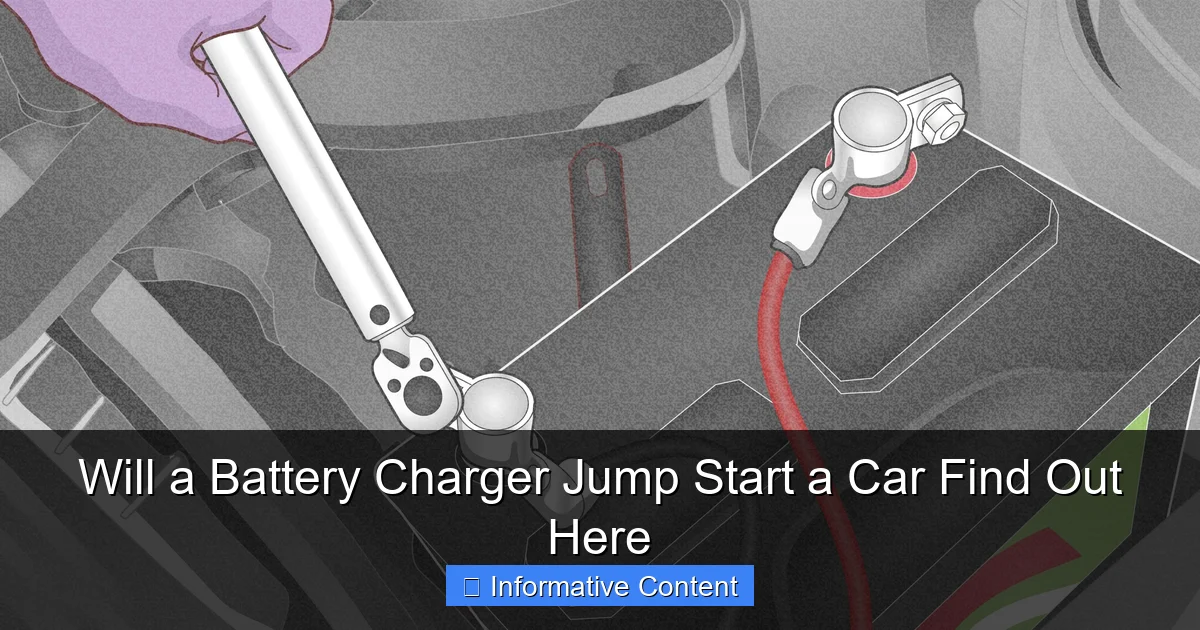
Visual guide about will a battery charger jump start a car
Image source: wikihow.com
The Role of the Car Battery
The car battery’s main job is to supply high-current power (measured in cold cranking amps, or CCA) to the starter motor. When you turn the key, the battery sends a jolt of electricity—often over 100 amps—to spin the engine fast enough to start combustion. This process is intense and drains the battery quickly. Once the engine is running, the alternator takes over, powering the car and recharging the battery.
Think of it like a sprinter: the battery is the explosive burst at the start, and the alternator is the long-distance runner keeping the pace going. If the sprinter is too weak, the race never begins.
Common Reasons for a Dead Battery
Batteries die for all sorts of reasons, and knowing why helps you choose the right solution:
- Leaving lights or electronics on – The classic mistake. Interior lights, radio, or phone chargers left on overnight can drain a battery in just a few hours.
- Short trips – If you only drive 5–10 minutes at a time, the alternator doesn’t have enough time to fully recharge the battery.
- Extreme temperatures – Cold weather slows chemical reactions in the battery, reducing its power. Heat, on the other hand, can damage internal components over time.
- Aging battery – Most car batteries last 3–5 years. As they age, their ability to hold a charge diminishes.
- Parasitic drain – Some systems (like clocks, alarms, or infotainment) draw small amounts of power even when the car is off. Over time, this can kill a battery if left unchecked.
I once had a car that wouldn’t start after sitting for just two days. Turned out, the glove compartment light was stuck on—tiny drain, big consequence. A fully charged battery might handle it once, but repeated incidents wear it down fast.
How Batteries Store and Deliver Power
A car battery is a lead-acid type, usually 12 volts. It stores energy chemically. When you need power, a chemical reaction between lead plates and sulfuric acid produces electricity. But this reaction takes time to build up—especially if the battery is low. That’s why a slow charger might restore a battery over 12–24 hours, but it won’t give you that instant burst needed to start the engine.
This is where the confusion starts: charging and jump starting are different things. Charging is like refueling a tank slowly. Jump starting is like giving it a massive energy boost all at once.
What’s the Difference Between a Battery Charger and a Jump Starter?
This is where most people get confused. You might see a device labeled “battery charger,” “jump starter,” or “charger/jump starter combo.” But not all do the same thing—and that’s crucial when you’re stranded with a dead battery. For a detailed comparison, check out our guide on jump starters vs. battery chargers.
Battery Charger: Slow and Steady
A traditional battery charger is designed to recharge a dead or low battery over time. It connects to the battery terminals (or sometimes to a 12V outlet) and applies a controlled current to restore the charge. Most chargers offer different modes:
- Trickle charge – Low current (0.5–2 amps) for slow, safe charging. Great for maintenance.
- Standard charge – Moderate current (4–10 amps). Takes 4–12 hours depending on battery condition.
- Fast charge – Higher current (10–20+ amps). Faster, but can damage a weak or sulfated battery if not monitored.
I used a 2-amp trickle charger to revive a classic car battery that had sat for months. It took two days, but it worked. However, it wouldn’t have helped me if I needed to drive to work the next morning.
The key point: Most battery chargers do NOT provide enough instantaneous power to start a car. They’re meant for recharging, not emergency starts.
Jump Starter: Instant Power When You Need It
A jump starter (also called a portable jump box or jump pack) is a battery-powered device that delivers a high burst of current—often 500–2000 amps—to crank the engine. Think of it like a portable, rechargeable battery with jumper cables built in.
Modern jump starters are compact, lightweight, and often include USB ports for charging phones, LED lights, and even air compressors. They’re designed for emergencies. You charge them ahead of time, keep them in your trunk, and when your car won’t start, you connect the clamps and hit the start button.
I keep a 1200-amp jump starter in my SUV. Last winter, my battery died in a parking garage at 6 a.m. I connected the jump starter, pressed the button, and the engine fired up in seconds. No waiting for roadside assistance or flagging down strangers.
Combo Units: The Best of Both Worlds?
Some devices are marketed as “charger/jump starter” combos. These usually have two functions:
- A built-in battery (like a jump starter) for emergency starts.
- A charging mode that can slowly recharge your car battery when connected to a power source.
These are great if you want a single tool for both maintenance and emergencies. But be careful: not all combo units deliver strong jump-starting power. Some prioritize charging and only offer 200–400 amps—enough for small cars, but not for trucks or SUVs.
For example, a 300-amp combo charger might jump start a compact sedan, but it could struggle with a V6 or diesel engine. Always check the peak amps rating before buying.
Can a Battery Charger Actually Jump Start a Car?
Now, to the million-dollar question: Will a battery charger jump start a car? The short answer: It depends.
Standard Chargers: Usually No
If you’re using a traditional, plug-in battery charger (like the kind that connects to a wall outlet), the answer is almost always no. These chargers are designed to supply low or moderate current over time. They lack the high instantaneous power needed to crank an engine.
Even if you set it to “fast charge,” it might take 30–60 minutes to deliver enough charge to start the car—and that’s if the battery isn’t deeply discharged or damaged. In an emergency, that’s not practical.
Here’s a real example: My neighbor once tried to jump start his truck with a 6-amp charger. He left it connected for 20 minutes, then tried the key. The engine turned over slowly, but wouldn’t fire. He ended up needing a real jump from a friend with jumper cables.
Smart Chargers with “Jump Start” Modes: Maybe
Some newer, “smart” battery chargers have a feature called “jump start mode” or “boost mode.” These are different from traditional charging. They use internal capacitors or a small built-in battery to deliver a short, high-current burst—similar to a jump starter.
For example, the NOCO Genius Boost series includes chargers with a “boost” button that delivers up to 1200 amps for a few seconds. These can jump start a car, but only if the battery isn’t completely dead or damaged. They’re more like hybrid tools than pure chargers.
So yes, some battery chargers can jump start a car—but only if they have this specific feature. Don’t assume all chargers do. Always read the specs.
Charging vs. Jump Starting: When Each Works Best
Let’s break it down:
- Use a standard battery charger when: Your battery is low but not dead, you’re at home or near an outlet, and you have time (hours) to wait. Great for maintenance or after a long trip.
- Use a jump starter when: You need to start the car now—no waiting, no outlet. Ideal for emergencies, roadside situations, or when you’re far from help.
- Use a smart charger with boost mode when: You want one device that can both maintain your battery and handle occasional jump starts. Best for DIYers who want versatility.
I keep both: a 10-amp smart charger in my garage for regular maintenance, and a portable 1200-amp jump starter in my car for emergencies. That way, I’m covered no matter what.
What to Look for in a Jump-Starting Battery Charger
If you’re considering a charger that can jump start your car, here’s what to focus on. Not all “jump-capable” chargers are created equal.
Peak Amps and Cranking Amps
These numbers tell you how powerful the device is:
- Peak amps – The maximum current the device can deliver in a short burst. Higher = better for larger engines.
- Cranking amps (CA) or cold cranking amps (CCA) – Measures starting power at 32°F (0°C) or 0°F (-18°C). Match this to your car’s requirements (usually listed in the owner’s manual).
For example, a compact car might need 400–600 CCA. A pickup truck or SUV could need 800+ CCA. A 500-amp jump starter might work for a sedan but fail on a V8.
Built-in Safety Features
Look for:
- Reverse polarity protection – Prevents damage if you connect the clamps wrong.
- Spark-proof clamps – Reduces risk of fire or explosion.
- Overcharge protection – Stops charging when the battery is full.
- Short-circuit protection – Prevents damage from accidental contact.
One time, I connected a cheap jump starter backwards (red to black). Sparks flew, but the device shut down automatically. I was grateful for that safety feature.
Portability and Power Source
Ask yourself:
- Will you keep it in your car? Then size and weight matter.
- Does it have a rechargeable battery? Most do, but some require an outlet to “recharge” the internal battery.
- Can it charge your phone or other devices? Bonus points for USB ports.
My favorite jump starter is about the size of a lunchbox, weighs 2.5 pounds, and has a 20,000 mAh battery. I can charge my phone twice and still have enough juice to jump start my car.
Smart Charging Modes
Advanced chargers can detect battery type (flooded, AGM, lithium), charge level, and temperature, then adjust the charging rate automatically. This prevents overcharging and extends battery life.
For example, my smart charger has a “repair” mode for sulfated batteries. It pulses the current to break up lead sulfate crystals—something a regular charger can’t do.
Real-World Example: Choosing the Right Tool
Let’s say you drive a 2020 Toyota RAV4 (4-cylinder, 12V battery). You want a device that can:
- Jump start the car in emergencies.
- Charge your phone.
- Maintain the battery when parked for long periods.
A 1000-amp smart charger/jump starter combo would be perfect. It has enough power for the RAV4, USB ports, and multiple charging modes. But if you drive a Ford F-150 with a V6, you’d need at least 1500 amps.
Step-by-Step: How to Use a Charger to Jump Start (Safely)
If you’re using a charger with jump-start capability, here’s how to do it right—without blowing anything up. For a more detailed guide on using a jump starter, see our step-by-step tutorial for beginners.
Step 1: Check the Charger and Battery
Ensure the charger is fully charged. Check the car battery for corrosion, cracks, or leaks. If the battery is damaged, don’t attempt to jump it—replace it.
Step 2: Connect the Clamps
Always follow this order:
- Connect the red (positive) clamp to the car battery’s positive terminal.
- Connect the black (negative) clamp to an unpainted metal surface (like a bolt or bracket) on the engine block. Never connect it directly to the battery’s negative terminal—this reduces spark risk.
Double-check the connections. A loose clamp can cause arcing or overheating.
Step 3: Activate Jump Start Mode
Turn on the charger and select the “jump start” or “boost” mode. Wait for the indicator light (usually green) to confirm it’s ready.
Step 4: Start the Car
Turn the key or press the start button. If the engine doesn’t start on the first try, wait 30 seconds before trying again. Don’t crank for more than 5–10 seconds at a time.
Step 5: Disconnect and Recharge
Once the car is running, disconnect the clamps in reverse order:
- Remove the black clamp.
- Remove the red clamp.
Recharge the jump starter as soon as possible. Most take 3–6 hours to recharge fully.
Pro Tip: What If It Doesn’t Work?
If the car still won’t start after a proper jump:
- The battery might be too far gone. It could have internal damage or a dead cell.
- The starter motor might be faulty.
- There could be a wiring or alternator issue.
Don’t keep trying. You could damage the charger or the car’s electrical system. Call for help or have the battery tested.
Data Table: Battery Charger vs. Jump Starter Comparison
| Feature | Standard Battery Charger | Portable Jump Starter | Smart Charger with Jump Mode |
|---|---|---|---|
| Jump Start Capability | No (or very limited) | Yes (high amps) | Yes (if equipped) |
| Charging Time | 2–24 hours | 3–12 hours (to recharge the jump starter) | 2–12 hours |
| Portability | Low (needs outlet) | High (battery-powered) | Medium (some need outlet) |
| Peak Amps | 5–20 amps (charging) | 500–2000+ amps | 200–1500 amps |
| Best For | Home use, battery maintenance | Roadside emergencies | Versatile home/car use |
| Price Range | $30–$100 | $50–$200 | $80–$250 |
Final Thoughts: So, Will a Battery Charger Jump Start a Car?
Let’s bring it all together. Will a battery charger jump start a car? The answer isn’t a simple yes or no—it depends on the type of charger.
If you’re using a standard plug-in charger, the answer is usually no. It’s built for slow recharging, not emergency starts. But if you have a smart charger with a jump-start or boost mode, or a portable jump starter, then yes—it absolutely can.
The key is understanding what you need: Do you want a tool for maintenance or for emergencies? Or both? I’ve learned the hard way that relying on a slow charger during a dead battery crisis is like trying to fill a swimming pool with a teaspoon. It just doesn’t work when you’re in a hurry.
My advice? Have both tools in your arsenal. Keep a reliable battery charger at home to maintain your battery and extend its life. And keep a high-quality jump starter in your car for those “uh-oh” moments. It’s a small investment that can save you time, stress, and towing fees.
And remember: no matter what tool you use, always prioritize safety. Check connections, follow the manual, and never ignore signs of a failing battery. Because the best jump start is the one you never need.
Frequently Asked Questions
Will a battery charger jump start a car in an emergency?
Most standard battery chargers are designed to slowly recharge a dead battery, not deliver the high burst of power needed to jump start a car. However, some modern smart chargers with a “boost” or “jump start” mode can safely provide enough cranking amps to start a vehicle. Always check your charger’s manual for jump-starting capabilities.
Can I use a battery charger instead of jumper cables?
While traditional battery chargers aren’t ideal for immediate jump starts, portable jump starters (often called battery boosters) with built-in chargers can replace jumper cables. These devices combine a charged battery pack with high cranking power, making them a reliable standalone solution for dead batteries.
What’s the difference between a battery charger and a jump starter?
A battery charger replenishes a battery’s charge over hours, while a jump starter delivers a high-current burst to crank the engine instantly. Some hybrid models, like a “battery charger jump starter,” offer both functions for versatility.
How long should I leave a battery charger connected to jump start my car?
If your charger has a jump-start function, follow the manufacturer’s instructions—typically 3-10 minutes of connection time. Standard chargers without this feature won’t jump start a car regardless of connection time; they’re meant for slow recharging only.
Is it safe to try to jump start a car with a regular battery charger?
Using a non-jump-start-capable charger can be risky, as it may not deliver the correct current type (DC vs. AC) or enough amperage. Stick to chargers explicitly labeled for jump starting or use a dedicated portable jump starter to avoid damaging your vehicle’s electrical system.
What should I look for in a battery charger to ensure it can jump start my car?
Look for a “battery charger jump starter” combo with at least 12V output, 1000+ peak amps, and safety features like reverse polarity protection. Compact lithium-ion jump starters with USB charging ports are also great for on-the-go emergencies.