
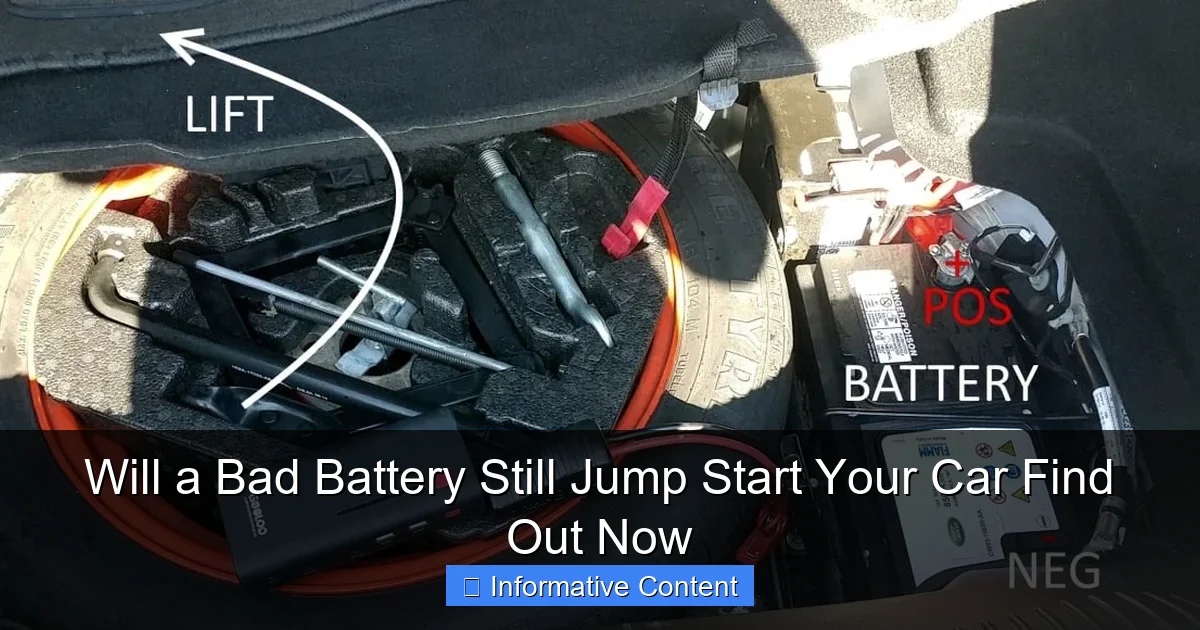
Featured image for will a bad battery still jump start
Image source: youcanic.com
A bad battery can still jump start your car if it has enough residual charge to engage the starter motor, but it’s not a reliable long-term fix. Jump-starting works by transferring power from a good battery, so even a failing one may respond—though repeated attempts risk stranding you or damaging the charging system. Always test and replace a bad battery promptly to avoid breakdowns.
Key Takeaways
- A weak battery can still jump start if it holds minimal charge and connections are clean.
- Jump starting isn’t a fix—replace a bad battery promptly to avoid repeated failures.
- Corroded terminals hinder jump starts—clean them thoroughly before attempting a jump.
- Repeated jump starts signal battery death—test or replace it immediately for reliability.
- Use quality jumper cables to ensure a safe, effective transfer of power.
- Alternator damage is a risk if you frequently jump start—address root causes fast.
📑 Table of Contents
- Will a Bad Battery Still Jump Start Your Car? Find Out Now
- Understanding What Makes a Battery “Bad”
- How to Safely and Effectively Jump a Bad Battery
- Data Table: Battery Voltage and What It Means
- Prevention and Maintenance: Avoiding the Need to Jump
Will a Bad Battery Still Jump Start Your Car? Find Out Now
Imagine this: you’re running late for work, your coffee hasn’t kicked in yet, and you hop into your car—only to hear that dreaded click… click… click when you turn the key. Your heart sinks. You know that sound all too well. It’s the sound of a weak or failing battery. But before you call a tow truck or start Googling mechanics near you, you might wonder: will a bad battery still jump start your car?
The short answer? Sometimes. But it’s not as simple as “yes” or “no.” A bad battery can still jump start, but whether it works depends on how bad the battery is, what caused the failure, and how you handle the jump. I’ve been there—stranded in a parking lot with a phone at 10% and no jumper cables. I learned the hard way that not all “bad” batteries are the same. Some are just drained; others are dead beyond repair. In this guide, we’ll break down exactly when a jump will work, when it won’t, and what you can do to avoid being stuck in the future. Whether you’re a new driver or a seasoned car owner, this info could save your morning—or your weekend.
Understanding What Makes a Battery “Bad”
Before we dive into whether a bad battery can be jump started, let’s get clear on what “bad” actually means. Not all battery problems are the same. Some are temporary, others are permanent. Knowing the difference helps you make smarter decisions when your car won’t start.
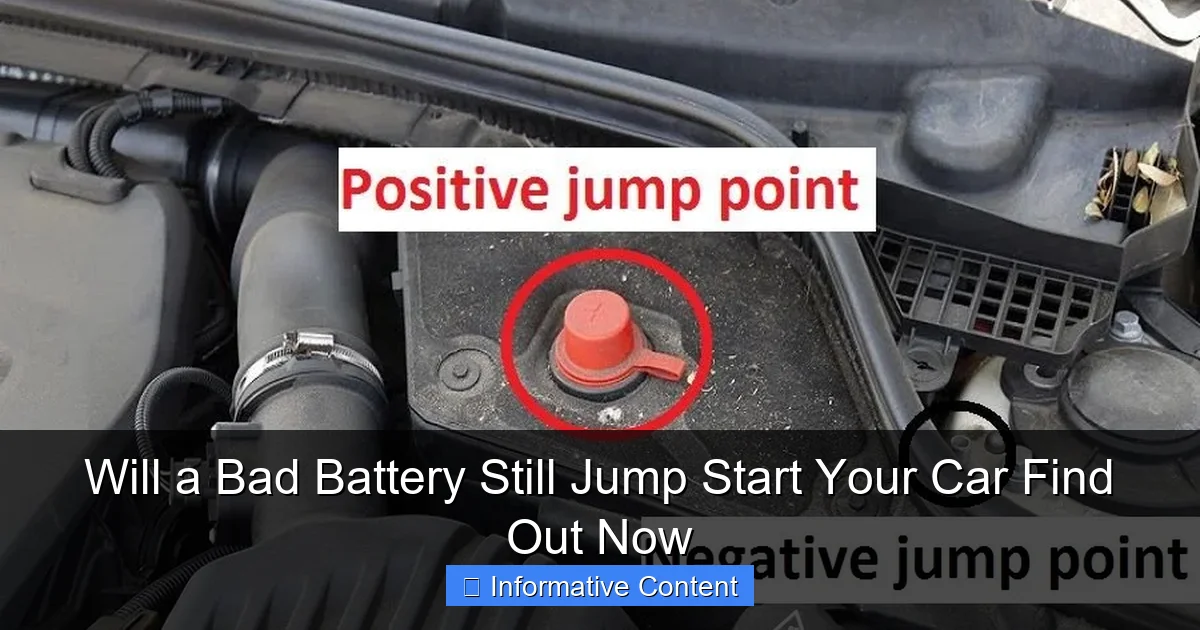
Visual guide about will a bad battery still jump start
Image source: cimg2.ibsrv.net
Types of Battery Failure
Battery issues generally fall into three main categories:
- Surface Discharge or Temporary Drain: This happens when you leave the lights on, the radio running, or a phone charger plugged in overnight. The battery isn’t broken—it’s just low on charge. These batteries often respond well to a jump.
- Internal Damage (Sulfation or Plate Corrosion): Over time, lead-acid batteries can develop sulfate crystals on the plates or corrode internally. This reduces capacity and makes recharging difficult. These batteries may jump start once or twice, but they won’t hold a charge long-term.
- Complete Failure (Shorted Cell or Open Circuit): A battery with a shorted cell (one cell is damaged and can’t hold voltage) or an open circuit (a break in the internal connection) is effectively dead. No amount of jumping will bring it back.
I once had a battery that would jump start fine—but died again within 15 minutes of driving. Turned out, it had a sulfated plate. The jump gave me enough power to start, but the battery couldn’t sustain the alternator’s charging. Lesson learned: a jump is a temporary fix, not a cure.
How to Tell What Kind of “Bad” You’re Dealing With
Here are some quick checks:
- Check the age: Most car batteries last 3–5 years. If yours is older, internal damage is likely.
- Look at the voltage: Use a multimeter. A fully charged battery reads 12.6–12.7 volts when the car is off. Below 12.4 volts is weak; below 12.0 is deeply discharged. If it’s below 10.5 volts after a jump, it may have a shorted cell.
- Listen for the starter: A strong “crank” after jumping suggests the battery is just drained. A slow, labored crank even after a jump points to internal damage.
Pro tip: If your battery is over 4 years old and has been jump started more than once, it’s probably time for a replacement—not just another jump.
When a Bad Battery Can Be Jump Started (And When It Works)
Yes, a bad battery can still jump start—but only under certain conditions. Think of a jump as giving your car a “second chance” to start. It’s like CPR for your engine. But if the heart (battery) is already too damaged, even CPR won’t help.
Batteries That Respond Well to Jumping
These are the scenarios where a jump is likely to work:
- Deep Discharge (e.g., left lights on): The battery is chemically intact but lacks charge. A jump delivers the initial surge needed to start the engine. Once the alternator kicks in, the battery can recharge—at least temporarily.
- Weak Cold-Weather Performance: Cold slows down the chemical reactions in a battery. A 3-year-old battery might struggle in winter but work fine in summer. A jump can help it “wake up” long enough to start.
- Intermittent Electrical Drain: Some cars have parasitic drains (e.g., from a faulty glovebox light). If the battery is otherwise healthy, a jump can get you going, and a mechanic can later find and fix the drain.
I had a friend who left his trunk open all night—light on, battery drained. We jumped it, and his car started right up. He drove to a shop, got a battery test, and it passed! No damage, just a low charge. A perfect example of a battery that just needed a boost.
How Long a Jump Might Last
Here’s the catch: even if the jump works, how long it lasts depends on the battery’s condition:
- Healthy battery, just drained: Can hold a charge after the alternator recharges it. You’re good for weeks or months.
- Moderately degraded battery: May start the car once or twice after a jump, but won’t hold charge well. You might get 1–2 days of driving before it dies again.
- Severely degraded or damaged battery: Might start the car, but the alternator can’t recharge it. The battery dies again within minutes or hours.
One winter, I helped a coworker jump his car. It started, but he only made it 10 minutes down the road before it died again. The alternator was working fine—the battery just couldn’t accept a charge. We jumped it again, and he drove straight to an auto shop. He replaced the battery that day.
Real-World Example: The “One-and-Done” Battery
Let’s say your car won’t start in the morning. You jump it, drive to work, and the car starts fine the next day. Great, right? Not so fast. If the battery is old or damaged, it might just be “one-and-done.” The alternator recharged it overnight, but the battery’s internal resistance is high. The next time you need a jump, it might not take. Always test the battery after a jump—don’t assume it’s fixed.
When a Bad Battery Cannot Be Jump Started (And Why)
Now, let’s talk about the times when jumping won’t work—no matter how many times you try. These are the red flags that your battery is beyond saving.
Physical or Internal Damage
If the battery is physically damaged or has internal issues, a jump is useless. Signs include:
- Bulging or cracked case: This means the battery has overheated or frozen. The internal plates may be warped or shorted.
- Leaking fluid: Acid leaks are dangerous and indicate a ruptured cell.
- Foul smell (like rotten eggs): This is sulfur gas, often from a shorted or overcharged battery.
- Zero voltage (below 8 volts): A multimeter reading below 8 volts usually means a shorted cell or open circuit.
I once saw a battery with a bulging side—it looked like it was about to explode. No way it was getting a jump. That car needed a new battery, not a boost.
Batteries with Shorted Cells
Lead-acid batteries have six cells (each producing ~2.1 volts). If one cell is shorted (e.g., due to a metal fragment bridging the plates), the battery voltage drops to ~10 volts (5 cells x 2 volts). A jump might give a momentary surge, but the shorted cell drains the power instantly. The car won’t start, or it starts and dies immediately.
Open Circuit Batteries
An open circuit means there’s a break in the internal connection—like a snapped wire inside. No current can flow. No matter how much power you feed it from another car, the electricity can’t reach the starter. You’ll see zero voltage across the terminals, even when connected to a jump.
Alternator or Charging System Issues
Here’s a common mix-up: people blame the battery when the real problem is the alternator. If the alternator isn’t charging, the battery will drain—even if it’s brand new. But if you jump a car with a bad alternator, it might start… and then die again as soon as the jumper cables are removed. The battery can’t recharge without a working alternator.
Tip: After a jump, let the engine run for 10–15 minutes. Then, turn it off and try to restart. If it starts easily, the alternator is likely charging. If it’s weak or won’t start, the alternator may be the real culprit.
How to Safely and Effectively Jump a Bad Battery
Jumping a car isn’t rocket science, but doing it wrong can be dangerous. Sparks, acid burns, or even explosions are real risks. Here’s how to do it safely—and increase your chances of success.
Step-by-Step Jump Start Guide
- Park the cars close, but not touching: Align them so the jumper cables can reach both batteries easily. Turn off both engines.
- Turn off all accessories: Lights, radio, AC, phone chargers. This reduces the load on the battery during the jump.
- Connect the cables in order:
- Red (+) to the dead battery’s positive terminal
- Red (+) to the good battery’s positive terminal
- Black (-) to the good battery’s negative terminal
- Black (-) to an unpainted metal surface on the dead car (e.g., engine block or bracket)—not the dead battery’s negative terminal. This reduces sparking near the battery.
- Start the working car: Let it run for 2–3 minutes to charge the dead battery.
- Try to start the dead car: If it doesn’t start, wait another minute and try again. Don’t crank for more than 5–10 seconds at a time—let the starter cool between tries.
- Disconnect in reverse order: Remove the black (-) from the dead car first, then the black from the good car, then the reds. Never let the clamps touch each other or any metal.
- Let the jumped car run: Drive for at least 20–30 minutes to let the alternator recharge the battery.
Common Mistakes to Avoid
- Connecting to the dead battery’s negative terminal: This can cause sparks near the battery, risking explosion. Always use a ground point.
- Jumping a frozen battery: If the battery case is bulging or the electrolyte is slushy, don’t jump it. It could explode. Let it thaw first.
- Using damaged cables: Frayed or corroded cables can’t deliver enough power. Inspect them regularly.
- Leaving the car in gear: Make sure the jumped car is in “Park” (automatic) or “Neutral” (manual) with the parking brake on.
Pro Tips for Success
- Rev the donor car’s engine to 2,000 RPM: This increases alternator output, helping charge the dead battery faster.
- Use a portable jump starter: Portable jump starters are safer and don’t require another car. Great for emergencies.
- Check connections: Clean any corrosion from the terminals with a wire brush before connecting.
I keep a portable jump starter in my trunk. It’s saved me twice—once when my battery died in a remote parking lot, and once when I accidentally left my headlights on. No waiting for help, no risk of sparks. Highly recommend.
Data Table: Battery Voltage and What It Means
| Battery Voltage (Engine Off) | State of Charge | Can It Be Jump Started? | Recommended Action |
|---|---|---|---|
| 12.6–12.7V | 100% charged | Yes (if starter works) | Check starter or ignition system |
| 12.4–12.5V | 75% charged | Yes | Jump and drive to recharge |
| 12.1–12.3V | 50% charged | Likely | Jump, then test battery |
| 11.8–12.0V | 25% charged | Possible | Jump, but expect quick failure |
| Below 11.8V | Discharged | Unlikely (if below 10.5V, probably not) | Jump only if no other option; replace battery |
| Below 10.5V | Shorted or dead | No | Replace battery immediately |
| 0V | Open circuit | No | Replace battery |
This table is your quick-reference guide. Always test your battery after a jump. If it’s below 12.4V when the engine is off, it’s likely not holding a charge—time for a new one.
Prevention and Maintenance: Avoiding the Need to Jump
The best jump start is the one you never need. With a little care, you can keep your battery healthy and avoid being stranded.
Regular Maintenance Tips
- Test your battery annually: Most auto shops offer free battery tests. Do it before winter and summer—extreme temps are hard on batteries.
- Clean terminals: Corrosion (white/green crust) reduces conductivity. Clean with baking soda and water, then coat with dielectric grease.
- Drive regularly: Short trips don’t give the alternator enough time to recharge the battery. Take a 20-minute drive once a week if your car sits a lot.
- Check for parasitic drains: If your car sits unused for days and dies, there may be a constant power draw. A mechanic can test this with an ammeter.
Smart Habits to Extend Battery Life
- Turn off lights and accessories: Make it a habit to double-check before leaving the car.
- Use a battery tender: If you have a classic car or don’t drive often, a trickle charger keeps the battery topped off.
- Park in a garage or shade: Heat is a battery killer. Parking in shade can add months to its life.
- Upgrade to AGM (Absorbent Glass Mat): AGM batteries handle cold better and last longer than standard lead-acid. Worth it if you live in a cold climate.
When to Replace—Not Jump
Here’s the golden rule: if your battery is over 4 years old and has been jump started more than once, replace it. It’s not a matter of if it will fail again—it’s when. Spending $100–$200 now can save you from being stranded later.
I replaced my battery at 4.5 years old after two winter jumps. It wasn’t cheap, but it was peace of mind. Six months later, a coworker’s 5-year-old battery died on a snowy night. He ended up paying for a tow and a new battery—costing twice as much in the long run.
So, will a bad battery still jump start your car? Yes—sometimes. But it’s not a long-term solution. A jump is a temporary rescue, not a repair. If your battery is just drained, a jump can get you back on the road. But if it’s damaged, old, or failing internally, a jump might buy you minutes, not miles.
The key is knowing the difference. Test your battery, check its age, and don’t ignore the warning signs. A jump can be a lifesaver, but it’s no substitute for a healthy battery. Keep jumper cables or a portable starter in your car, stay informed, and treat your battery with care. Because the last thing you want is to be that person stranded in a parking lot, phone dying, wondering why the jump didn’t work.
Stay safe, stay charged, and drive smart.
Frequently Asked Questions
Will a bad battery still jump start my car?
Yes, a bad battery can often still jump start your car if it has enough residual charge to engage the starter motor. However, if the battery is completely dead or severely degraded, a jump may not work, and replacement might be necessary. For more details on choosing the right equipment, see our guide on the best jump starters for 2026.
Can a jump starter fix a bad battery permanently?
No, a jump starter only provides a temporary solution to start your car. A bad battery won’t hold a charge long-term and will likely need replacement soon to avoid future breakdowns.
Why won’t my car start even after a jump with a bad battery?
If your car still won’t start after a jump, the battery may be too far gone or there could be other issues like a faulty alternator or starter. A professional diagnostic is recommended to identify the root cause.
How many times can you jump start a bad battery?
You can typically jump start a bad battery a few times, but repeated attempts may damage the battery or electrical system. If it fails to hold a charge after 1-2 jumps, replace it immediately.
Is it safe to jump start a car with a visibly damaged battery?
No, jump starting a cracked, leaking, or swollen battery is unsafe and could cause fires or acid leaks. Replace the battery instead of attempting a jump start in such cases.
Does a bad battery affect how well the jump starter works?
Yes, a severely degraded battery may draw excessive current from the jump starter, reducing its effectiveness or draining the jumper pack quickly. Always check the battery’s condition before relying on a jump.