
Featured image for why will my car not start with jumper cables
Image source: thumbs.dreamstime.com
Dead or damaged batteries aren’t the only culprits when your car won’t start with jumper cables—faulty connections, corroded terminals, or a failing alternator can prevent a successful jump. Even with proper cables and a good donor battery, underlying electrical or mechanical issues like a bad starter, blown fuse, or parasitic drain may block ignition, demanding professional diagnosis beyond a simple jumpstart.
Key Takeaways
- Check connections first: Ensure jumper cables are securely attached to both batteries.
- Dead battery beyond jump: Replace if battery is old or damaged.
- Faulty alternator: Test alternator if the car dies after jump-starting.
- Corroded terminals: Clean terminals for proper electrical contact.
- Starter motor issues: Listen for clicks; may need replacement.
- Bad ground connection: Verify clean, metal-to-metal grounding points.
📑 Table of Contents
- Why Will My Car Not Start With Jumper Cables Here Are the Reasons
- The Battery Isn’t the Real Issue (Even If It Seems Like It)
- Faulty Connections or Poor Jumping Technique
- Starter Motor Failure: The Hidden Culprit
- Alternator Problems: The Silent Saboteur
- Ignition System or Fuel Delivery Issues
- Other Hidden Causes and When to Call a Pro
- Quick Reference: Common Causes & Solutions
Why Will My Car Not Start With Jumper Cables Here Are the Reasons
We’ve all been there. You’re running late, you hop in your car, turn the key, and nothing happens. The engine just won’t turn over. Your first instinct? grab the jumper cables. You connect them to a working car, wait a few minutes, and try again. But still—nothing. It’s frustrating, confusing, and honestly, a little scary. Why will my car not start with jumper cables? You did everything “right,” but the engine stays silent.
It’s easy to blame the battery or assume the cables are faulty, but the truth is, several underlying issues could prevent your car from starting—even with a jump. The good news? Most of these problems are fixable, and many don’t require a mechanic. In this post, I’ll walk you through the most common reasons your car won’t start with jumper cables, what you can do about them, and how to avoid being stranded again. Whether you’re a new driver or a seasoned car owner, this guide will help you diagnose the problem and get back on the road—safely and confidently.
The Battery Isn’t the Real Issue (Even If It Seems Like It)
When your car won’t start, the battery is the first suspect. After all, it’s what powers the starter motor, the lights, and the ignition system. But here’s the thing: jumper cables deliver power to the battery, not directly to the starter. So if the battery is completely dead, a jump should help. But if the battery is *too* damaged or has an internal fault, even a strong jump won’t save it.
Visual guide about why will my car not start with jumper cables
Image source: m.media-amazon.com
Dead vs. Damaged Battery: Know the Difference
A dead battery simply means it’s drained and needs a recharge. A *damaged* battery, on the other hand, has internal issues like sulfation, cracked plates, or a short circuit. These problems prevent it from holding a charge—even with jumper cables connected. Think of it like a water bottle with a hole in it. No matter how much water you pour in, it won’t fill up.
For example, I once had a car that wouldn’t start after sitting for two weeks. I jumped it, and the engine cranked—but died as soon as I disconnected the cables. That’s a classic sign of a damaged battery. It can’t store energy. The jump gives it a temporary boost, but without a functional battery, the car can’t sustain operation.
Signs Your Battery Is Beyond Repair
- The car starts with a jump but dies immediately after disconnecting the cables
- The battery is over 4–5 years old (average lifespan)
- Corrosion is severe around the terminals
- You hear a clicking sound when turning the key, but no cranking
- The battery case is bloated or leaking
Pro tip: If you’ve jumped your car successfully before but now it won’t hold a charge, it’s time to replace the battery. A quick voltage test with a multimeter (12.6V when off, 13.5–14.5V when running) can confirm if it’s still usable. If it reads below 12V after a jump, it’s likely toast.
Jumper Cables Can’t Fix a Bad Cell
Even if your battery isn’t visibly damaged, one bad cell can ruin the whole thing. A 12V battery has six cells. If one fails, the voltage drops, and the battery can’t deliver enough power to the starter. Jumper cables can’t “heal” a bad cell—they only provide external power. So if the battery is internally compromised, no amount of jumping will help long-term.
Faulty Connections or Poor Jumping Technique
You’d be surprised how often jumper cables fail—not because of the battery or the car, but because of *how* they’re used. A poor connection, reversed polarity, or incorrect sequence can prevent the jump from working, even if everything else is fine.
Common Mistakes When Using Jumper Cables
- Dirty or corroded terminals: If the battery posts are caked in white or green crust, electricity can’t flow properly. Clean them with a wire brush before connecting.
- Loose clamps: If the clamps wiggle or don’t grip tightly, the connection is weak. A poor connection means less power transfer.
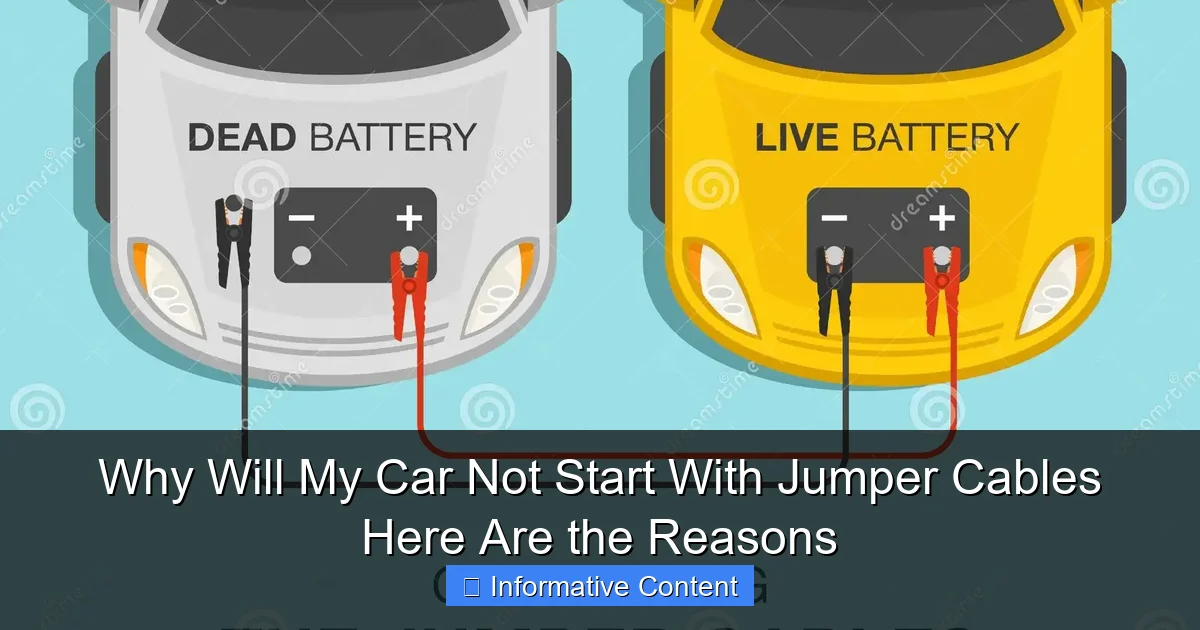
- Wrong connection order: Always connect red to dead battery first, then red to donor battery, black to donor battery, and black to a grounded metal point on the *dead* car (not the battery). This prevents sparks near the battery, which can cause explosions.
- Reversed polarity: Connecting red to black and vice versa can fry the car’s electrical system. Double-check before turning anything on.
One time, I helped a friend jump their car, but it wouldn’t start. After checking, I noticed the black clamp was connected directly to the dead battery’s negative terminal instead of a metal bracket. That small mistake created a spark near the battery and limited the current flow. We reconnected it properly, and it started right up.
Why Grounding Matters
The final black clamp should go to an unpainted metal surface—like a bolt, bracket, or engine block—on the *dead* car. This acts as a ground, completing the circuit safely. If you connect it to the battery’s negative terminal, hydrogen gas around the battery could ignite from a spark. It’s a rare risk, but why take the chance?
Cable Quality Makes a Difference
Not all jumper cables are created equal. Thin, low-gauge cables (like 10 or 8 gauge) can’t carry enough current for larger engines. For most cars, 4 or 6-gauge cables are ideal. Thicker cables reduce resistance and deliver more power. I keep a 4-gauge set in my trunk—it’s saved me (and others) more than once.
Starter Motor Failure: The Hidden Culprit
Here’s a twist: even with a strong battery and perfect jump, your car won’t start if the starter motor is broken. The starter is the electric motor that turns the engine over. If it’s faulty, no amount of power from jumper cables will make it crank.
How to Tell If It’s the Starter
Listen carefully when you turn the key. If you hear a single loud click but nothing else, it’s likely the starter. The solenoid (the part that engages the starter gear) is getting power, but the motor isn’t turning. This often means worn brushes, a bad armature, or internal electrical failure.
Another clue: if the dashboard lights come on but the engine doesn’t crank, the issue is probably not the battery. The battery is powering the electronics, but the starter isn’t responding.
Real-World Example: The Click That Never Cranks
A few years ago, my sister’s car wouldn’t start. We jumped it, lights came on, but all we heard was “click.” We tried tapping the starter with a wrench (a temporary fix for worn brushes) while someone turned the key. It worked once, then failed again. That told us the starter was on its last legs. Replacing it solved the problem.
Can You Jump-Start a Car with a Bad Starter?
Technically, no. Jumper cables deliver power to the battery, which then sends it to the starter. If the starter is dead, it won’t respond—no matter how much power you give it. However, in rare cases, a weak starter might work *just enough* with a strong jump. But if it fails consistently, replacement is the only real fix.
DIY Check: Test the Starter Signal
You can check if the starter is getting power with a test light or multimeter. Have someone turn the key while you probe the starter’s main terminal. If it lights up, the signal is there—but the starter isn’t responding. That points to a bad starter, not the battery or cables.
Alternator Problems: The Silent Saboteur
The alternator is your car’s onboard generator. It recharges the battery while the engine runs and powers the electrical system. If it fails, the battery will drain quickly—even if you just replaced it. And here’s the kicker: a bad alternator won’t prevent a jump start, but it *will* cause the car to die soon after.
Why a Jump Might Work—Temporarily
When you jump a car with a bad alternator, the donor battery provides enough power to start the engine. But once the cables are disconnected, the dead alternator can’t recharge the battery. The car runs on battery power alone, which lasts only 15–30 minutes before the battery drains completely.
This is a classic case of “why will my car not start with jumper cables?” It *does* start—but only because the donor battery is still connected. As soon as you disconnect, the car dies.
Signs of a Failing Alternator
- Dim or flickering headlights
- Battery warning light on the dashboard
- Electrical issues (windows slow, radio cuts out)
- Car starts with a jump but dies shortly after
- Burning smell or strange noises from under the hood
I once helped a coworker jump his car. It started fine, but died 10 minutes later on the highway. We jumped it again, and the same thing happened. A quick voltage check while running showed only 11.8V—far below the normal 13.5–14.5V. That confirmed a bad alternator. We drove straight to a shop.
How to Test the Alternator
Use a multimeter to check the voltage across the battery terminals while the engine is running. If it’s below 13V, the alternator isn’t charging. If it’s above 15V, it’s overcharging (also a problem). Either way, the alternator needs attention.
Ignition System or Fuel Delivery Issues
Sometimes, the problem isn’t electrical at all. Your car might have a healthy battery, perfect connections, and a working starter—but if the engine isn’t getting fuel or spark, it won’t start. These issues won’t respond to jumper cables because they’re unrelated to power supply.
No Spark? No Start
The ignition system creates the spark that ignites the fuel-air mixture in the engine. If the spark plugs, ignition coils, or distributor are faulty, there’s no combustion. The engine cranks (thanks to the jump), but never starts.
For example, a friend’s car cranked fine with a jump but wouldn’t fire. We checked the spark plugs—they were fouled with carbon. After cleaning them, the car started immediately.
Fuel Pump or Filter Problems
If the fuel pump isn’t working or the filter is clogged, fuel can’t reach the engine. You’ll hear the starter turning, but the engine won’t catch. A quick test: turn the key to “on” (without starting) and listen for a humming sound from the fuel tank. If you don’t hear it, the pump might be dead.
Common Ignition and Fuel Issues
- Faulty spark plugs: Worn or dirty plugs can’t generate a strong spark
- Bad ignition coil: The coil boosts battery voltage to create a spark. If it fails, no spark
- Clogged fuel filter: Restricts fuel flow, especially under load
- Failing fuel pump: Weak pumps can’t deliver enough pressure
- Crankshaft position sensor failure: Tells the computer when to fire the spark. If it’s broken, the engine won’t start
Tip: If the engine cranks but doesn’t start, try spraying starter fluid into the air intake. If it fires briefly, you’ve got a fuel problem. If it does nothing, it’s likely an ignition or sensor issue.
Other Hidden Causes and When to Call a Pro
Not every no-start issue fits neatly into a category. Sometimes, the problem is more complex—or just plain weird.
Computer or Security System Glitches
Modern cars have immobilizer systems that prevent starting without the correct key. If the key fob battery is dead or the system glitches, the car won’t start—even with a jump. Try using the physical key (if your car has one) or replacing the fob battery.
Blown Fuses or Relays
A blown fuse in the starter circuit or fuel pump relay can stop the car from starting. Check the fuse box under the hood or dashboard. Look for blackened or broken filaments. Replace any suspect fuses with the correct amperage.
Engine Seizure (Rare but Possible)
If the engine has seized (due to overheating, lack of oil, or mechanical failure), it won’t turn over at all. No amount of jumping will help. You’ll hear the starter spin, but the engine won’t budge. This usually requires major engine work.
When to Walk Away and Call for Help
- You’ve checked the battery, connections, and tried multiple jumps with no success
- The car cranks but won’t fire, and you’ve ruled out fuel and spark
- There’s a burning smell, smoke, or strange noises
- You’re in an unsafe location (like a busy highway)
Remember: jumper cables are a tool, not a miracle fix. If the underlying issue is beyond your skill level, it’s okay to call a tow truck. Your safety comes first.
Quick Reference: Common Causes & Solutions
| Issue | Signs | Solution |
|---|---|---|
| Damaged Battery | Starts with jump but dies, old battery, low voltage | Replace battery |
| Poor Connections | Loose clamps, corrosion, reversed polarity | Clean terminals, re-clamp properly |
| Bad Starter | Clicking sound, no cranking | Tap starter, replace if needed |
| Failing Alternator | Car dies after jump, dim lights, low voltage | Replace alternator |
| Ignition/Fuel Issue | Cranks but won’t fire, no spark, no fuel smell | Check spark plugs, fuel pump, fuses |
| Immobilizer Glitch | Key not recognized, dashboard warning | Use physical key, replace fob battery |
At the end of the day, asking “why will my car not start with jumper cables” is a sign you’re trying to solve the problem—and that’s great. But remember: jumper cables are just one piece of the puzzle. By understanding the common causes—from battery health to starter function and beyond—you’ll be better equipped to diagnose the real issue and avoid future surprises.
Keep your jumper cables in good condition, know how to use them safely, and don’t ignore warning signs like slow cranking or dim lights. And when in doubt, don’t hesitate to get professional help. Your car—and your peace of mind—are worth it.
Frequently Asked Questions
Why will my car not start with jumper cables even when connected properly?
If your car won’t start with jumper cables despite correct connections, the issue might be a completely dead battery, corroded terminals, or a faulty alternator. Ensure the cables are securely attached to clean metal surfaces and the donor battery has sufficient charge.
Can jumper cables themselves prevent a car from starting?
Yes, damaged or low-quality jumper cables with thin wires or loose clamps can fail to deliver enough power to jumpstart your car. Always use thick, heavy-duty cables (4-6 gauge) for reliable performance.
Why won’t my car start after jumpstarting, and the battery seems fine?
A working battery but failure to start could point to a bad starter motor, ignition switch, or fuel system issues. The jumper cables bypassed the battery but didn’t address these deeper mechanical or electrical problems.
What if my car cranks but won’t start with jumper cables attached?
Cranking indicates the battery and cables are functional, but the engine may lack spark, fuel, or proper air intake. Check for issues like a clogged fuel filter, faulty spark plugs, or a malfunctioning fuel pump.
Could a parasitic drain be why my car won’t start even with jumper cables?
Yes, a parasitic electrical drain (e.g., a glovebox light or faulty module) can deplete the battery overnight, making jumpstarting fail. Use a multimeter to test for excessive current draw when the car is off.
Why do my jumper cables get hot but the car still won’t start?
Overheating cables suggest high resistance due to poor connections, undersized cables, or a severely discharged battery. Reconnect all clamps to clean metal, or the battery may need replacement if it can’t hold a charge.