
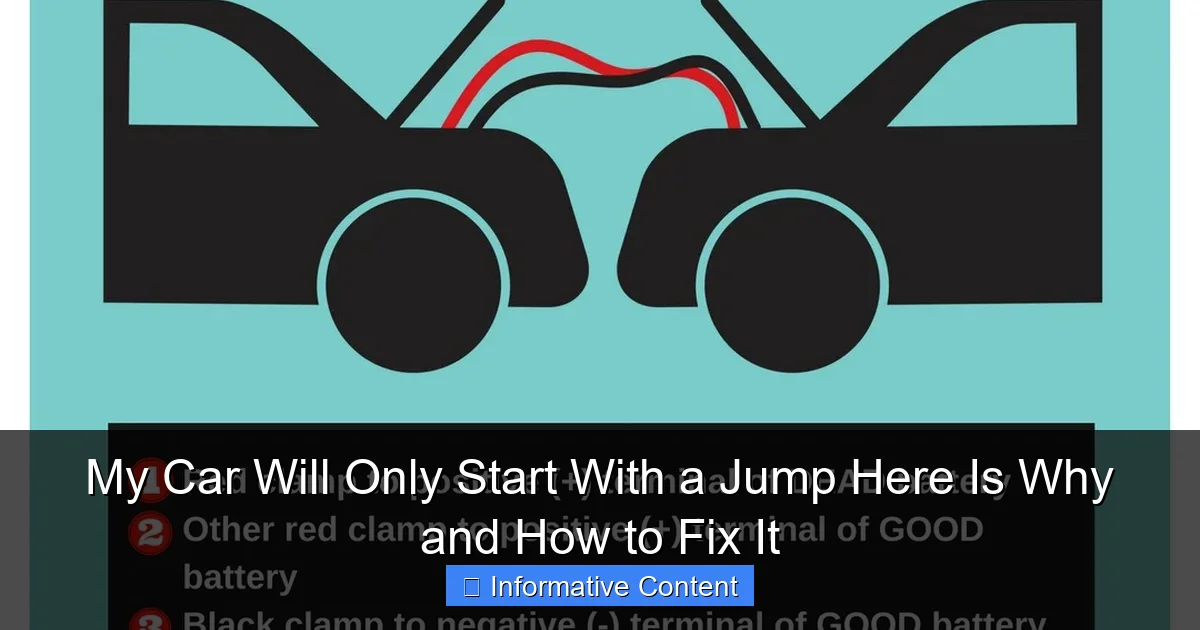
Featured image for my car will only start with a jump
Image source: nationaldispatch.com
If your car will only start with a jump, the culprit is often a dead or failing battery, corroded terminals, or a faulty charging system. Ignoring the issue risks being stranded—so test the battery voltage, inspect connections, and check the alternator’s output to pinpoint the root cause. Quick fixes like cleaning terminals or replacing the battery can restore reliability, but persistent problems demand professional diagnosis.
Key Takeaways
- Check battery health first: Test voltage and replace if below 12.4V.
- Inspect terminals and cables: Clean corrosion and tighten loose connections.
- Rule out alternator failure: Test charging output; replace if faulty.
- Prevent parasitic drains: Unplug devices and check for aftermarket accessories.
- Jump-start safely: Use correct jumper cable order to avoid damage.
- Consult a mechanic: Seek professional help for persistent electrical issues.
📑 Table of Contents
- My Car Will Only Start With a Jump – Here Is Why and How to Fix It
- Understanding the Basics: How Your Car’s Starting System Works
- Top 5 Reasons Why Your Car Will Only Start With a Jump
- How to Diagnose the Problem Step by Step
- DIY Fixes and When to Call a Mechanic
- Real-World Examples and Lessons Learned
- Data Table: Common Causes and Fixes
- Final Thoughts: Don’t Ignore the Warning Signs
My Car Will Only Start With a Jump – Here Is Why and How to Fix It
Picture this: It’s early morning, the coffee hasn’t kicked in yet, and you’re rushing to work. You slide into your car, turn the key, and… nothing. Just a faint click or silence. But when a neighbor pulls up with jumper cables, your car springs to life like nothing’s wrong. Sound familiar? If your car will only start with a jump, you’re not alone. This frustrating issue plagues drivers everywhere, especially in colder months or after long weekends of inactivity. But here’s the good news: it’s usually fixable, and you don’t need to be a mechanic to understand why it’s happening.
Let’s be honest – no one enjoys the awkward shuffle of asking strangers for a jump start. It’s inconvenient, embarrassing, and sometimes dangerous. But the real problem isn’t the jump itself; it’s what the jump is hiding. Your car is giving you a warning sign. Think of it like a smoke alarm – it’s not the alarm that’s the issue, it’s the fire behind it. In this post, we’ll break down the most common reasons why your car will only start with a jump, how to diagnose the root cause, and what steps you can take to fix it – all without needing to spend a fortune at the mechanic. Whether you’re a DIY enthusiast or just want to understand what’s going on under the hood, this guide has you covered.
Understanding the Basics: How Your Car’s Starting System Works
Before we dive into fixes, let’s get on the same page about how your car actually starts. When you turn the key (or press the start button), your car relies on a chain reaction between three key components: the battery, the starter motor, and the alternator. If any one of these is weak, damaged, or not communicating properly, your car won’t start – at least not on its own.
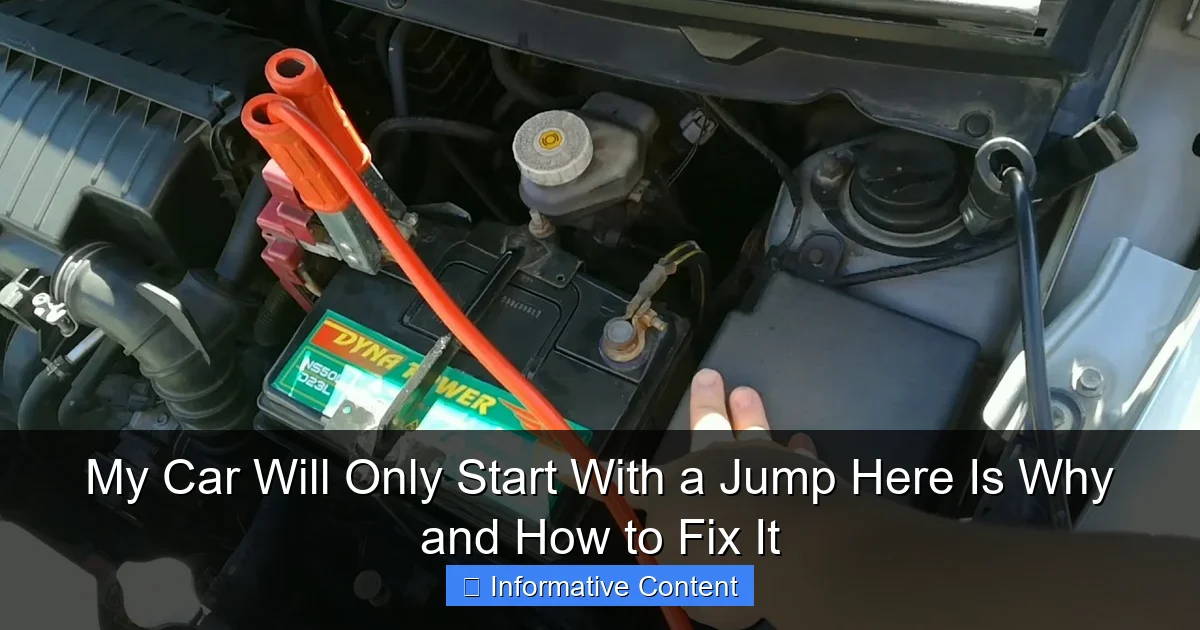
Visual guide about my car will only start with a jump
Image source: i.ytimg.com
The Role of the Battery
The battery is your car’s power reservoir. It stores electrical energy and delivers a high burst of power to the starter motor when you turn the key. A healthy 12-volt car battery should read around 12.6 volts when the engine is off. When you jump-start your car, you’re essentially bypassing a weak or dead battery with an external power source. If your car only starts with a jump, the battery is often the first suspect – but not always the culprit.
The Starter Motor: The Muscle Behind Ignition
The starter motor is what physically turns the engine over. It’s a powerful electric motor connected to the engine’s flywheel. When you start your car, the battery sends power to the starter, which spins the engine until the combustion process takes over. If the starter is failing, you might hear a clicking sound when you turn the key – but no cranking. However, if a jump start makes it work, the issue is likely not the starter itself, but the power supply (i.e., the battery or connections).
The Alternator: Keeping the Battery Charged
Once your engine is running, the alternator takes over. It generates electricity to power the car’s systems and recharge the battery. If the alternator is failing, your battery won’t get enough charge, even if it’s new. This leads to a slow drain over time – and eventually, your car will only start with a jump. Think of the alternator as your car’s personal power plant. If it’s not working, the battery runs out of juice, no matter how often you drive.
Common Symptoms That Point to the Problem
- Slow cranking: The engine turns over sluggishly, like it’s struggling.
- Clicking sound: A single or rapid click when you turn the key – often a sign of low battery or a bad starter connection.
- Interior lights dimming: When you try to start the car, the dome lights or dashboard lights dim significantly.
- Car starts fine after a jump, but dies after a short drive: This usually points to an alternator issue.
- Car starts only after sitting for a few hours: A classic sign of a weak battery or parasitic drain.
Top 5 Reasons Why Your Car Will Only Start With a Jump
Now that you understand the system, let’s look at the five most common reasons your car needs a jump start – and how to tell them apart.
1. Weak or Dead Battery
This is the most common cause. Car batteries typically last 3 to 5 years. Over time, the internal plates degrade, and the battery can’t hold a charge. Extreme temperatures – both hot and cold – accelerate this process. A battery that’s just “old” might still show voltage, but it can’t deliver the high current needed to start the engine.
Signs: Slow cranking, dim lights, jump start works every time, battery warning light on the dashboard (sometimes).
Tip: If your battery is over 3 years old and you’ve had jump starts before, it’s likely time for a replacement. You can test this at most auto parts stores for free.
2. Corroded or Loose Battery Connections
Even a healthy battery can’t deliver power if the cables are corroded, loose, or damaged. Corrosion (a white or greenish crust) builds up on the terminals and acts like an insulator, blocking the flow of electricity. Loose cables wiggle and create poor contact, leading to voltage drops.
Signs: Jump start works, but the car runs fine once started. You might see visible corrosion on the terminals.
Tip: Disconnect the battery (negative first, then positive), clean the terminals with a wire brush and baking soda/water solution, and tighten the connections. Reconnect (positive first, then negative). This fix costs almost nothing and takes 15 minutes.
3. Failing Alternator
If your alternator isn’t charging the battery properly, it will slowly drain, even if you drive regularly. This is why your car might start fine in the morning but need a jump after a short drive. The alternator should produce 13.5 to 14.5 volts when the engine is running.
Signs: Battery warning light on, car dies after a short drive, jump start only works temporarily, headlights dim when idling.
Tip: Use a multimeter to check voltage at the battery with the engine off (should be ~12.6V) and with the engine running (should be 13.5–14.5V). If the running voltage is low, the alternator is likely the problem.
4. Parasitic Drain
Parasitic drain happens when something in your car continues to draw power from the battery when the engine is off. Common culprits include a malfunctioning glove box light, aftermarket stereo, alarm system, or even a stuck trunk light. A normal drain is under 50 milliamps (mA), but a faulty component can draw several hundred mA – enough to kill the battery overnight.
Signs: Car starts fine after a jump but dies after sitting for 24–48 hours. Battery is new and connections are clean.
Tip: Use a multimeter to measure current draw. Disconnect the negative terminal and place the meter in series. If the draw is over 50 mA, start pulling fuses one by one until the draw drops. The circuit that fixes the issue is the culprit.
5. Bad Starter or Ignition Switch
While less common, a failing starter motor or ignition switch can mimic battery issues. A bad starter might click but not crank – but if a jump start gives it enough power to work, the real issue is likely the battery or connections. However, a faulty ignition switch can prevent power from reaching the starter, even with a good battery.
Signs: Clicking sound, no cranking, jump start sometimes works (but not always), intermittent starting issues.
Tip: If you’ve ruled out the battery, connections, and alternator, have a mechanic check the starter and ignition switch. These are harder to diagnose and usually require professional tools.
How to Diagnose the Problem Step by Step
You don’t need to guess. With a few basic tools and a methodical approach, you can pinpoint the issue yourself. Here’s how:
Step 1: Check the Battery Voltage
Use a multimeter (under $20 at any hardware store) to measure the battery voltage with the engine off. A reading of:
- 12.6V or higher: Battery is fully charged.
- 12.4V: ~50% charged – may need a charge.
- Below 12.0V: Severely discharged – likely needs replacement.
Pro tip: Turn on the headlights for a few minutes before testing to “load” the battery. A weak battery might show 12.6V at rest but drop below 10V under load.
Step 2: Inspect the Battery Terminals and Cables
Pop the hood and look at the battery terminals. Are they corroded, loose, or damaged? Wiggle the cables – they should be snug. Clean any corrosion with a wire brush and baking soda/water mix. Reconnect and tighten.
Step 3: Test the Alternator
With the engine running, measure the voltage at the battery. It should be 13.5–14.5V. If it’s below 13.5V, the alternator isn’t charging. If it’s above 15V, the voltage regulator is faulty (which can damage the battery).
Step 4: Check for Parasitic Drain
Set your multimeter to measure current (amps). Disconnect the negative battery terminal. Connect the meter between the terminal and the cable (in series). Wait 10–15 minutes for all systems to sleep. A draw over 50 mA is abnormal. Pull fuses one by one to find the circuit causing the drain.
Step 5: Listen and Observe
Turn the key and listen:
- Click, click, click: Low battery or bad connection.
- Single click, no cranking: Bad starter or solenoid.
- Slow cranking: Weak battery or starter.
- Fast cranking but no start: Fuel or ignition issue (not battery-related).
Step 6: Jump and Monitor
If a jump start works, drive the car for 20–30 minutes to recharge the battery. Then, turn the car off and try starting it again without a jump. If it starts, the battery or alternator is likely the issue. If it doesn’t, the battery may be too far gone to hold a charge.
DIY Fixes and When to Call a Mechanic
Not every fix requires a trip to the shop. Here’s what you can do yourself – and when it’s time to seek professional help.
DIY Fixes You Can Try Today
- Clean the battery terminals: A 10-minute job with a wire brush and baking soda. Prevents 30% of jump-start issues.
- Charge the battery: Use a battery charger overnight. A trickle charger (2–4 amps) is safest for older batteries.
- Replace the battery: Most auto parts stores will install it for free. Just bring your old battery for recycling.
- Tighten loose cables: Use a wrench to secure the terminals. No tools? A zip tie can work in a pinch.
- Check fuses: A blown fuse in the charging system can mimic alternator failure. Check your owner’s manual for the correct fuse box location.
When to Call a Mechanic
Some issues require specialized tools and expertise:
- Alternator replacement: Requires removing belts and brackets. Risk of improper installation.
- Starter replacement: Often buried in tight spaces. Labor costs can exceed $300.
- Parasitic drain diagnosis: If you can’t find the source after pulling fuses, a mechanic has better diagnostic tools.
- Wiring issues: Frayed or damaged cables can be hard to spot and dangerous to fix.
Tip: If you’re unsure, get a second opinion. Many shops offer free electrical system checks. Just don’t let them upsell you on unnecessary repairs.
Preventive Maintenance Tips
- Drive regularly: Short trips don’t fully charge the battery. Take a 20-minute drive once a week.
- Turn off accessories: Don’t leave lights, radio, or phone chargers on when the engine is off.
- Check battery age: Write the purchase date on the battery. Replace it every 4–5 years.
- Keep terminals clean: Inspect them every oil change.
- Use a battery tender: If you store your car for long periods, a smart charger keeps the battery at optimal charge.
Real-World Examples and Lessons Learned
Let’s look at a few real-life scenarios to see how these fixes play out.
Case 1: The Weekend Warrior
Problem: Sarah’s car wouldn’t start after sitting for 3 days. It needed a jump every time.
Diagnosis: Clean terminals – no help. Voltage test: 11.8V (weak). Alternator test: 13.2V (low). Parasitic drain: 120 mA (high).
Solution: Pulled fuses. The trunk light fuse caused the drain – the bulb was stuck on. Replaced the bulb, and the car started normally. Battery was still weak, so she replaced it.
Lesson: Even a small drain can kill a battery over time.
Case 2: The Cold Snap
Problem: Mark’s car only started with a jump in winter. It worked fine in summer.
Diagnosis: Battery was 4 years old. Cold weather reduces battery capacity by 30–50%. A jump gave it enough power to start.
Solution: Replaced the battery. No more issues, even at -20°F.
Lesson: Cold weather exposes weak batteries.
Case 3: The Hidden Alternator Issue
Problem: Lisa’s car started with a jump, but died after 10 minutes of driving.
Diagnosis: Alternator output was only 12.8V. The battery wasn’t charging.
Solution: Replaced the alternator. Car started fine without a jump afterward.
Lesson: A jump start only masks the real problem.
Data Table: Common Causes and Fixes
| Issue | Key Symptoms | Quick Fix | Cost Estimate (DIY) | When to Call a Mechanic |
|---|---|---|---|---|
| Weak Battery | Slow cranking, jump works | Replace battery | $100–$200 | Battery is under 3 years old (check warranty) |
| Corroded Terminals | Visible crust, jump works | Clean terminals | $0–$10 | Cables are damaged or frayed |
| Failing Alternator | Car dies after driving, battery light on | Replace alternator | $200–$400 | You’re not comfortable with belt removal |
| Parasitic Drain | Car dies after sitting, battery new | Find and fix the drain | $0–$50 | Can’t locate the source after testing |
| Bad Starter | Clicking, no cranking | Replace starter | $200–$300 | Starter is hard to access |
Final Thoughts: Don’t Ignore the Warning Signs
If your car will only start with a jump, don’t just keep jumping it and hoping for the best. That’s like putting a band-aid on a broken bone. The underlying issue will only get worse – and could leave you stranded at the worst possible time. Whether it’s a $10 cleaning job or a $400 alternator replacement, fixing the root cause is always cheaper and safer than dealing with a breakdown on the side of the road.
Remember: Your car is trying to tell you something. A jump start is a temporary fix, not a solution. By understanding the basics of your starting system, diagnosing the problem step by step, and taking action, you can save time, money, and a lot of stress. And the next time your car starts on the first try – no cables, no drama – you’ll know exactly why.
So, the next time you’re tempted to just grab the jumper cables, pause for a second. Pop the hood, check the terminals, test the voltage, and ask yourself: “Is this a quick fix, or a deeper issue?” Your car – and your wallet – will thank you.
Frequently Asked Questions
Why does my car will only start with a jump?
If your car will only start with a jump, it’s often due to a weak or dead battery, corroded terminals, or a failing alternator. These issues prevent the battery from holding a charge, leaving your vehicle reliant on external power to start.
Can a bad alternator cause my car to only start with a jump?
Yes, a faulty alternator may fail to recharge the battery while driving, causing the battery to drain completely. This leads to a situation where your car will only start with a jump because the battery lacks sufficient voltage.
How do I know if my battery or starter is the problem?
If your car clicks but won’t turn over even after a jump, the starter may be faulty. However, if it starts smoothly with a jump but dies later, the issue is likely the battery or alternator.
Is it safe to keep jump-starting my car?
Repeated jump-starting can damage electrical components or even cause battery explosions in extreme cases. It’s best to diagnose and fix the root cause—like a failing battery or alternator—instead of relying on jumps long-term.
What are common signs my car will only start with a jump soon?
Warning signs include dim headlights, slow cranking, or needing frequent jumps. If your car will only start with a jump after sitting overnight, it’s time to test the battery and charging system.
How much does it cost to fix a car that needs a jump to start?
Costs vary: a battery replacement ($100–$300) is cheaper than an alternator repair ($300–$800). Diagnosing the issue early can save money and prevent further damage to your vehicle.