
Featured image for my car will not start even with jumper cables
Image source: images-na.ssl-images-amazon.com
If your car won’t start even with jumper cables, the issue likely goes beyond a dead battery—common culprits include a faulty starter, corroded connections, or a failing alternator. Jumper cables can’t fix mechanical or electrical failures, so check for signs like clicking noises, dim lights, or a swollen battery. Diagnosing these underlying problems early can save you time, money, and a tow truck.
Key Takeaways
- Check battery connections: Clean and tighten corroded or loose terminals before jumping.
- Test the battery: A dead or damaged battery may need replacement, not just a jump.
- Inspect the alternator: A faulty alternator can prevent proper charging and starting.
- Verify starter function: Listen for clicking sounds indicating starter motor issues.
- Evaluate fuel system: Ensure fuel pump and injectors are delivering fuel properly.
- Scan for error codes: Use an OBD-II scanner to diagnose hidden electrical problems.
📑 Table of Contents
- Why Your Car Won’t Start Even With Jumper Cables – And What to Do About It
- 1. The Battery Isn’t the Only Problem (Even With Jumper Cables)
- 2. The Starter Motor Might Be the Real Issue
- 3. Ignition System Problems Can Block the Spark
- 4. Fuel System Failures Can Starve the Engine
- 5. Engine Mechanical Problems: When the Car Can’t Turn Over
- Quick Reference: Common Causes & Fixes
- Final Thoughts: Don’t Panic—You’ve Got This
Why Your Car Won’t Start Even With Jumper Cables – And What to Do About It
You’re late for work, it’s freezing outside, and your car won’t start—again. You grab the jumper cables, call a neighbor, and after a few tense minutes of connecting batteries, you turn the key. Nothing. Not even a click. Your heart sinks. You’ve done this before, and it worked. But this time, my car will not start even with jumper cables. Sound familiar?
It’s a frustrating, sometimes scary situation that many drivers face. You did everything “right”—connected the cables properly, waited, tried again—but still, silence. The good news? You’re not alone. And the even better news? It’s usually not the end of the road for your car. The issue often lies deeper than a dead battery. In this post, we’ll walk through the most common reasons your car won’t start even with jumper cables, what you can check yourself, and when it’s time to call a pro. Think of this as your friendly mechanic’s guide—no jargon, no scare tactics, just real talk about what’s going on under the hood.
1. The Battery Isn’t the Only Problem (Even With Jumper Cables)
When your car won’t start, the first thought is always the battery. But here’s the reality: jumper cables only help if the battery is the *only* issue. If something else is broken, no amount of juice from another car will fix it. Let’s break down why your car might still be unresponsive—even with a full charge.
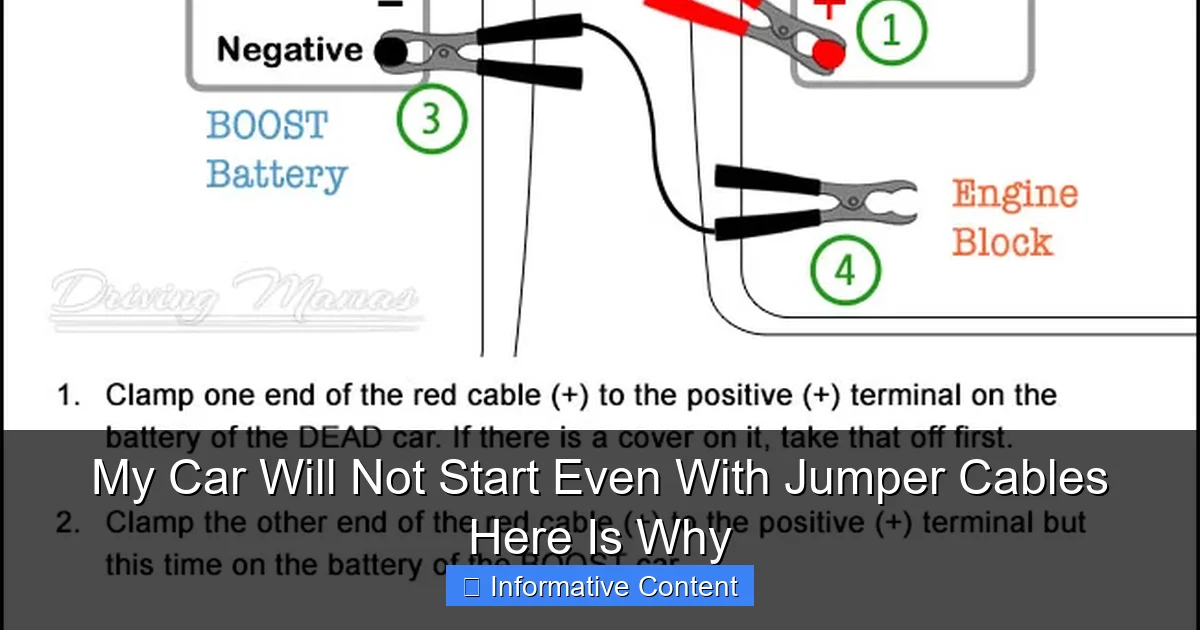
Visual guide about my car will not start even with jumper cables
Image source: cookiesandclogs.com
Jumper Cables Can’t Fix a Dead or Damaged Battery
Yes, jumper cables deliver power—but only if the battery is still functional. Think of it like trying to charge a phone with a cracked battery. Even with a perfect charger, the battery can’t hold the energy.
A battery that’s physically damaged, leaking, or has internal corrosion won’t accept or store a charge. Over time, sulfation (a buildup of lead sulfate crystals) can permanently reduce capacity. If your battery is more than 3–5 years old, this could be the culprit.
Tip: Check for visible signs of damage: bulging case, acid leaks, or a rotten egg smell. If you see any of these, skip the cables—replace the battery.
Loose or Corroded Connections Block the Flow
Even with jumper cables connected, power won’t reach the starter if the terminals are corroded or loose. Corrosion (that white, green, or blue crust) acts like insulation, blocking electricity.
I once helped a friend jump-start her SUV. We connected the cables perfectly, but nothing happened. When I checked the terminals, they were so corroded you couldn’t even see the metal. After cleaning them with baking soda and water, the car started on the first try.
Quick fix: Turn off both cars. Disconnect the cables. Scrub terminals with a wire brush and a paste of baking soda and water. Dry, reconnect, and try again.
Jumper Cables Themselves Can Be Faulty
It’s easy to overlook, but old or damaged jumper cables can fail. Thin, frayed wires or poor clamps won’t deliver enough current. I keep a set in my trunk that’s 10 years old—and it once failed me on a rainy night. The cables looked fine, but the internal wires were corroded.
Pro tip: Test your cables with a multimeter if you’re unsure. Or, better yet, invest in a set with 4–6 gauge wires—they’re thicker and more reliable.
2. The Starter Motor Might Be the Real Issue
If the battery and cables are fine, the problem might be the starter motor. This little device is the heart of your ignition system. When you turn the key, it uses a burst of electricity to crank the engine. No starter = no start—even with a full battery.
What a Failing Starter Sounds Like
Listen closely when you turn the key. Do you hear:
- One loud click? That’s often the starter solenoid engaging, but the motor isn’t turning.
- Rapid clicking? Could mean low voltage—but if jumper cables don’t help, it might be a weak starter.
- Grinding noise? The starter gear isn’t meshing with the flywheel. This can damage both parts.
- Silence? No click at all? Could be a bad starter, ignition switch, or wiring.
I once had a Honda that clicked once and died. Jumper cables didn’t help. A mechanic tapped the starter with a wrench (yes, really), and it started. That trick sometimes frees a stuck starter—but it’s temporary.
Starter Motor Failure: Common Causes
Starters fail for several reasons:
- Wear and tear: Starters last 7–10 years on average. If your car is older, it’s due for a replacement.
- Moisture damage: Water can corrode internal components, especially in older models.
- Electrical faults: Bad relays, fuses, or wiring can prevent power from reaching the starter.
- Faulty solenoid: This part engages the starter. If it’s broken, the motor won’t turn.
DIY check: Have a friend turn the key while you tap the starter (with a rubber mallet or long tool). If the car starts, the starter is likely failing. But don’t rely on this—replace it soon.
When to Replace vs. Repair
Some starters can be rebuilt, but most modern ones are replaced as a unit. A new starter costs $200–$500, plus labor. If your car is older and the starter is original, replacement is usually the best option. A rebuilt unit might save money, but it’s a gamble.
3. Ignition System Problems Can Block the Spark
Even if the engine cranks, your car won’t start without a proper ignition system. This includes the ignition switch, starter relay, and related wiring. If any part fails, the starter won’t get the signal—or the power—to turn.
The Ignition Switch: The First Link in the Chain
The ignition switch sends power to the starter when you turn the key. If it’s faulty, nothing happens. Common signs:
- Dashboard lights flicker or don’t come on.
- Accessories (radio, windows) don’t work.
- Car dies suddenly while driving (rare but dangerous).
I had a Ford Focus where the key wouldn’t turn at all. The switch was seized. A locksmith lubed the cylinder, and it worked—until it failed completely a month later. Replacing the switch fixed it.
Starter Relay and Fuses: The Hidden Gatekeepers
The starter relay is a small box that controls high current to the starter. If it’s bad, no power flows—even with jumper cables. Fuses can also blow, cutting off the circuit.
How to check:
- Locate the relay (check your owner’s manual or fuse box cover).
- Swap it with a similar relay (e.g., horn or headlight relay) to test.
- If the car starts, the relay is bad.
- Check the fuse with a multimeter or visual inspection (look for a broken wire inside).
Relays cost $10–$30. Fuses are $1–$5. Easy fixes, but often overlooked.
Wiring and Ground Issues: The Silent Killers
Bad wiring or poor ground connections can prevent the starter from getting power. Look for:
- Frayed or corroded wires near the battery or starter.
- Loose ground straps (usually from battery to engine block or chassis).
- Burnt or melted insulation (sign of a short).
Pro tip: Check the ground strap by wiggling it. If it’s loose, tighten the bolt. A multimeter can test continuity between the battery negative and engine block.
4. Fuel System Failures Can Starve the Engine
Here’s a surprise: even if the engine cranks, it won’t start without fuel. The fuel system includes the pump, filter, injectors, and pressure regulator. If any part fails, no fuel reaches the engine—and jumper cables can’t fix that.
The Fuel Pump: The Engine’s Lifeline
The fuel pump delivers gasoline from the tank to the engine. When it fails, you’ll often hear:
- No humming sound when you turn the key (listen near the fuel tank).
- Engine cranks but won’t fire.
- Car starts, then dies after a few seconds.
I once had a Chevy Malibu that cranked fine with jumper cables but wouldn’t start. The fuel pump was silent. A mechanic confirmed it was dead. A new pump fixed it—but the repair cost $600. Ouch.
Clogged Fuel Filter or Injectors
A clogged filter restricts fuel flow. Dirty injectors don’t spray properly. Both can cause hard starts or no start.
Signs:
- Rough idle or stalling.
- Loss of power under load.
- Engine cranks but won’t start after sitting.
Fuel filters should be replaced every 30,000–60,000 miles. Injectors can be cleaned with fuel additives (like Techron) or professionally serviced.
Fuel Pressure Regulator Issues
This part maintains proper pressure in the fuel rail. If it fails, pressure drops—or spikes. Symptoms:
- Black smoke from exhaust (too much fuel).
- Hard starts or no start.
- Fuel smell in the engine bay.
A mechanic can test pressure with a gauge. Replacement costs $100–$300.
5. Engine Mechanical Problems: When the Car Can’t Turn Over
If the engine won’t crank at all—even with jumper cables—the problem might be mechanical. These are serious issues, but they’re less common.
Seized Engine: The Worst-Case Scenario
A seized engine means the pistons can’t move. Causes:
- Low oil (or no oil) leading to overheating and metal-on-metal contact.
- Water in the cylinders (hydrolock).
- Severe internal damage (e.g., broken timing belt).
Signs:
- Engine won’t turn when you try to crank it.
- You can’t rotate the crankshaft by hand (use a socket wrench).
- Knocking or grinding noises.
This is a major repair—or a total loss. If your engine is seized, consult a mechanic ASAP.
Timing Belt or Chain Failure
The timing belt/chain synchronizes the engine’s valves and pistons. If it breaks, the engine won’t run. In interference engines, pistons hit valves—causing catastrophic damage.
Signs:
- No start, even with good battery and starter.
- Loud clattering noise when cranking.
- Check engine light with codes like P0340 (camshaft sensor).
Timing belts should be replaced every 60,000–100,000 miles. Chains last longer but can still fail.
Hydrolock: When Water Gets in the Engine
Driving through deep water can suck water into the intake, filling a cylinder. Water doesn’t compress, so the engine can’t turn.
What to do: Don’t try to start the car. Have it towed. A mechanic can check for hydrolock and drain the cylinders if caught early.
Quick Reference: Common Causes & Fixes
Here’s a handy table to help you diagnose the issue:
| Symptom | Likely Cause | Quick Fix | When to Call a Pro |
|---|---|---|---|
| No click, no crank | Dead battery, bad starter, ignition switch | Clean terminals, check cables, tap starter | If tapping doesn’t work or lights are off |
| One click, no crank | Failing starter | Tap starter gently | If tapping doesn’t start the car |
| Rapid clicking | Low voltage or bad battery | Check connections, try better cables | If jumper cables don’t help |
| Cranks but won’t start | Fuel pump, filter, or injectors | Listen for fuel pump hum | If no fuel pump sound or engine sputters |
| Engine won’t turn | Seized engine, hydrolock | Don’t try to start | Immediately—tow the car |
| Dashboard lights off | Ignition switch, blown fuse | Check fuses, wiggle key | If accessories don’t work |
Final Thoughts: Don’t Panic—You’ve Got This
So, my car will not start even with jumper cables—but that doesn’t mean it’s the end. Most of the time, the issue is fixable. Start with the basics: check connections, test the starter, listen for the fuel pump. Use the table above as your guide.
Remember: jumper cables are a tool, not a cure-all. They help with battery issues—but not starter failure, fuel problems, or mechanical damage. If you’ve tried the simple fixes and still nothing, don’t keep cranking the engine. You could damage the starter or battery further.
And here’s a final tip: keep a portable jump starter in your trunk. It’s cheaper than a tow, and you don’t need another car. Plus, many have USB ports, flashlights, and air compressors—bonus!
Car troubles are stressful, but they’re part of driving. The key is to stay calm, check the simple things first, and know when to call for help. You’ve got this. And next time your car won’t start, you’ll know exactly what to check—before the panic sets in.
Frequently Asked Questions
Why won’t my car start even with jumper cables?
If your car won’t start even with jumper cables, the issue may extend beyond a dead battery. Possible causes include a faulty starter, alternator problems, or corroded/loose connections preventing proper current flow.
Can jumper cables fail to start a car with a completely dead battery?
Yes, jumper cables can fail if the donor battery is weak, cables are damaged, or connections are poor. Even with “my car will not start even with jumper cables,” check cable integrity and terminal cleanliness.
What are signs the starter is bad when using jumper cables?
If you hear a clicking sound but the engine doesn’t crank—even with jumper cables—it likely indicates a bad starter. Dim headlights during the attempt also suggest insufficient power reaching the starter.
Could a bad alternator prevent a car from starting with jumper cables?
Yes, a failing alternator won’t charge the battery, so even jumper cables may not help long-term. If the car dies after jump-starting, the alternator is a prime suspect.
How do I troubleshoot “my car will not start even with jumper cables”?
First, clean battery terminals and ensure tight connections. Then test the battery voltage and inspect the starter/alternator. Professional diagnostics may be needed if issues persist.
Is it safe to keep trying jumper cables if the car won’t start?
Repeated attempts can damage electrical systems. Limit tries to 3–4, and if the car still won’t start, investigate deeper issues like fuel supply, ignition, or internal engine faults.