
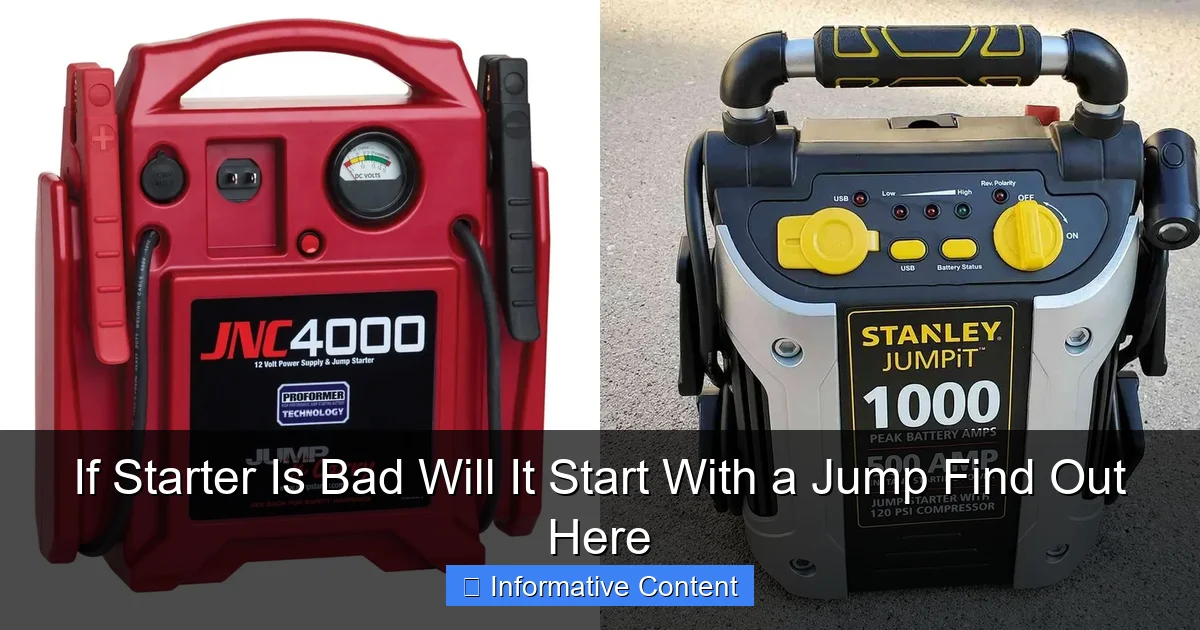
Featured image for if starter is bad will it start with a jump
Image source: everstartjumpstarter.com
A bad starter often prevents a car from starting, even with a jump. While a jump provides temporary power to the battery, it won’t fix a faulty starter that fails to engage the engine. If the starter is the root issue, you’ll hear clicking or no crank—time for a replacement, not a recharge.
Key Takeaways
- A bad starter often fails to engage even with a jump, requiring immediate inspection.
- Jump-starting may work temporarily if the starter motor has partial functionality left.
- Listen for clicking sounds—a clear sign of starter failure needing replacement.
- Check battery and connections first to rule out simpler issues before testing the starter.
- Repeated jump-starts risk damage to alternator and electrical system—act quickly.
- Professional diagnosis is crucial to confirm starter failure and avoid misdiagnosis.
📑 Table of Contents
- What Happens When Your Starter Fails? The Jump-Start Dilemma
- Understanding the Starter Motor and Its Role
- Jump-Starting Basics: When It Works and When It Doesn’t
- Signs Your Starter Is Bad (And Not Just the Battery)
- Can You Jump-Start a Car with a Bad Starter? The Truth
- Alternatives to Jump-Starting a Bad Starter
- Preventing Starter Problems: Maintenance Tips
- Conclusion: The Final Verdict on Jump-Starting a Bad Starter
What Happens When Your Starter Fails? The Jump-Start Dilemma
Picture this: you’re running late for an important meeting, and as you turn the key in your car’s ignition, all you hear is a faint click—or worse, nothing at all. Your heart sinks. The starter motor, that tiny but mighty component responsible for bringing your engine to life, has seemingly given up. Now, the million-dollar question arises: If starter is bad will it start with a jump? It’s a scenario many of us have faced or will face, and the answer isn’t always straightforward. Let’s dive into the mechanics, myths, and realities of jump-starting a car with a faulty starter.
Jump-starting a car is a common fix for dead batteries, but when the starter itself is the culprit, the solution isn’t so simple. Many drivers assume that a jump-start will solve any starting issue, but this isn’t always the case. Understanding the difference between a dead battery and a failing starter can save you time, frustration, and unnecessary expenses. In this guide, we’ll explore whether a jump-start can revive your car when the starter is bad, what signs to watch for, and how to troubleshoot the problem effectively. Whether you’re a seasoned driver or a new car owner, this information could be the key to getting back on the road.
Understanding the Starter Motor and Its Role
How the Starter Motor Works
The starter motor is a small but powerful electric motor that cranks the engine to initiate combustion. When you turn the key or press the start button, a signal is sent to the starter solenoid, which connects the battery to the starter motor. The motor then spins the flywheel, which turns the crankshaft and gets the pistons moving. Without a functioning starter, your engine simply won’t turn over, no matter how much fuel or spark you have.
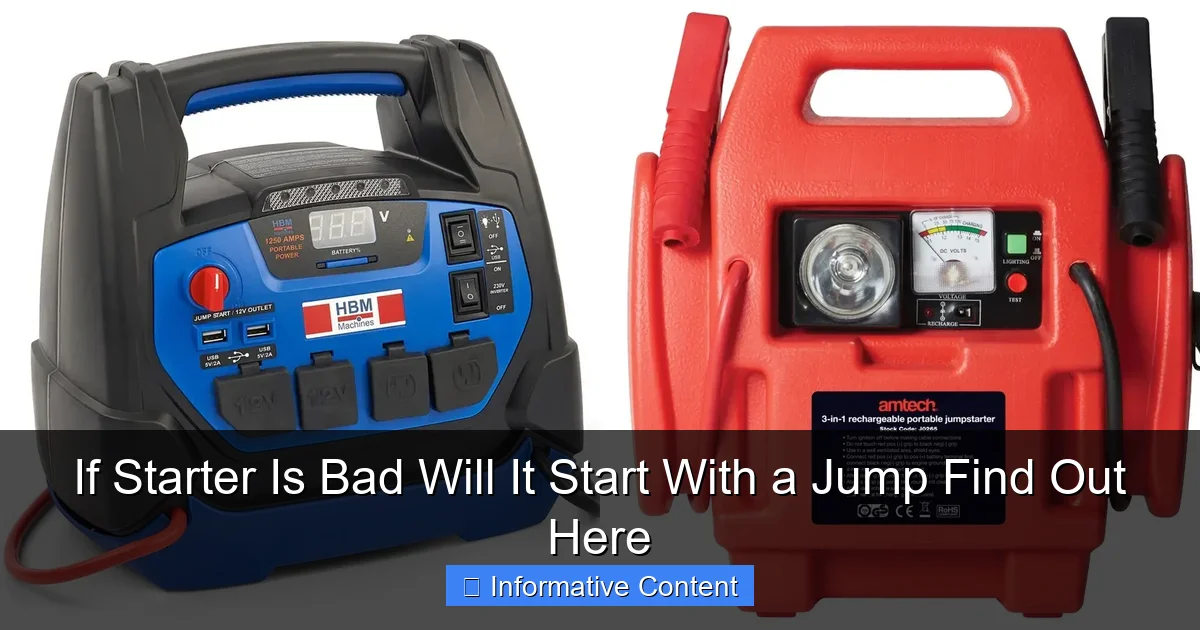
Visual guide about if starter is bad will it start with a jump
Image source: everstartjumpstarter.com
Think of the starter motor as the “first push” your engine needs to start running on its own. It’s a one-time action, but it’s critical. If the starter fails, the engine remains stationary, and no amount of battery power can compensate for this mechanical shortfall. This is why a jump-start won’t always work if the starter is the root cause of the problem.
Common Causes of Starter Failure
Starter motors can fail for various reasons, and understanding these can help you diagnose the issue. Here are some of the most common causes:
- Wear and Tear: Over time, the internal components of the starter motor, such as the brushes and armature, can wear out, reducing its ability to generate enough torque.
- Electrical Issues: Corroded wiring, loose connections, or a faulty solenoid can prevent the starter from receiving the necessary current.
- Heat Damage: Excessive heat from the engine bay can warp or damage starter components, especially if the motor is located near exhaust manifolds.
- Faulty Ignition Switch: Sometimes, the problem isn’t the starter itself but the switch that sends the signal to engage it.
- Foreign Debris: Dirt or moisture can interfere with the starter’s operation, particularly in older vehicles.
For example, I once had a friend whose car wouldn’t start, and we spent an hour trying to jump-start it. It turned out the starter solenoid was corroded, preventing the motor from engaging. A jump-start couldn’t fix that—only a replacement solenoid could.
Jump-Starting Basics: When It Works and When It Doesn’t
How Jump-Starting Works
Jump-starting a car involves using another vehicle’s battery (or a portable jump starter) to provide a temporary boost of electrical power. The process works by connecting the dead battery to a live one via jumper cables, allowing the good battery to “donate” enough charge to turn the starter motor. This is effective when the battery is the problem—say, it’s drained from leaving the lights on overnight.
The key here is that jump-starting only addresses battery-related issues. If the starter motor itself is damaged or malfunctioning, the extra power won’t make a difference. The starter still needs to function mechanically to crank the engine.
Why Jump-Starting Fails with a Bad Starter
Imagine trying to start a campfire with wet matches. No matter how many matches you use, they won’t ignite the fire. Similarly, a jump-start provides more “matches” (electrical current), but if the starter motor is the “wet match,” it won’t spark the engine. Here’s why:
- Mechanical Failure: If the starter’s gears or motor are broken, no amount of electricity can make it turn the flywheel.
- Solenoid Issues: The solenoid acts as a bridge between the battery and starter. If it’s faulty, the current won’t reach the motor, even with a jump.
- Internal Shorts: A short circuit within the starter can prevent it from drawing power properly, rendering the jump useless.
A practical example: my neighbor once tried to jump-start his truck, only to hear a loud click but no cranking. After a mechanic inspected it, they found the starter’s armature had seized. The jump couldn’t overcome this physical blockage—only a replacement starter could.
Signs Your Starter Is Bad (And Not Just the Battery)
Diagnosing Starter Problems vs. Battery Issues
Before assuming the starter is bad, it’s essential to rule out a dead battery. Here’s how to tell the difference:
- Clicking Noise: A single or repeated click when turning the key often points to a weak battery or faulty starter. If the battery is fully charged (confirmed with a multimeter), the starter is likely the culprit.
- No Sound at All: If you turn the key and hear nothing, the issue could be the battery, starter, or ignition switch. Check the battery first.
- Grinding Noise: A loud grinding sound usually means the starter gear isn’t meshing properly with the flywheel—a sign of starter wear.
- Smoke or Burning Smell: If you smell something burning after attempting to start, the starter motor may be overheating due to a short circuit.
- Dashboard Lights Flicker: If lights dim significantly when trying to start, the battery is likely weak. If they stay bright but the engine doesn’t crank, the starter is probably the issue.
Practical Troubleshooting Steps
To avoid misdiagnosis, follow these steps:
- Check the Battery: Use a multimeter to measure the battery voltage. A healthy battery should read around 12.6 volts when the car is off and 13.5–14.5 volts when running.
- Inspect the Connections: Look for corrosion or looseness on the battery terminals and starter wiring. Clean and tighten if needed.
- Tap the Starter: Sometimes, a gentle tap with a hammer or wrench can free a stuck starter motor. This is a temporary fix but can help confirm if the starter is the issue.
- Test the Ignition Switch: If other electrical systems (like lights) work fine, the ignition switch may be faulty.
For instance, my sister once had a car that wouldn’t start. The battery was fine, but tapping the starter with a wrench allowed it to start temporarily. This confirmed the starter was failing and needed replacement.
Can You Jump-Start a Car with a Bad Starter? The Truth
The Short Answer: Rarely
To directly address the question: If starter is bad will it start with a jump? The answer is usually no. Jump-starting relies on the starter motor being functional enough to draw power and crank the engine. If the starter is completely dead, a jump won’t help. However, there are exceptions:
- Weak Starter: If the starter is partially functional but lacks the power to turn the engine, a jump might provide enough extra current to overcome this weakness.
- Intermittent Failure: Some starters work sporadically. A jump could coincide with a moment when the starter decides to function.
- Starter Relay Issues: Sometimes, the relay (which controls power to the starter) is the real problem. A jump won’t fix this, but replacing the relay might.
In rare cases, I’ve heard of people successfully jump-starting a car with a bad starter—but these are exceptions, not the rule. It’s like hoping a flickering lightbulb will stay on by turning the switch on and off repeatedly. Possible, but not reliable.
When Jump-Starting Might Seem to Work (But It’s Actually Something Else)
Sometimes, a jump-start appears to “fix” a bad starter, but the real issue was elsewhere. For example:
- Low Battery: A weak battery can strain the starter, making it seem faulty. Jump-starting restores power, and the starter works again—temporarily.
- Corroded Connections: Jumper cables can bypass corroded battery terminals, delivering power directly to the starter. Cleaning the terminals might have solved the problem without the jump.
- Parasitic Drain: A component drawing power when the car is off (like a faulty radio) can drain the battery, mimicking starter failure. A jump masks the real issue.
Always investigate further if a jump seems to resolve the problem. The underlying issue could resurface later.
Alternatives to Jump-Starting a Bad Starter
Push-Starting (For Manual Transmissions Only)
If you drive a manual car, push-starting (also called bump-starting) can bypass the starter entirely. Here’s how:
- Turn the ignition to the “on” position.
- Depress the clutch and shift into second gear.
- Get someone to push the car or roll it downhill.
- Once moving, quickly release the clutch while keeping the throttle slightly open. The engine should turn over and start.
Push-starting works because the wheels turn the engine directly, eliminating the need for the starter. However, this only works for manual transmissions and can be dangerous on busy roads. Always prioritize safety.
Starter Bypass Tools and Other Tricks
For advanced DIYers, a starter bypass tool (or even a screwdriver) can manually engage the starter solenoid. This sends power directly to the starter motor, bypassing the ignition switch. Warning: this can be risky and should only be attempted if you’re confident in your skills.
Other temporary fixes include:
- Wiggling the Ignition Key: Sometimes, a worn key or ignition cylinder can prevent the signal from reaching the starter. Wiggling the key might help.
- Checking the Neutral Safety Switch: This switch prevents the engine from starting unless the car is in park or neutral. If it’s faulty, the starter won’t engage.
When to Call a Professional
Starter replacement isn’t a simple task. It often involves removing parts like the air intake or exhaust system, and mistakes can cause further damage. If you’re unsure, call a mechanic. They’ll diagnose the issue and replace the starter if needed—saving you time and potential headaches.
Preventing Starter Problems: Maintenance Tips
Routine Checks to Avoid Failure
Like any car component, the starter benefits from proactive maintenance. Here’s how to extend its life:
- Keep Connections Clean: Regularly inspect battery terminals and starter wiring for corrosion. Clean with a wire brush and apply dielectric grease.
- Avoid Short Trips: Frequent short drives prevent the battery from fully charging, which can strain the starter over time.
- Park in the Shade: Excessive heat can damage the starter. Park in shaded areas or use a sunshade.
- Listen for Early Warning Signs: If you notice slow cranking or unusual noises, address them before they worsen.
Data Table: Starter Failure Rates by Vehicle Age
| Vehicle Age (Years) | Average Starter Lifespan (Years) | Failure Rate (%) | Common Causes |
|---|---|---|---|
| 1–3 | 5–7 | 2% | Electrical issues, manufacturing defects |
| 4–6 | 4–6 | 8% | Wear and tear, heat damage |
| 7–10 | 3–5 | 15% | Corrosion, mechanical failure |
| 10+ | 2–4 | 25% | Complete wear, moisture damage |
This table highlights how starter failure risk increases with age. Regular maintenance can mitigate some of these risks, especially for older vehicles.
Conclusion: The Final Verdict on Jump-Starting a Bad Starter
So, if starter is bad will it start with a jump? The answer, as we’ve explored, is almost always no. Jump-starting is a powerful tool for dead batteries, but it can’t overcome a completely failed starter motor. The starter’s mechanical and electrical components must be functional to crank the engine, and a jump only provides more current—not a fix for internal damage.
That said, there are nuances. A weak starter might benefit from a jump, and other issues (like corroded connections) can mimic starter failure. The key is proper diagnosis. Use the troubleshooting steps outlined here to determine whether the battery, starter, or another component is at fault. And remember: temporary fixes like tapping the starter or push-starting can help in a pinch, but they’re not long-term solutions.
Ultimately, a failing starter is a safety issue. If your car won’t start reliably, it’s time to replace it. While the process can be costly, it’s far cheaper than being stranded or causing further damage to your engine. Stay proactive with maintenance, listen to your car’s warnings, and don’t hesitate to consult a mechanic when in doubt. After all, your car’s starter might be small, but its role is monumental. Treat it with care, and it’ll keep your engine running smoothly for years to come.
Frequently Asked Questions
Can a car with a bad starter still start with a jump?
Yes, a car with a bad starter can often start with a jump if the issue is limited to the starter motor itself. The jump provides the necessary electrical current to bypass a weak or failing starter.
Will jumping a car fix a faulty starter?
Jumping a car won’t repair a faulty starter, but it may allow the engine to start if the battery is low and the starter is still partially functional. If the starter is completely dead, a jump may not help.
What are signs that my starter is bad but the battery is fine?
If your car starts with a jump but won’t turn over on its own, and you hear a clicking sound, the starter is likely failing. A healthy battery with low cranking power points to a starter issue.
How do I know if a jump start is a temporary fix for a bad starter?
If your car consistently requires jump starts despite having a fully charged battery, the starter is likely the culprit. A mechanic can confirm this by testing the starter’s draw and performance.
Is it safe to jump-start a car with a bad starter?
Yes, it’s generally safe to jump-start a car with a bad starter, but avoid repeated attempts to prevent damage to the electrical system. Address the starter issue promptly to avoid further problems.
Can a bad starter drain my battery even after a jump?
Yes, a failing starter can strain the battery and charging system, especially if it draws excessive current. If you notice rapid battery drain after a jump, have the starter inspected immediately.