
Featured image for if my starter is bad will a jump start work
Image source: my-test-11.slatic.net
A bad starter typically won’t be fixed by a jump start, as the issue lies in the starter motor or solenoid, not the battery. Jump starting may help if weak batteries contribute, but persistent failure to crank usually demands starter replacement or professional repair.
Key Takeaways
- Jump starts won’t fix a bad starter – they only address battery or alternator issues.
- Listen for clicking sounds – a rapid click often signals a failing starter.
- Check battery voltage first – ensure it’s above 12.4V before testing the starter.
- Bypass the ignition switch – use a screwdriver to test starter solenoid functionality.
- Inspect wiring and connections – corrosion or looseness can mimic starter failure.
- Call a mechanic if uncertain – DIY fixes can worsen electrical system damage.
📑 Table of Contents
- If My Starter Is Bad, Will a Jump Start Work? Find Out Now
- How a Car’s Starting System Works (And Why It Matters)
- Signs Your Starter Is Bad (vs. a Dead Battery)
- When a Jump Start Might Work (And When It Won’t)
- How to Diagnose the Problem Like a Pro
- What to Do If the Starter Is Bad (And Jump Starts Won’t Help)
- Data Table: Starter vs. Battery Symptoms
- Final Thoughts: Know the Difference, Save the Hassle
If My Starter Is Bad, Will a Jump Start Work? Find Out Now
Imagine this: you’re running late for work, the kids are screaming in the backseat, and you turn the key in your car’s ignition. Instead of the familiar roar of the engine, you hear a frustrating click… click… click. You try again. Same result. Panic sets in. You call a friend or a roadside service, and they suggest a jump start. But here’s the big question: if my starter is bad, will a jump start work? It’s a common dilemma, and you’re not alone in wondering whether that quick fix will get you back on the road—or just waste your time.
The short answer? It depends. A jump start can sometimes help, but it won’t fix a truly dead starter. To understand why, we need to dive into how your car’s starting system works, what causes a starter to fail, and when a jump start might actually save the day. In this guide, we’ll walk through the mechanics, real-world scenarios, and practical tips so you can make smart decisions when your car won’t start. Whether you’re a seasoned driver or a first-time car owner, this breakdown will help you avoid confusion, save time, and maybe even avoid an unnecessary repair bill.
How a Car’s Starting System Works (And Why It Matters)
To answer the question “if my starter is bad will a jump start work?”, we need to understand the starting system. Think of it like a relay race: each part passes the baton to the next. If one runner stumbles, the whole race fails.
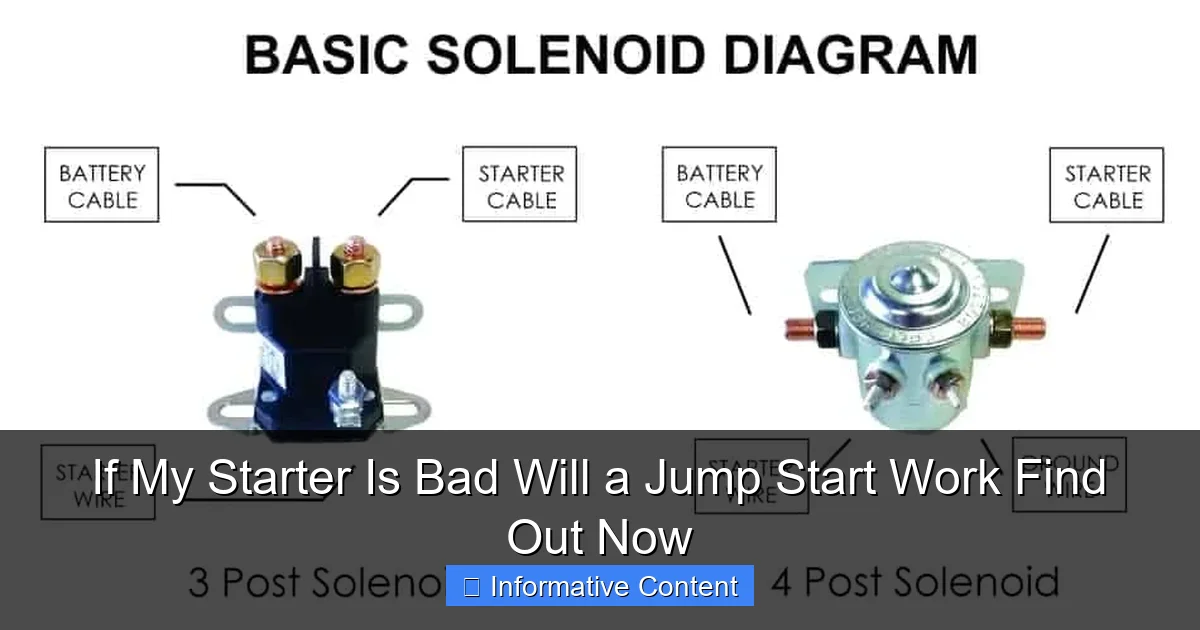
Visual guide about if my starter is bad will a jump start work
Image source: poweredoutdoors.com
The Key Players: Battery, Starter, and Ignition
- The battery supplies electrical power to the starter motor. It also runs lights, radio, and other systems when the engine isn’t running.
- The starter motor is a small electric motor that physically turns the engine’s flywheel to start combustion.
- The ignition switch (the key or push-button) sends a signal to the starter relay, which then activates the starter motor.
- The alternator recharges the battery once the engine is running.
When you turn the key, the battery sends a burst of power to the starter. The starter spins the engine, fuel and air ignite, and the engine starts. If any of these components fail, the system breaks down. But here’s the catch: a jump start only helps if the battery is the weak link. If the starter itself is broken, extra power won’t make it work.
Real-Life Example: The Click That Haunts You
Let’s say you’ve heard that dreaded click-click-click sound. That usually means the starter is getting power (the click is the relay engaging), but the motor isn’t turning. A jump start might help if the battery is weak and the starter is still functional. But if the starter is physically damaged (e.g., worn brushes, broken solenoid, or seized motor), no amount of juice will fix it. I once tried jumping a friend’s car with a nearly dead battery, and the starter worked fine after the jump. But another time, I jumped my own car—only to realize the starter was toast. The engine didn’t turn at all, even with 12.6 volts from the donor car.
Signs Your Starter Is Bad (vs. a Dead Battery)
Before jumping your car, you need to diagnose whether the issue is the starter, battery, or something else. Misdiagnosis leads to wasted time and frustration. Here’s how to tell the difference.
1. Listen for the Sound
Your ears are your first diagnostic tool.
- Dead battery: The engine cranks slowly or not at all. You might hear a single click, or the dashboard lights dim when you turn the key.
- Bad starter: A rapid click-click-click or no sound at all. The engine doesn’t crank, even with a jump.
- Starter solenoid issue: A loud clunk but no cranking. This means the solenoid (the switch inside the starter) is engaging, but the motor isn’t spinning.
2. Check the Dashboard Lights
When you turn the key to “on” (before starting), the dashboard lights should come on brightly. If they’re dim or flicker, it’s likely a battery or alternator issue. If they’re bright but the engine won’t crank, the starter or starter circuit is the suspect.
3. Try the Headlight Test
Turn on your headlights. If they’re bright and stay bright when you try to start the car, the battery is likely okay. If they dim significantly, the battery is weak. But here’s a pro tip: if the lights stay bright but the engine won’t crank, the starter is probably the culprit.
4. Tap the Starter (The “Mechanic’s Trick”)
This old-school method actually works! With the car in park (or neutral, with the parking brake on), have someone turn the key while you gently tap the starter with a wrench or hammer handle. If the engine starts, the starter’s brushes or solenoid might be stuck. It’s a temporary fix, but it confirms the starter is failing. I used this trick once on my dad’s old truck, and it started—only to die again a week later. The starter was on its last legs.
When a Jump Start Might Work (And When It Won’t)
Now, the million-dollar question: if my starter is bad, will a jump start work? Let’s break it down into scenarios.
✅ Jump Start Works: The Battery Is Weak, Starter Is Okay
This is the best-case scenario. A weak battery can’t supply enough current to the starter, even if the starter is functional. A jump provides the extra amps needed. For example:
- Your battery is 3 years old and has a slightly reduced capacity.
- You left the dome light on overnight, draining the battery.
- The alternator isn’t charging properly, so the battery slowly discharges.
In these cases, a jump start will likely work. The starter gets the power it needs, and the engine cranks normally.
❌ Jump Start Fails: The Starter Is Physically Broken
If the starter is internally damaged, no amount of power will help. Common causes include:
- Worn brushes: These transfer electricity to the motor’s armature. When they wear out, the starter won’t spin.
- Failed solenoid: The solenoid engages the starter gear and completes the circuit. If it’s stuck or broken, the motor won’t turn.
- Seized motor: Dirt, moisture, or worn bearings can freeze the motor.
- Broken wiring or connections: Corroded or loose cables prevent power from reaching the starter.
In these cases, even a fully charged battery or a jump won’t help. The starter is the weak link, not the battery.
⚠️ Jump Start “Works” But It’s a False Positive
Sometimes, a jump start seems to work—but it’s not the starter. For example:
- The battery was weak, but the starter is also failing. The jump provides just enough power to overcome the starter’s weakness temporarily.
- There’s a poor connection (e.g., corroded terminals) that improves slightly with the jump’s extra current.
This can lead to a false sense of security. The car starts once, but you’re still at risk of being stranded later.
How to Diagnose the Problem Like a Pro
Don’t just jump your car and hope for the best. A proper diagnosis saves time, money, and stress. Here’s how to do it right.
Step 1: Check the Battery Voltage
Use a multimeter to measure the battery voltage. Here’s what to look for:
- 12.6 volts or higher: Battery is fully charged.
- 12.0–12.5 volts: Battery is partially discharged.
- Below 12.0 volts: Battery is weak or dead.
If the voltage is low, charge the battery or jump it. Then try starting. If the engine cranks normally, the battery was the issue.
Step 2: Inspect the Starter Connections
Look at the starter motor (usually near the engine’s bottom). Check for:
- Loose or corroded terminals.
- Damaged or frayed wires.
- Signs of overheating (melted plastic, burnt smell).
Clean the terminals with a wire brush and tighten the connections. Try starting again. If it works, the problem was a poor connection—not the starter itself.
Step 3: Listen for the Starter Solenoid
When you turn the key, you should hear a single, distinct click from the starter solenoid. If you hear multiple clicks or no click at all, the solenoid or its circuit is faulty.
Step 4: Test the Starter Circuit
This is more advanced but useful. Use a test light or multimeter to check for voltage at the starter’s main terminal and the small solenoid wire when the key is turned. No voltage? The issue is in the ignition switch, relay, or wiring. Voltage present but no crank? The starter is bad.
Step 5: Consider the Alternator
A failing alternator won’t charge the battery, leading to a weak battery and a starter that seems to fail. If the battery keeps dying, test the alternator output (should be 13.5–14.5 volts when the engine is running).
What to Do If the Starter Is Bad (And Jump Starts Won’t Help)
If you’ve confirmed the starter is the problem, don’t keep trying to jump the car. It’s time for a real solution.
Option 1: Replace the Starter
The most reliable fix. Starters typically last 100,000–150,000 miles, but they can fail earlier due to:
- Frequent short trips (not enough time to recharge the battery).
- Exposure to heat, moisture, or road debris.
- Manufacturing defects.
You can replace it yourself if you’re mechanically inclined, or have a mechanic do it. Labor is usually 1–2 hours, and parts cost $100–$400 depending on the car.
Option 2: Rebuild or Refurbish the Starter
Some starters can be rebuilt by replacing the brushes, solenoid, or bearings. It’s cheaper than a full replacement but requires technical skill. I once rebuilt a starter on my old Honda Civic for $60 in parts—saved $200 compared to a new unit. But it’s not for beginners.
Option 3: Use a Portable Jump Starter (As a Last Resort)
A high-quality portable jump starter (like a NOCO or DBPOWER) can sometimes provide enough power to overcome a weak starter—temporarily. But it’s a band-aid, not a cure. Use it to get to a mechanic, not as a long-term solution.
Option 4: Call for Help
If you’re stranded, call roadside assistance. Many services offer free towing if you have insurance or a membership (e.g., AAA). They’ll diagnose the issue and recommend a repair shop.
Data Table: Starter vs. Battery Symptoms
| Symptom | Likely Cause | Will a Jump Start Help? | Recommended Action |
|---|---|---|---|
| Slow cranking, dim lights | Weak battery | ✅ Yes | Jump or charge battery |
| Rapid clicking, no cranking | Bad starter | ❌ No | Replace starter |
| Single click, no cranking | Weak battery or bad starter | ⚠️ Maybe | Test battery and starter |
| No sound, bright lights | Bad starter or wiring | ❌ No | Check connections, replace starter |
| Engine cranks but won’t start | Fuel, spark, or sensor issue | N/A | Check fuel pump, spark plugs, etc. |
| Battery dies after jump | Failing alternator | ❌ No (long-term) | Replace alternator |
Final Thoughts: Know the Difference, Save the Hassle
So, if my starter is bad, will a jump start work? The answer is clear: it depends on the root cause. A jump start is a fantastic tool for weak batteries, but it’s powerless against a broken starter. The key is diagnosing the problem correctly before you waste time and energy.
Remember: if your car makes a rapid clicking sound, has bright dashboard lights, and won’t crank—even with a jump—the starter is likely the issue. Don’t keep trying to jump it. Instead, use the diagnostic steps we’ve covered to confirm the problem, then take action. Whether it’s a simple battery recharge, a starter replacement, or a call to a mechanic, you’ll save yourself stress and avoid getting stranded again.
And here’s a final tip: keep a multimeter and a portable jump starter in your trunk. They’re inexpensive tools that can save you hundreds in tow bills and repairs. I learned that the hard way after my first starter failure—but now, I’m always prepared. Your car might not start, but with the right knowledge, you’ll never be stuck in the dark again.
Frequently Asked Questions
Will a jump start work if my starter is bad?
If your starter is completely failed, a jump start likely won’t work because the starter motor needs electrical power to engage—even with a boost, a faulty starter can’t turn the engine over. However, if the issue is weak voltage from the battery, a jump *might* provide enough power to crank the engine.
Can a bad starter prevent a jump start from working?
Yes, a bad starter can prevent a jump start from working. Jump starting only addresses battery-related issues, not mechanical or electrical failures in the starter motor itself, which must function to start the engine.
What are signs that my starter is bad, not just the battery?
Clicking noises when turning the key, no response from the engine, or dimming lights without cranking are classic signs of a failing starter. If jump starting doesn’t help and these symptoms persist, the starter is likely the culprit.
Is it safe to jump start a car with a bad starter?
Jump starting a car with a bad starter is generally safe but won’t solve the underlying problem. The jumper cables can deliver power, but without a working starter, the engine won’t turn over—focus on diagnosing the starter instead.
How do I know if my starter is bad or if I need a jump start?
If your car doesn’t start but lights, radio, and electronics work, it’s likely a starter issue. A jump start typically helps if the battery is dead, but if the engine doesn’t crank after jumping, the starter may be bad.
Will a jump start work if my starter solenoid is bad?
A jump start won’t fix a faulty starter solenoid, which is part of the starter system. While a boost might provide power, the solenoid must still function to engage the starter motor—so replacement is usually required.