
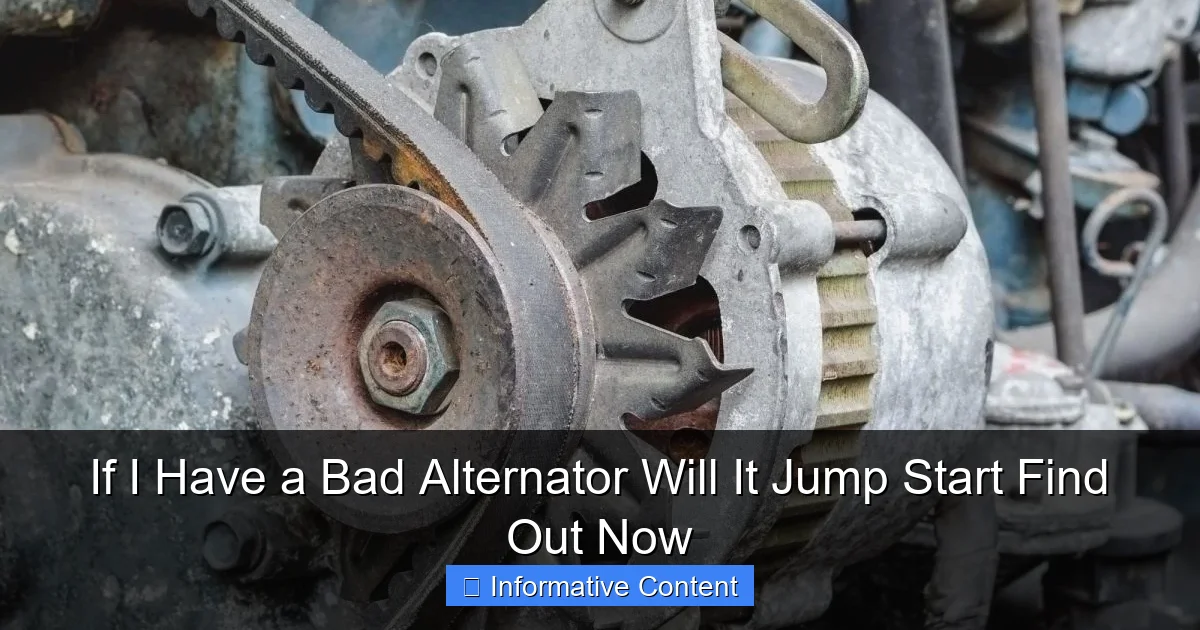
Featured image for if i have a bad alternator will it jump start
Image source: images.saymedia-content.com
Yes, a vehicle with a bad alternator can still jump start, but it won’t stay running long without a functioning charging system. The jump provides temporary power to crank the engine, but once the battery drains—typically within minutes—the car will stall, confirming the alternator isn’t recharging the battery. Don’t rely on this fix—replace the alternator to avoid getting stranded.
Key Takeaways
- Jump-starting may work temporarily with a bad alternator, but the battery won’t recharge.
- Test alternator voltage with a multimeter; below 13.5V indicates failure.
- Dim lights or stalling signal alternator issues—address immediately.
- Replace the alternator ASAP to avoid total battery drain and breakdowns.
- Drive straight to a mechanic after a jump to prevent further damage.
- Regular maintenance checks catch alternator problems before they strand you.
📑 Table of Contents
- Understanding the Alternator’s Role in Your Car
- Can a Bad Alternator Still Allow a Jump Start?
- Signs Your Alternator Is Failing (And What to Do)
- Jump-Starting a Car with a Bad Alternator: Step-by-Step Guide
- How to Test Your Alternator (DIY and Professional Methods)
- Preventing Alternator Failure: Maintenance Tips
Understanding the Alternator’s Role in Your Car
Picture this: you’re running late for work, you hop into your car, turn the key, and—nothing. The engine cranks sluggishly, the lights are dim, and your heart sinks. You’ve been here before. Maybe you’ve even tried jump-starting the car, only to have it die again moments later. If this sounds familiar, you might be dealing with a bad alternator. But here’s the big question: if I have a bad alternator, will it jump start? The short answer is yes, it might start—but not for long. Let me explain why.
The alternator is like your car’s power plant. While the battery gives the initial spark to start the engine, the alternator takes over once the car is running, recharging the battery and powering all the electrical systems—lights, radio, AC, sensors, and more. When the alternator fails, the battery is left to do all the work. And just like your phone dying after a full day of use, a car battery can’t sustain everything for long. So, if you’re wondering whether a jump start will save the day with a failing alternator, the answer isn’t a simple yes or no. It depends on how bad the alternator is, how much charge the battery has left, and what happens after the engine starts. Let’s dig into the details.
Can a Bad Alternator Still Allow a Jump Start?
Yes, a car with a bad alternator can often be jump-started. Think of it this way: the jump start gives the battery a temporary boost, just enough to turn the engine over. But here’s the catch—once the engine is running, if the alternator isn’t working, it’s not recharging the battery. The battery starts draining immediately, and eventually, the car will stall. It’s like pouring water into a bucket with a hole in the bottom. You can fill it temporarily, but it won’t stay full.

Visual guide about if i have a bad alternator will it jump start
Image source: dial-a-battery.com
Why Jump-Starting Might Work (Temporarily)
Jump-starting works because the external power source (another car or a jump box) provides the necessary voltage to crank the engine. Once the engine fires up, the alternator is supposed to take over. But if it’s faulty, the battery continues to supply power to the entire vehicle. This means:
- The engine might run for a few minutes—long enough to drive a short distance.
- Electrical components (lights, radio, dashboard) may dim as the battery drains.
- The car will likely stall once the battery is too weak to sustain the engine.
For example, I once helped a friend jump-start his car after he left the headlights on overnight. It started fine, but within five minutes of driving, the radio flickered, the dashboard lights dimmed, and the engine sputtered to a stop. A mechanic later confirmed his alternator was dead. The jump start gave us just enough time to get the car to a repair shop—but it wouldn’t have lasted much longer.
How Long Can You Drive After a Jump Start?
How long your car runs after a jump start with a bad alternator depends on several factors:
- Battery condition: A healthy, fully charged battery might last 10–20 minutes. A weak or old battery could die in under 5 minutes.
- Electrical load: Using high-draw accessories (AC, headlights, heated seats) drains the battery faster. Driving with minimal electrical use (e.g., during the day, no AC) might extend the life.
- Driving speed: At idle, the alternator (if partially working) might provide a tiny bit of charge. Highway speeds increase alternator output—but if it’s dead, speed won’t help.
Tip: If you’re jump-starting a car with a suspected bad alternator, drive straight to a mechanic or a safe location. Don’t stop—every time you turn the engine off, you’ll likely need another jump to restart it.
Signs Your Alternator Is Failing (And What to Do)
Before you even think about jump-starting, it’s smart to know the signs of a failing alternator. This helps you avoid being stranded and gives you time to plan. The symptoms often creep up slowly, so catching them early can save you time, money, and stress.
Common Warning Signs
- Dim or flickering lights: Headlights, dashboard lights, or interior lights that dim when the engine is running—especially at idle—are a red flag.
- Battery warning light: The red battery icon on your dashboard is a direct indicator of charging system issues.
- Strange noises: Grinding, whining, or squealing sounds from the engine bay could mean the alternator bearings are failing.
- Electrical issues: Power windows moving slowly, radio cutting out, or sensors malfunctioning.
- Smell of burning rubber or wires: Overheating alternator components can produce a noticeable odor.
- Frequent jump starts: If your car needs multiple jump starts in a short time, the battery is likely being drained by a bad alternator.
For example, my neighbor noticed her headlights dimming at night. At first, she thought it was just the battery. But after jump-starting the car twice in one week, she took it to a shop. The mechanic found the alternator was only producing 11 volts (should be 13.5–14.5 volts). She was lucky she didn’t get stranded.
What to Do When You Spot These Signs
If you notice any of these symptoms:
- Check the battery voltage: Use a multimeter. With the engine off, a healthy battery should read 12.6 volts. With the engine running, it should read 13.5–14.5 volts. If it’s below 13 volts, the alternator isn’t charging.
- Inspect belts and connections: A loose or broken serpentine belt can prevent the alternator from working. Look for cracks, fraying, or excessive slack.
- Listen for noises: A failing alternator often makes a whining or grinding sound, especially when accessories are on.
- Visit a mechanic: Don’t wait until the car dies. A professional can test the alternator output and battery health.
Tip: Keep a portable jump starter in your car if you suspect alternator issues. It’s safer than relying on another vehicle, especially in remote areas.
Jump-Starting a Car with a Bad Alternator: Step-by-Step Guide
Okay, so you’ve got a car that won’t start, and you suspect the alternator is to blame. Can you still jump-start it? Yes—but you need to do it safely and know what to expect afterward.
Step 1: Safety First
Before connecting jumper cables or a jump box:
- Park on level ground: Turn off both vehicles and set the parking brake.
- Wear safety glasses: Batteries can explode if mishandled.
- Check for damage: Look for leaks, cracks, or corrosion on the battery. If you see any, don’t attempt a jump start.
Step 2: Connect the Jumper Cables (or Use a Jump Box)
If using another car:
- Connect red (positive) to the dead battery’s positive terminal.
- Connect the other red to the good battery’s positive terminal.
- Connect black (negative) to the good battery’s negative terminal.
- Connect the other black to an unpainted metal part of the dead car’s engine block (not the battery). This grounds the circuit and reduces spark risk.
If using a jump box:
- Connect red to positive, black to negative (or ground).
- Turn on the jump box and wait a few seconds.
Step 3: Start the Car
- Start the working car (or turn on the jump box).
- Let it run for 1–2 minutes to charge the dead battery slightly.
- Try starting the dead car. If it doesn’t start, wait another minute and try again.
Step 4: Drive Immediately—Don’t Stop
Once the car starts:
- Do not turn it off. The battery is likely weak, and if the alternator is bad, it won’t recharge.
- Drive directly to a mechanic or safe location. Avoid traffic lights, stops, or detours.
- Minimize electrical use. Turn off AC, radio, and lights if possible to conserve battery power.
Example: A colleague once jump-started his car after the alternator failed. He drove straight to the repair shop—about 12 minutes away—without stopping. The car made it, but the battery died the moment he turned off the engine. He had to call a tow truck to bring a new battery.
Step 5: Disconnect Safely
After the jump:
- Disconnect cables in reverse order: black from ground, black from good battery, red from good battery, red from dead battery.
- Do not let the clamps touch each other or metal parts while connected.
Tip: If you’re using a jump box, keep it charged and store it in your trunk. They’re affordable and can save you from waiting for help.
How to Test Your Alternator (DIY and Professional Methods)
You don’t need to be a mechanic to check if your alternator is working. A few simple tests can tell you whether it’s the culprit behind your jump-start woes.
DIY Alternator Test with a Multimeter
You’ll need a digital multimeter (available for $10–20 at auto stores). Here’s how:
- With the engine off: Set the multimeter to DC voltage (20V range). Connect red to positive (+), black to negative (-) on the battery. A healthy battery reads 12.6 volts.
- Start the engine: The voltage should jump to 13.5–14.5 volts. This means the alternator is charging.
- Turn on accessories: Turn on headlights, AC, radio, and wipers. The voltage should stay above 13 volts. If it drops below 12.5 volts, the alternator isn’t keeping up.
Example: I tested my alternator this way after my car kept dying. With the engine running, the voltage was only 12.1 volts—clearly not enough. The alternator was failing.
Professional Alternator Testing
For a more thorough check, visit a mechanic or auto parts store (many offer free tests). They’ll:
- Use a load tester to simulate electrical demand.
- Check alternator output under high load (e.g., with AC and headlights on).
- Inspect belts, wiring, and connections.
- Test the battery’s ability to hold a charge.
Most shops can diagnose alternator issues in 15–20 minutes. It’s a small investment to avoid being stranded.
Alternator Output Specifications
Different cars need different alternator outputs. Here’s a general guide:
| Vehicle Type | Typical Alternator Output (Amps) | Voltage Range |
|---|---|---|
| Compact car (e.g., Honda Civic) | 70–90 amps | 13.5–14.5 volts |
| Mid-size sedan (e.g., Toyota Camry) | 90–120 amps | 13.5–14.5 volts |
| SUV/Truck (e.g., Ford F-150) | 120–160 amps | 13.5–14.5 volts |
| High-performance/luxury (e.g., BMW) | 140–200+ amps | 13.5–14.5 volts |
If your alternator is producing less than 80% of its rated output, it’s time for a replacement.
Preventing Alternator Failure: Maintenance Tips
Alternators typically last 80,000–150,000 miles, but you can extend their life with proper care. Think of it like maintaining your phone’s battery—small habits make a big difference.
Regular Maintenance Checks
- Inspect the serpentine belt: Check for cracks, fraying, or looseness every 6 months. A worn belt slips and reduces alternator output.
- Keep connections clean: Corrosion on battery terminals or alternator wiring can block charging. Clean terminals with a wire brush and baking soda solution.
- Test the battery annually: A weak battery forces the alternator to work harder, shortening its life.
- Avoid deep discharges: Frequent jump starts strain the alternator. If your battery dies, charge it fully before using the car.
Driving Habits That Help
- Don’t idle with high electrical load: Running AC, lights, and radio while parked drains the battery and stresses the alternator.
- Turn off accessories when not needed: Especially at night or in hot weather.
- Drive regularly: Short trips don’t give the alternator enough time to fully charge the battery.
When to Replace the Alternator
Even with good care, alternators eventually wear out. Consider replacement if:
- You’ve had multiple jump starts in a month.
- The battery warning light is on.
- Voltage tests show low output.
- You hear grinding or whining noises.
Tip: If your alternator fails, replace the serpentine belt at the same time. A worn belt can damage the new alternator.
So, if I have a bad alternator, will it jump start? Yes—but it’s a temporary fix, not a solution. A jump start gives you a window to get to a mechanic, but the car will likely die again soon. The real answer lies in recognizing the signs early, testing the system, and addressing the root cause. Whether you’re dealing with dimming lights, a dead battery, or a car that won’t stay running, understanding the alternator’s role empowers you to take action before you’re stranded on the side of the road. Stay proactive, keep your tools handy, and don’t ignore those little warning signs. Your car—and your peace of mind—will thank you.
Frequently Asked Questions
Can a car with a bad alternator be jump-started?
Yes, a car with a bad alternator can often be jump-started if the battery still holds a charge. However, the engine may die again once the jumper cables are removed because the faulty alternator can’t recharge the battery.
If I have a bad alternator, will it jump start and stay running?
If you have a bad alternator, it may jump start and run briefly, but it likely won’t stay running long. The alternator is responsible for powering the electrical system and recharging the battery—without it functioning, the car will eventually lose power.
How long can I drive after a jump start if the alternator is bad?
Driving with a bad alternator after a jump start is risky and should only be done to reach a repair shop nearby. You might get 20–30 minutes of runtime before the battery drains completely, depending on electrical load and battery condition.
Will a jump start damage my car if the alternator is bad?
A proper jump start won’t damage your car even if the alternator is bad, but continued driving without a working alternator can harm the battery and electrical components over time. Always get the alternator checked immediately.
Can a completely dead alternator still allow a jump start?
Yes, a completely failed alternator won’t prevent a jump start as long as the battery has enough charge to crank the engine. The jump provides the initial power, but the car won’t stay running without a functioning alternator.
What are the signs that a jump start won’t work due to a bad alternator?
If your car dies immediately after jump-starting or won’t stay running, it’s a strong sign the alternator is bad. Dimming lights, warning indicators, or repeated stalling also suggest the alternator can’t support the electrical system.