

Featured image for if alternator is bad will car jump start
Image source: m.media-amazon.com
Yes, a car with a bad alternator can often be jump-started, but it won’t stay running long without a functioning charging system. The battery will power the engine temporarily, but once the stored energy depletes—usually within minutes—the car will stall and won’t restart.
Key Takeaways
- A bad alternator may allow a jump start but won’t sustain the battery long-term.
- Jump-starting works temporarily if the battery is dead, not the alternator itself.
- Test the alternator with a voltmeter to confirm if it’s charging properly.
- Drive immediately after jump-starting to avoid stalling due to power loss.
- Replace the alternator promptly to prevent complete battery failure and stranding.
- Dimming lights or stalling are clear signs of alternator issues post-jump start.
📑 Table of Contents
- The Dreaded Click: What Happens When Your Alternator Fails?
- How the Alternator and Battery Work Together (And Why One Can’t Save the Other)
- Signs Your Alternator Is Failing (And Why You Shouldn’t Ignore Them)
- Can You Jump Start a Car with a Bad Alternator? (The Real Answer)
- How to Diagnose a Bad Alternator (Simple Tests You Can Do at Home)
- Alternator vs. Battery: How to Tell Which One Is the Problem
- What to Do If Your Alternator Is Bad: Practical Steps
The Dreaded Click: What Happens When Your Alternator Fails?
You’re late for work, the morning coffee is cold, and as you turn the key, all you hear is that dreaded click—or worse, the engine sputters and dies after a few seconds. Your heart sinks. You’ve seen this before. The battery might be dead, right? So you grab your jumper cables, call a friend, or pull out the portable jump starter, and voilà—the car roars back to life. But here’s the real question: if the alternator is bad, will the car jump start? The short answer? Yes, it can. But that’s where the good news ends.
Let me share a story. A few years back, I helped a neighbor jump-start his SUV after it wouldn’t start in his driveway. The engine turned over, lights came on, and we high-fived—problem solved! But two days later, the same thing happened. And again the next week. We were playing battery roulette, and it was only a matter of time before the car died on the highway. That’s when we discovered the real culprit: a failing alternator. Jumping the car wasn’t a fix—it was a temporary band-aid. If you’ve ever wondered why a jump-started car dies shortly after, or why your battery keeps going flat, the alternator might be the silent saboteur. In this post, I’ll walk you through everything you need to know about alternator health, jump-starting, and what to do when your car’s electrical system is on life support.
How the Alternator and Battery Work Together (And Why One Can’t Save the Other)
To understand whether a bad alternator will still allow a jump start, you need to know how your car’s electrical system functions. Think of the battery and alternator as a team with two very different jobs.
Visual guide about if alternator is bad will car jump start
Image source: m.media-amazon.com
The Battery: Your Car’s Electrical Starter Pack
The battery is like your car’s emergency reserve. It stores electrical energy and delivers a big burst of power when you turn the key—this is what spins the starter motor and gets the engine going. Without a charged battery, your car won’t start at all. But here’s the catch: the battery only powers the car for a short time. Once the engine is running, the battery should stop being the main power source.
For example, imagine your car’s battery as a small water tank. When you start the car, you drain that tank. But if you don’t refill it, you’ll run dry. That’s where the alternator comes in.
The Alternator: The Engine-Powered Charger
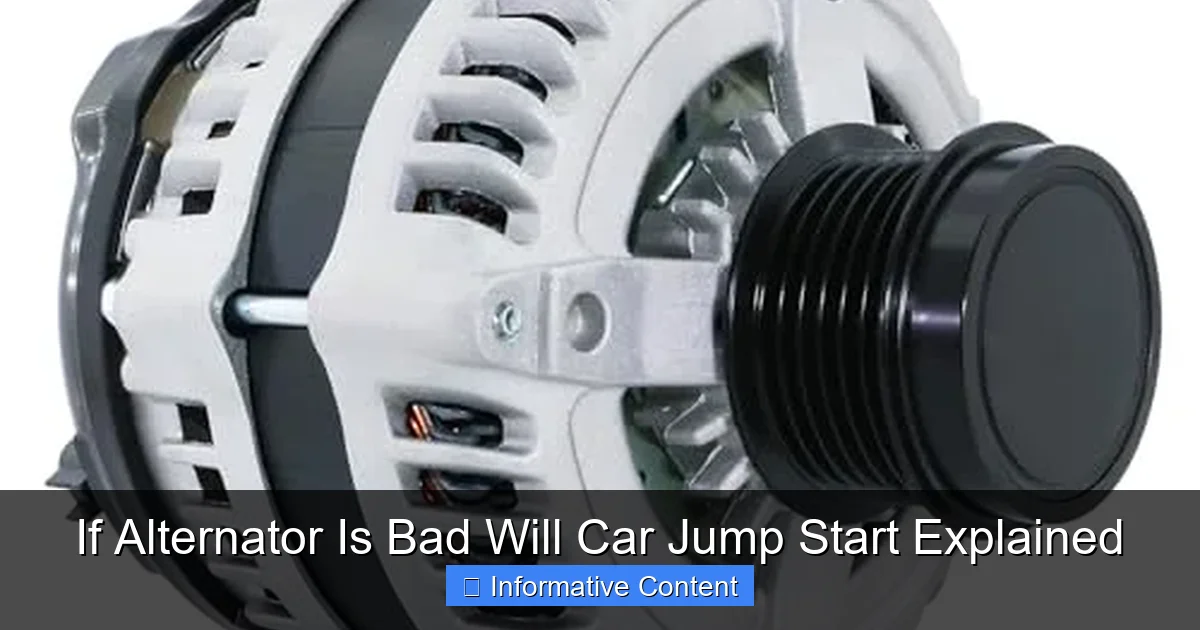
The alternator is a generator that runs off the engine’s crankshaft via a belt. Once the engine is running, the alternator kicks in and does two critical things:
- Charges the battery to replace the energy used during startup.
- Powers all electrical systems—lights, radio, AC, sensors, fuel pump, ignition system—while the engine is running.
So, if the alternator is working, your car runs smoothly, and the battery stays charged. But if the alternator is failing or dead, it’s like having a broken water pump. The tank (battery) gets drained faster than it can be refilled. Eventually, even if you jump-start the car, it will die once the battery runs out of juice.
Why a Bad Alternator Can Still Allow a Jump Start
Here’s the key insight: jump-starting bypasses the battery’s charge level temporarily. The jumper cables or portable starter deliver enough power to crank the engine. Once the engine starts, the car runs—but only as long as the battery has energy. Since the bad alternator can’t recharge the battery or power the systems, the battery drains rapidly.
For instance, if your battery has 12 volts when jump-started, it might drop to 10 volts within 10–20 minutes of driving—especially if you’re using lights, AC, or wipers. At around 9–10 volts, critical systems (like fuel injection or ignition) start to fail, and the engine stalls.
Signs Your Alternator Is Failing (And Why You Shouldn’t Ignore Them)
Alternator failure doesn’t happen overnight. There are clear warning signs—if you know what to look for. Ignoring them can lead to a stranded car, expensive repairs, or even damage to other components.
Dimming or Flickering Lights
One of the earliest signs is lights that dim when you’re idling or flickering when you accelerate. This happens because the alternator can’t maintain consistent voltage. For example, your headlights might look fine on the highway but get noticeably dimmer at stoplights.
I once noticed my dashboard lights dimming every time I hit the brakes. At first, I thought it was a loose connection. But after checking the voltage with a multimeter (more on that later), I realized the alternator wasn’t delivering enough power. The brake lights were drawing extra current, and the failing alternator couldn’t compensate.
Battery Warning Light on the Dashboard
This is your car’s way of saying, “Hey, the alternator isn’t doing its job!” The battery-shaped light (often labeled “ALT” or “GEN”) usually comes on when voltage drops below 13.5 volts. If it lights up while driving, pull over safely and turn off non-essential electronics.
Don’t assume it’s just the battery. Modern cars have smart charging systems. If the alternator fails, the light will stay on even if the battery is new.
Strange Noises from the Engine Bay
A failing alternator often makes a whining, grinding, or growling noise. This can be due to:
- Worn-out bearings inside the alternator
- A loose or slipping drive belt
- Electrical arcing from damaged internal components
One friend ignored a growling noise for weeks. One day, the alternator seized up, and the belt snapped—leaving him stranded on a rural road. The repair cost doubled because the broken belt damaged the water pump.
Electrical Malfunctions
When the alternator can’t supply steady voltage, electronics act weird. Examples include:
- Radio cutting out
- Power windows moving slowly
- AC fan running at erratic speeds
- Engine misfires (due to weak spark)
These aren’t just annoyances—they’re symptoms of a deeper electrical problem.
Frequent Jump Starts
If you’re jump-starting your car more than once or twice a year, it’s time to investigate. A healthy battery should last 3–5 years. If yours is dying prematurely, the alternator is likely the root cause.
Can You Jump Start a Car with a Bad Alternator? (The Real Answer)
Yes, you can jump start a car with a bad alternator. But it’s not a solution—it’s a temporary workaround. Here’s what actually happens:
Jump Starting: The Short-Term Fix
When you connect jumper cables or use a portable starter, you’re delivering a high burst of current to the battery. This provides enough power to:
- Engage the starter motor
- Fire the spark plugs
- Power the fuel pump
The engine starts, and the car runs—but only because the battery is now charged (temporarily). The bad alternator can’t recharge it, so the battery starts draining immediately.
How Long Will a Jump-Started Car Last?
This depends on:
- Battery health: A weak or old battery won’t hold a charge well.
- Electrical load: Using lights, AC, or wipers drains the battery faster.
- Alternator condition: A completely dead alternator offers no help. A partially working one might provide minimal charging.
In ideal conditions (new battery, minimal electrical use), a jump-started car with a bad alternator might run for 20–30 minutes. But in real-world scenarios, it could die in 5–10 minutes.
Example: A friend once jump-started his car with a bad alternator and drove 5 miles to a repair shop. He made it—barely. The battery voltage dropped to 9.8 volts by the time he arrived, and the engine stalled as he pulled into the parking lot.
Risks of Driving with a Bad Alternator
Even if you get the car started, driving with a failing alternator is risky:
- Sudden engine stall: Could happen at highway speeds.
- Damage to electronics: Voltage spikes from a failing alternator can fry sensitive components.
- Stranded in a dangerous location: No power = no lights, horn, or emergency calls.
Bottom line: Use a jump start to get to a safe location or repair shop—not to drive home from work.
How to Diagnose a Bad Alternator (Simple Tests You Can Do at Home)
Don’t guess—test. Here are three easy ways to check your alternator’s health without special tools (though a multimeter helps).
1. The Voltage Test (Most Accurate)
What you need: A multimeter (available at auto stores for $10–$20).
- Set the multimeter to DC voltage (20V range).
- Start the car and let it idle.
- Touch the red probe to the positive battery terminal (+), black to negative (–).
What to look for:
- 13.8–14.4 volts: Alternator is working well.
- Below 13.5 volts: Alternator is undercharging.
- Above 15 volts: Overcharging (can damage battery and electronics).
Rev the engine to 2,000 RPM. Voltage should stay in the 13.8–14.4 range. If it drops, the alternator is failing.
2. The Load Test (Quick and Dirty)
Turn on all electrical systems:
- Headlights (high beam)
- AC (max)
- Wipers (high speed)
- Radio
Run the engine at idle. If the lights dim significantly or the engine sputters, the alternator can’t handle the load.
3. The Belt and Noise Check
- Inspect the serpentine belt for cracks, fraying, or looseness.
- Listen for grinding, whining, or squealing when the engine is running.
- Check for a burning smell (could indicate overheating or electrical issues).
When to See a Mechanic
If your tests show low voltage, strange noises, or frequent jump starts, don’t delay. A failing alternator can damage the battery, voltage regulator, or even the ECU (engine control unit). Most alternators cost $200–$500 to replace, but ignoring it could lead to $1,000+ in repairs.
Alternator vs. Battery: How to Tell Which One Is the Problem
Confusing the alternator with a bad battery is common. Here’s how to tell the difference.
Test 1: Jump Start and Drive
- Jump start the car.
- Drive 5–10 minutes with minimal electrical use.
- Turn the engine off.
- Wait 2 minutes, then try to restart.
If the car starts easily: Battery is likely fine. If it won’t start or cranks slowly: Alternator isn’t charging the battery.
Test 2: Voltage Before and After
- Measure battery voltage with the engine off (should be 12.4–12.7V).
- Start the engine and measure again (should be 13.8–14.4V).
If voltage doesn’t rise: Alternator issue. If voltage is low with engine off but normal when running: Battery is weak.
Test 3: Battery Age and Condition
- Batteries last 3–5 years. If yours is older, replace it first.
- Check for corrosion on terminals (clean with baking soda and water).
- Have the battery load-tested at an auto shop (free at most places).
Data Table: Alternator vs. Battery Symptoms
| Symptom | Bad Alternator | Bad Battery |
|---|---|---|
| Car won’t start (clicking) | Possible, but may jump start and die | Very likely; jump start may work |
| Dim/flickering lights | Yes (especially at idle) | Rare |
| Battery warning light | Yes | Sometimes (if battery is deeply discharged) |
| Strange noises | Yes (whining, grinding) | No |
| Voltage when running | Below 13.5V or above 15V | Normal (13.8–14.4V) |
| Car dies after jump start | Very likely | Unlikely (if alternator is good) |
What to Do If Your Alternator Is Bad: Practical Steps
So you’ve confirmed the alternator is failing. Now what?
1. Get to a Safe Location
If the car is running, drive directly to a repair shop or safe parking spot. Avoid highways if possible. Turn off all non-essential electronics to conserve battery power.
2. Call for Help
If the car dies, call a tow truck. Don’t try to jump start it repeatedly—you’re risking further damage. Most tow companies can test the alternator on-site.
3. Replace the Alternator (DIY or Professional)
Alternator replacement is doable for DIYers with basic tools, but it’s time-consuming (2–4 hours). Consider:
- Cost: $200–$500 for part and labor (varies by car model).
- DIY savings: $100–$200 (if you’re handy).
- Risk: Incorrect installation can damage the belt, wiring, or ECU.
Tip: Always replace the serpentine belt when changing the alternator. It’s a $20 part but saves future headaches.
4. Prevent Future Issues
- Check belt tension and condition every 6 months.
- Test alternator voltage annually (or when replacing the battery).
- Keep jumper cables or a portable starter in your car—just in case.
Remember: A jump start is not a repair. It’s a lifeline to get you to a mechanic. If your alternator is bad, the car will jump start—but it won’t stay running for long. The real fix is replacing the alternator before you’re left stranded on the side of the road.
Stay proactive, test your electrical system regularly, and don’t ignore those warning signs. Your car—and your peace of mind—will thank you.
Frequently Asked Questions
Can a bad alternator prevent a car from jump starting?
If your alternator is bad, the car may still jump start temporarily because the battery provides initial power. However, without a functioning alternator to recharge the battery, the engine will eventually stall once the battery drains.
Will a jump start work if the alternator is bad?
A jump start can get your car running briefly, but a faulty alternator won’t sustain power. The vehicle will likely die again shortly after, especially if accessories (e.g., lights, radio) are in use.
How long can you drive after a jump start with a bad alternator?
Driving with a bad alternator after a jump start is risky—most cars last 30 minutes to an hour before the battery depletes. Heavy electrical usage (AC, headlights) shortens this timeframe significantly.
What are the signs a bad alternator is affecting jump starts?
If your car struggles to jump start, dies immediately, or has dimming lights after starting, these are classic symptoms of a failing alternator. The battery may test fine, but the alternator isn’t recharging it.
Can you recharge a battery with a bad alternator using a jump start?
No—a jump start only uses the existing battery charge. A bad alternator can’t recharge the battery, so the car will eventually lose power again, requiring another jump or a full alternator replacement.
Is it safe to jump start a car with a bad alternator?
It’s safe for short-term emergencies, but don’t rely on it. A failing alternator can cause voltage spikes, risking damage to electronics. Always replace the alternator promptly to avoid getting stranded.