
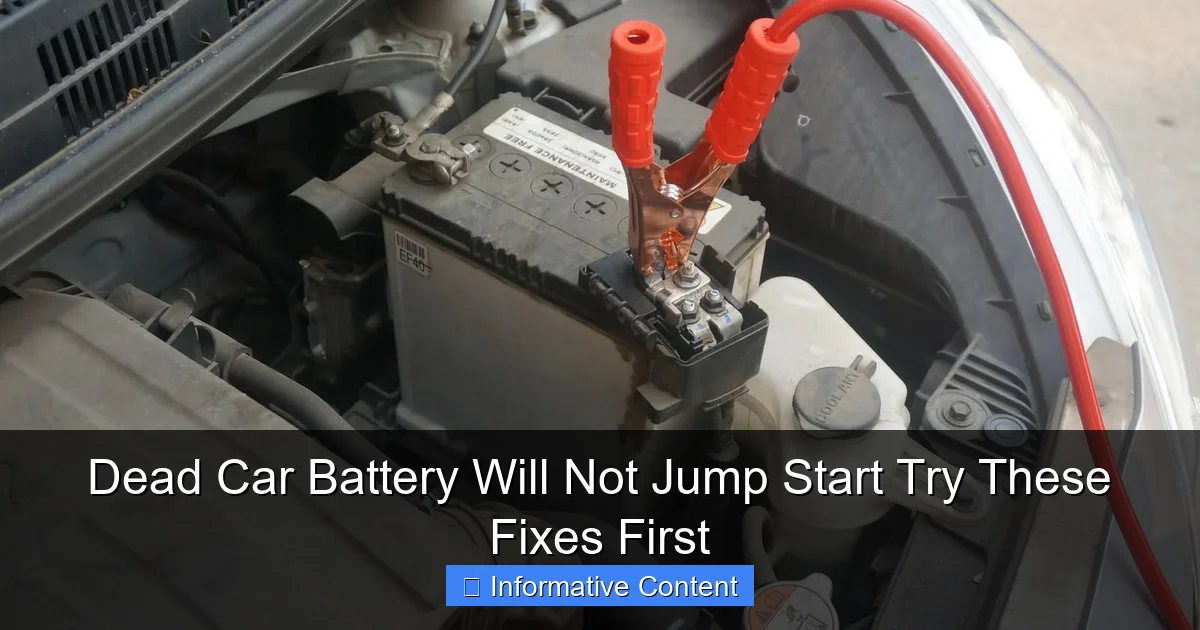
Featured image for dead car battery will not jump start
Image source: team-bhp.com
If your dead car battery will not jump start, the issue may not be the battery at all—check corroded or loose terminals first, as poor connections often prevent jump-start success. Before calling for a tow, inspect fuses, test the alternator, and ensure the jump cables are properly attached to a working donor battery. Simple fixes like cleaning contacts or replacing a blown fuse can save time, money, and frustration.
Key Takeaways
- Check connections first: Clean and tighten corroded or loose battery terminals before jump-starting.
- Test the alternator: A faulty alternator may prevent charging even after a jump.
- Inspect for parasitic drain: Hidden electrical loads can kill a battery overnight.
- Try a battery charger: Slow charging may revive deeply discharged batteries better than jumping.
- Evaluate battery age: Replace batteries older than 3–5 years regardless of jump success.
- Use a memory saver: Prevent ECU reset by powering the system during battery work.
📑 Table of Contents
- Why Your Dead Car Battery Won’t Jump Start (And What to Do About It)
- 1. Check the Basics: Common Jump-Start Mistakes
- 2. Diagnose the Battery: Is It Really Dead?
- 3. Rule Out Alternator and Charging System Issues
- 4. Investigate Starter and Electrical Problems
- 5. Consider Environmental and Hidden Factors
- 6. When to Call a Professional (And What to Expect)
Why Your Dead Car Battery Won’t Jump Start (And What to Do About It)
You’re late for work, the kids are screaming in the backseat, and your car won’t start. You grab jumper cables, hook up a friend’s car, and… nothing. The engine doesn’t even crank. Frustrating, right? A dead car battery will not jump start isn’t just annoying—it’s a sign something deeper is wrong. And no, it’s not always the battery’s fault.
I’ve been there. Once, during a freezing winter morning, I spent 20 minutes fiddling with cables, only to realize the issue was a corroded connection. After that, I learned that jump-starting isn’t a one-size-fits-all fix. Sometimes, the problem isn’t the battery at all. In this guide, I’ll walk you through the real reasons your car won’t jump start, how to diagnose them, and what to do next. No fluff, just practical fixes.
1. Check the Basics: Common Jump-Start Mistakes
Before you panic, let’s rule out simple oversights. Even experienced drivers make these mistakes. Here’s what to double-check:
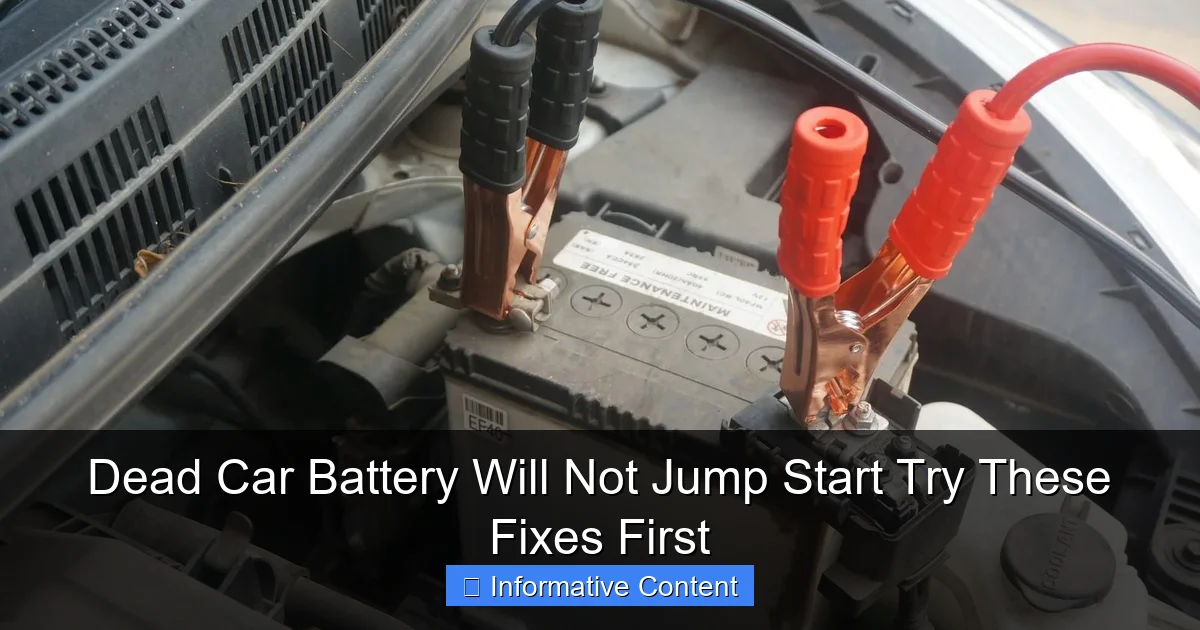
Visual guide about dead car battery will not jump start
Image source: team-bhp.com
Are You Following the Right Jump-Start Steps?
Jumper cables are simple, but one wrong move can ruin the attempt. Always follow this order:
- 1. Park the working car close (but not touching) and turn off both engines.
- 2. Attach red (+) to the dead battery’s positive terminal.
- 3. Attach red (+) to the working battery’s positive terminal.
- 4. Attach black (-) to the working battery’s negative terminal.
- 5. Attach black (-) to an unpainted metal part (like a bolt or bracket) on the dead car—not the battery’s negative terminal. This grounds the connection and prevents sparks near the battery.
- 6. Start the working car and let it run for 3–5 minutes.
- 7. Try starting the dead car. If it works, let both run for 10+ minutes to recharge.
Example: My neighbor once connected the black clamp directly to the dead battery’s negative terminal. A spark ignited gas fumes, causing a small explosion. Grounding to metal (step 5) avoids this risk.
Are the Cables or Terminals Corroded?
Corrosion (white/green crust on terminals) acts like a wall, blocking electricity. Even if the cables are connected, power can’t flow. Fix it:
- Mix baking soda and water (1 tbsp per cup).
- Scrub terminals with a wire brush until shiny.
- Rinse with water and dry with a cloth.
Tip: After cleaning, coat terminals with dielectric grease to prevent future corrosion.
Are the Cables Damaged or Too Thin?
Cheap jumper cables (under 4-gauge thickness) can’t deliver enough power. Look for:
- Thick, insulated cables (6-gauge or thicker).
- No fraying, exposed wires, or loose clamps.
Data Point: A 2022 AAA study found that 60% of jump-start failures involved undersized or damaged cables.
2. Diagnose the Battery: Is It Really Dead?
Just because the car won’t start doesn’t mean the battery is the culprit. Let’s test it properly.
Test Voltage with a Multimeter
A healthy battery should read 12.6+ volts when the car is off. Here’s how to check:
- Set the multimeter to 20V DC.
- Touch red probe to (+) terminal, black to (-).
- Read the voltage:
| Voltage Reading | What It Means |
|---|---|
| 12.6–12.8V | Fully charged |
| 12.4V | 50% charged |
| 12.0V or lower | Dead or deeply discharged |
Example: My friend’s battery read 11.8V after sitting for 3 weeks. A slow drain (like a trunk light left on) killed it.
Look for Physical Signs of Battery Failure
Even if voltage seems okay, these signs mean it’s time to replace the battery:
- Swollen or bulging case: Overcharging or extreme heat warps the plastic.
- Leaking acid: A rotten egg smell (sulfur) or crusty residue.
- Age: Most car batteries last 3–5 years. Check the date code on the label (e.g., “03/23” = March 2023).
Tip: If your battery is 4+ years old, replace it preemptively. A failing battery can damage the alternator.
Try a Battery Load Test (If Available)
A load test simulates starting the engine. Many auto shops do this free. If the voltage drops below 9.6V during the test, the battery is weak.
3. Rule Out Alternator and Charging System Issues
Your battery might be fine, but if the alternator isn’t charging it, you’ll still get a dead car battery will not jump start situation. Here’s how to check:
Test the Alternator with a Multimeter
With the engine running, check voltage across the battery terminals:
- Voltage should read 13.8–14.4V (indicating the alternator is charging).
- Below 13.5V? The alternator isn’t working.
Example: My alternator failed on a road trip. The battery voltage dropped to 12.2V with the engine running. We had to call a tow truck.
Listen for Warning Signs
A failing alternator often gives clues:
- Dimming headlights: Lights get brighter when you rev the engine.
- Battery warning light: A red battery symbol on your dashboard.
- Strange noises: Grinding or whining (bad alternator bearings).
Tip: If the battery light is on, stop driving. A dead alternator can strand you.
Check the Alternator Belt
Worn, loose, or cracked belts can’t spin the alternator. Look for:
- Cracks or fraying.
- More than ½ inch of belt deflection when pressed.
Pro Move: Replace the belt every 60,000 miles (check your owner’s manual).
4. Investigate Starter and Electrical Problems
If the battery and alternator are fine, the issue might be the starter motor or wiring. Don’t ignore these!
Listen for the Starter Click
When you turn the key:
- One loud click: Starter solenoid is getting power, but the motor is stuck or worn.
- Rapid clicking: Low voltage (bad battery or connection).
- No sound: Power isn’t reaching the starter (bad relay, fuse, or ignition switch).
Example: A friend’s starter motor failed. We tapped it with a hammer, and it started—temporarily. Time for a new starter!
Check Fuses and Relays
A blown fuse or faulty relay can cut power to the starter. Locate the starter relay (check your owner’s manual or fuse box cover) and:
- Swap it with a similar relay (e.g., horn relay).
- If the car starts, the relay is bad.
Tip: Keep spare fuses in your glovebox.
Inspect Ground Wires and Connections
A poor ground can mimic a dead battery. Look for:
- Corroded or loose battery-to-frame ground wires.
- Frayed wires near the starter motor.
Fix: Clean or replace damaged wires. Tighten connections with a wrench.
5. Consider Environmental and Hidden Factors
Sometimes, external factors or hidden drains kill your battery—even if everything else works.
Extreme Temperatures
Cold weather is a battery killer:
- At 0°F (-18°C), battery power drops by 60%.
- Heat (above 100°F/38°C) shortens battery life.
Tip: In winter, park in a garage. Use a battery blanket or heater if parked overnight.
Parasitic Drain
Even when off, some electronics (like the clock or alarm) draw power. A “parasitic drain” over 50 milliamps is excessive. To check:
- Wait 15 minutes after turning off the car (some systems power down).
- Set a multimeter to milliamps (mA).
- Disconnect the negative battery cable.
- Touch one probe to the cable, the other to the terminal.
- If reading exceeds 50mA, pull fuses one by one to find the culprit.
Example: A faulty trunk light switch caused a 100mA drain in my car. It killed the battery in 2 days.
Aftermarket Electronics
Subwoofers, dashcams, or GPS units can overload the system. Always:
- Use a fused power tap (not the cigarette lighter).
- Turn off devices when the engine is off.
6. When to Call a Professional (And What to Expect)
Some issues are too complex for DIY fixes. Here’s when to seek help:
Complex Electrical Problems
If you’ve ruled out the battery, alternator, and starter, the issue might be:
- Faulty wiring harnesses.
- Computer (ECU) errors.
- Ignition system failures.
Tip: A mechanic can use an OBD2 scanner to diagnose error codes (e.g., “P0562” for low system voltage).
Jump-Start Safety Risks
Don’t risk injury if:
- The battery is leaking or swollen.
- You smell burning or see smoke.
- You’re unsure about electrical work.
Data Point: The National Safety Council reports over 2,000 jump-start-related injuries annually (mostly burns and explosions).
Cost vs. DIY Time
Weigh the cost of a tow truck ($75–$150) against your time and tools. For example:
- Replacing a starter: $200–$600 (parts + labor).
- DIY: Free, but requires 2–4 hours and a socket set.
Example: I once spent 3 hours replacing an alternator. The shop would’ve charged $400. Worth it for the learning experience—but not for everyone!
Remember, a dead car battery will not jump start isn’t always a battery problem. By methodically checking connections, the charging system, and hidden drains, you’ll save time, money, and frustration. Next time you face this issue, start with the basics: clean terminals, test voltage, and listen for clues. And if all else fails? Call a pro. Your car—and your sanity—will thank you.
Frequently Asked Questions
Why won’t my car battery jump start even after connecting jumper cables?
A dead car battery that will not jump start may have internal damage, sulfation, or a complete loss of charge beyond the capacity of a jump. Ensure the cables are properly connected and the donor battery is strong; if issues persist, the battery may need replacement.
Can a completely dead battery be fixed, or does it always need replacement?
While some deeply discharged batteries can be revived with a slow trickle charge, a dead car battery will not jump start if its cells are damaged or sulfated. Most cases require a professional load test to determine if repair or replacement is necessary.
How do I know if my battery or alternator is the real problem?
If your car starts with a jump but dies soon after, the alternator may not be recharging the battery. Use a multimeter to check voltage: 13.8–14.4V while running indicates a healthy alternator; lower readings point to charging system issues.
What are the signs of a bad connection preventing a jump start?
Corroded, loose, or damaged terminals can block current flow during a jump. Clean terminals with a wire brush and tighten connections—if the dead car battery will not jump start after this, the issue may be internal.
Is it safe to try multiple jump attempts on a stubborn battery?
Repeated jump attempts can overheat cables or damage electronics. Limit attempts to 3–4, and if the battery still won’t respond, stop to avoid risks. The problem may be a faulty battery, starter, or electrical system.
Could extreme cold or heat be why my car battery won’t jump start?
Yes. Extreme temperatures reduce battery capacity and can cause fluid freezing or plate damage. If the battery is old or weakened, temperature extremes may push it past its ability to accept a jump, requiring replacement.