
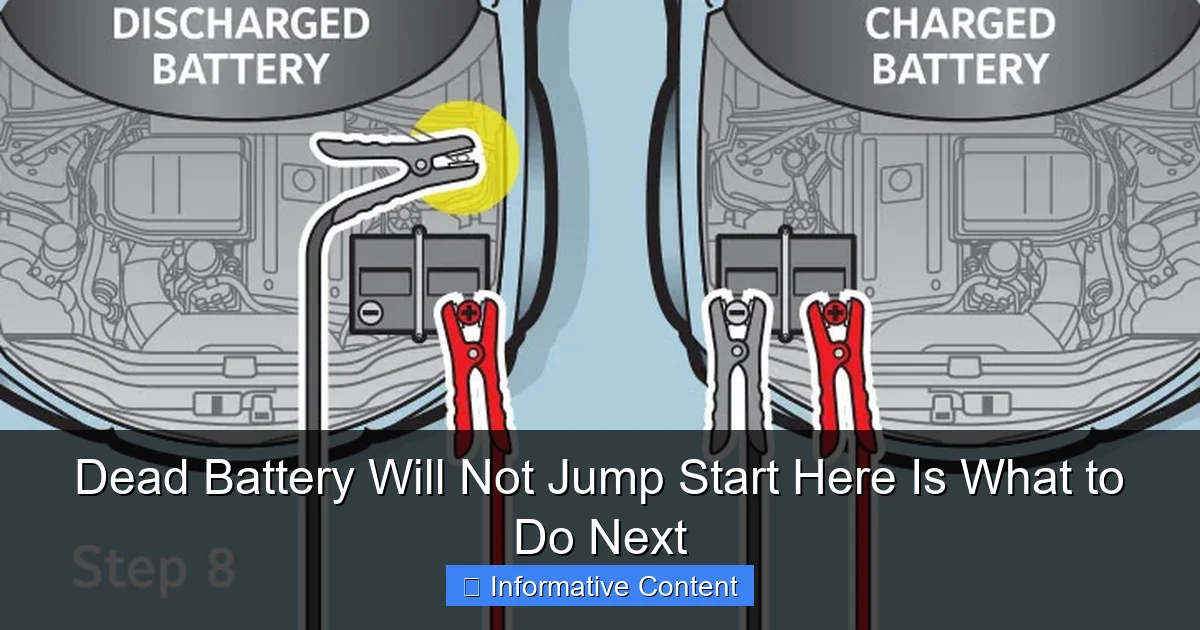
Featured image for dead battery will not jump start
Image source: static.pakwheels.com
If your dead battery won’t jump start, the issue likely goes beyond a simple charge—corroded terminals, a faulty alternator, or a completely failed battery may be to blame. Always inspect connections first, then test the battery and charging system to pinpoint the root cause. When all else fails, professional diagnostics or a battery replacement may be your only safe, reliable solution.
Key Takeaways
- Check connections first: Ensure jumper cables are properly attached to both batteries.
- Test the battery voltage: Use a multimeter to confirm if the battery is truly dead.
- Inspect for corrosion: Clean battery terminals to rule out poor electrical contact.
- Try a battery charger: A slow charge may revive a deeply discharged battery.
- Rule out alternator failure: Have the charging system tested if battery keeps dying.
- Replace if old: Batteries over 3 years old often need replacement, not revival.
📑 Table of Contents
- Dead Battery Will Not Jump Start? Here’s What to Do Next
- Understanding Why a Dead Battery Won’t Jump Start
- Step-by-Step Troubleshooting When Your Battery Won’t Jump
- When the Battery Is Beyond Jump Starting: Replacement Signs
- Other Culprits: Alternator, Starter, and Electrical Issues
- Preventing Future Battery Failures: Maintenance Tips
- Data Table: Battery Health Checklist
- Conclusion: You’re Not Stuck—You’re Prepared
Dead Battery Will Not Jump Start? Here’s What to Do Next
Imagine this: You’re running late for work, or maybe you’re about to pick up your kids from school. You slide into the driver’s seat, turn the key, and… nothing. Not even a click. You try again. Still nothing. The headlights are dim, the radio barely lights up, and your heart sinks. A dead battery. No big deal, right? Just grab the jumper cables, hook up to a neighbor’s car, and you’ll be on your way. But what if the battery won’t jump start? What if, after all that effort, the engine still refuses to turn over? That’s when frustration sets in. And you’re not alone—this is one of the most common (and confusing) car problems drivers face.
If your car’s dead battery won’t jump start, it’s easy to feel stuck. You’ve done everything “right”—checked the cables, waited 10 minutes, tried multiple attempts—but nothing works. The truth is, a battery that refuses to accept a jump is often a sign of something deeper. Maybe it’s not just the battery at all. Maybe it’s the alternator, a bad connection, or even a parasitic drain. In this guide, we’ll walk through what to do when a dead battery will not jump start, step by step, with real-world examples, practical tips, and no fluff. Whether you’re a DIY beginner or a seasoned car owner, you’ll walk away knowing exactly what to check—and how to fix it—without spending a fortune.
Understanding Why a Dead Battery Won’t Jump Start
Before we jump into solutions (pun intended), let’s talk about why a battery might not respond to a jump. A jump start works by transferring electrical current from a working battery to a dead one, giving it enough power to start the engine. But if the receiving battery is too far gone—or if there’s another issue blocking the flow of electricity—the jump simply won’t work.

Visual guide about dead battery will not jump start
Image source: youcanic.com
Common Reasons a Jump Start Fails
- Completely dead (sulfated) battery: Over time, lead-acid batteries develop sulfate crystals on the plates. If the battery has been deeply discharged for days or weeks, these crystals harden and prevent the battery from accepting a charge—even from a jump.
- Severe internal damage: A battery with a shorted cell, cracked case, or corroded terminals can’t hold or transfer electricity properly.
- Loose or corroded connections: Even a good battery won’t respond if the cables are loose, dirty, or corroded. Think of it like trying to charge your phone with a frayed cable—it just won’t work.
- Faulty alternator: If the alternator isn’t charging the battery while the car runs, the battery will drain quickly—even if it starts once.
- Parasitic drain: Some electrical component (like a glovebox light, trunk light, or faulty module) is drawing power when the car is off, slowly killing the battery.
- Extreme cold: In freezing temperatures, a weak battery can lose up to 60% of its cranking power. A jump might not be enough to overcome this.
Real-life example: A friend of mine once spent 30 minutes trying to jump a 7-year-old battery in a snowstorm. The car wouldn’t start. We eventually discovered the battery was completely sulfated—no amount of jumping would revive it. But we also found a loose ground wire on the starter. Fixing that and replacing the battery solved the problem.
The key takeaway? A dead battery will not jump start not because jumping is broken, but because the system has one or more underlying issues blocking the flow of power. Your job is to diagnose and eliminate those blockers.
Step-by-Step Troubleshooting When Your Battery Won’t Jump
Now that you know what might be causing the problem, let’s walk through a practical, step-by-step process to troubleshoot a battery that won’t jump start. This method works whether you’re at home, in a parking lot, or stranded on the side of the road.
1. Double-Check the Jump Start Procedure
It sounds basic, but many people make small mistakes during a jump. Here’s the correct way:
- Turn off both vehicles and set the parking brakes.
- Connect the positive (red) cable to the positive terminal of the dead battery.
- Connect the other end of the red cable to the positive terminal of the working battery.
- Connect the negative (black) cable to the negative terminal of the working battery.
- Connect the other end of the black cable to a bare metal ground on the dead car—like an engine bracket or bolt—not the dead battery’s negative terminal. This reduces the risk of sparks near flammable gases.
- Start the working car and let it run for 3–5 minutes. Then try starting the dead car.
Pro tip: If the dead car starts, keep it running for at least 15–20 minutes to let the alternator recharge the battery. If it stalls immediately, the battery may be beyond help.
2. Inspect the Battery and Cables
Open the hood and look closely at the battery:
- Are the terminals clean and tight? Corrosion (white or blue crust) can block electrical flow.
- Are the cables securely attached? Wiggle them gently. If they move, they need to be tightened.
- Is the battery case cracked or bulging? That’s a sign of internal damage.
- Does the battery smell like rotten eggs? That could mean a leaking or overcharged battery.
Quick fix: Clean the terminals with a mixture of baking soda and water, a wire brush, and a rag. Dry thoroughly before reconnecting. Tighten all connections with a wrench.
3. Test Voltage with a Multimeter
If you have a multimeter (they cost under $20 at auto stores), test the battery voltage:
- Set the multimeter to DC voltage (20V range).
- Touch the red probe to the positive terminal, black to negative.
- Read the voltage:
- 12.6V or higher: Battery is fully charged.
- 12.4V: 75% charged.
- 12.0V or below: Deeply discharged or failing.
Now, try to start the car and watch the voltage. If it drops below 10V when cranking, the battery is likely too weak to start the engine—even with a jump.
4. Check for Parasitic Draw
Even when the car is off, some systems use power. A normal draw is 50 milliamps or less. More than that is a problem.
- Turn off the car, remove the keys, and close all doors.
- Wait 10–15 minutes for the system to “sleep.”
- Set the multimeter to DC amps (10A range).
- Disconnect the negative battery cable.
- Connect the multimeter between the negative terminal and the cable end.
- Read the current draw. If it’s over 50mA, you have a parasitic drain.
Tip: Pull fuses one at a time until the draw drops. The circuit with the dropped fuse is the culprit—common offenders include glovebox lights, trunk lights, and aftermarket stereos.
When the Battery Is Beyond Jump Starting: Replacement Signs
Sometimes, no amount of troubleshooting will bring a battery back. It’s simply time to replace it. But how do you know when that moment has come?
Signs You Need a New Battery
- Age: Most car batteries last 3–5 years. If yours is over 4 years old, it’s on borrowed time.
- Repeated jump starts: If you’ve had to jump the car more than once in a month, the battery can’t hold a charge.
- Slow cranking: Even with a jump, the engine turns over slowly or labored.
- Swollen or bloated case: Heat and overcharging can cause the battery to expand. This means internal damage.
- Low voltage after charging: If you charge the battery (with a charger, not a jump) and it drops below 12.4V within 24 hours, it’s failing.
- Corrosion on terminals: While some corrosion is normal, heavy buildup can indicate overcharging or a leaking battery.
Real example: My sister’s 2015 Honda Civic had a battery that wouldn’t jump start after sitting for two weeks. We charged it with a battery tender for 12 hours. It showed 12.6V, but dropped to 11.2V after just 6 hours. That told us the battery was no longer holding a charge. We replaced it, and the problem vanished.
Choosing the Right Replacement Battery
Not all batteries are created equal. Here’s what to look for:
- Group size: Check your car’s manual or the old battery for the correct size (e.g., Group 24, 35, 65). It must fit the tray and terminals.
- CCA (Cold Cranking Amps): Higher CCA means better performance in cold weather. Match or exceed the original spec.
- Reserve Capacity (RC): How many minutes the battery can run essential systems if the alternator fails. Look for at least 90 minutes.
- Type: Most cars use standard lead-acid, but some newer models use AGM (Absorbent Glass Mat) for better vibration resistance and longer life. Check your manual.
Pro tip: Buy from a reputable auto parts store that offers free battery testing and recycling. Many will install it for free too.
Other Culprits: Alternator, Starter, and Electrical Issues
Here’s a hard truth: A dead battery will not jump start might not be the battery’s fault at all. Other parts of the electrical system can mimic battery failure. Let’s explore the most common suspects.
The Alternator: The Silent Killer
The alternator charges the battery while the engine runs. If it’s failing, the battery will slowly drain—even if you just replaced it.
- Symptoms: Dim lights, flickering dashboard, battery warning light, car dies shortly after jump.
- Test: With the engine running, measure battery voltage with a multimeter. It should read 13.8–14.4V. Below 13V means the alternator isn’t charging. Above 15V means it’s overcharging (which damages the battery).
Example: A reader once wrote in: “I replaced my battery, but it died again in a week.” We suggested testing the alternator. Sure enough, it was only putting out 12.2V at idle. Replacing the alternator fixed the issue for good.
Starter Motor Problems
If the starter motor is failing, it may not turn the engine over—even with a fully charged battery.
- Symptoms: Clicking sound when turning the key (solenoid engages but motor doesn’t spin), slow cranking, or no response.
- Test: Tap the starter gently with a wrench while someone tries to start the car. If it starts, the starter is likely failing.
Bad Grounds and Wiring
Electrical systems need clean, solid connections. A bad ground between the battery, engine, and chassis can prevent current flow.
- Check the ground cable from the battery to the engine block and chassis.
- Look for corrosion, frayed wires, or loose connections.
- Clean and tighten all ground points.
Faulty Ignition Switch
Rare, but possible. If the switch isn’t sending power to the starter, nothing will happen.
- Symptoms: No lights, no radio, no power at all when turning the key.
- Use a test light or multimeter to check for power at the starter solenoid when the key is turned.
Preventing Future Battery Failures: Maintenance Tips
You don’t want to go through this again. So let’s talk about how to keep your battery healthy and avoid future jump-start nightmares.
Regular Maintenance Routine
- Clean terminals monthly: Wipe with a baking soda/water mix and a brush.
- Check connections: Tighten cables and inspect for corrosion every oil change.
- Test battery voltage: Every 6 months, especially before winter.
- Drive regularly: Batteries drain when cars sit. Take a 20-minute drive at least once a week.
- Use a battery tender: For cars that sit more than 2 weeks, use a smart charger to maintain charge.
Smart Habits to Extend Battery Life
- Turn off all lights, AC, and accessories before turning off the engine.
- Close all doors and the trunk completely—interior lights can drain the battery overnight.
- Unplug phone chargers, dash cams, and aftermarket electronics when not in use.
- Park in a garage or shaded area to reduce heat exposure (heat kills batteries faster than cold).
- Get a battery with a warranty—many offer free replacement within 2–3 years.
Bonus tip: Keep a portable jump starter in your car. They’re small, rechargeable, and can jump a car without another vehicle. Great for emergencies.
Data Table: Battery Health Checklist
| Check | Normal | Problem | Action |
|---|---|---|---|
| Voltage (engine off) | 12.6V or higher | Below 12.4V | Charge or replace battery |
| Voltage (engine running) | 13.8–14.4V | Below 13V or above 15V | Test alternator |
| Terminal condition | Clean, tight | Corroded, loose | Clean and tighten |
| Parasitic draw | Under 50mA | Over 100mA | Find and fix drain |
| Battery age | Under 4 years | Over 5 years | Monitor or replace |
| Cranking speed | Fast, strong | Slow, labored | Test battery/starter |
Use this table as a quick reference during your next battery check. It’s a simple way to catch issues before they leave you stranded.
Conclusion: You’re Not Stuck—You’re Prepared
Finding out your dead battery will not jump start is frustrating, but it doesn’t mean you’re helpless. By following the steps in this guide—checking connections, testing voltage, ruling out the alternator, and knowing when to replace the battery—you can solve the problem with confidence. The key is to stop thinking of a jump start as a magic fix and start treating it as a diagnostic tool. If it doesn’t work, that’s a clue—not a dead end.
Remember: A battery that won’t jump is often a symptom, not the disease. Whether it’s a corroded terminal, a failing alternator, or a battery that’s simply lived its life, there’s always a reason—and usually a fix. And with a little maintenance, you can avoid this scenario altogether. Keep your terminals clean, test your battery regularly, and don’t ignore the warning signs. Your car (and your peace of mind) will thank you.
Next time your car won’t start, take a deep breath. Grab your multimeter, check the connections, and work through the steps. You’ve got this. And if all else fails? Call a pro. Sometimes, the smartest move is knowing when to ask for help. But now, at least, you’ll know exactly what to say: “My battery won’t jump—can you check the alternator and parasitic draw?” That’s not just a driver. That’s a car-savvy problem solver.
Frequently Asked Questions
Why won’t my car battery jump start even after trying for several minutes?
If your dead battery will not jump start after multiple attempts, the battery may be deeply sulfated, damaged, or completely depleted. Corroded terminals or a faulty connection between the jumper cables and battery can also prevent a successful jump.
Could a dead battery that won’t jump start mean I need a new one?
Yes, if the battery is old (typically over 3–5 years) or has visible damage, it may no longer hold a charge. A mechanic or auto shop can test the battery’s voltage and internal health to confirm if replacement is necessary.
Is it possible the alternator is to blame if my battery won’t jump start?
While a jump start failure usually points to the battery, a faulty alternator can prevent the battery from recharging while driving. If the car starts but dies shortly after, the alternator may need inspection.
What should I do if my battery won’t jump start and I’m stranded?
If your dead battery will not jump start, call for roadside assistance or a mobile mechanic. They can test the battery, charging system, and provide a replacement if needed—saving you time and guesswork.
Can extreme temperatures cause a battery to fail to jump start?
Yes, both extreme cold and heat can damage batteries and reduce their ability to accept a charge. In freezing weather, the chemical reactions inside slow down, making it harder to jump start a weak or old battery.
Are there safety risks when trying to jump start a dead battery that won’t respond?
Yes, attempting to jump start a damaged or frozen battery can lead to sparks, acid leaks, or even explosions. If the battery is cracked, bulging, or frozen, avoid jump starting and have it replaced immediately.