
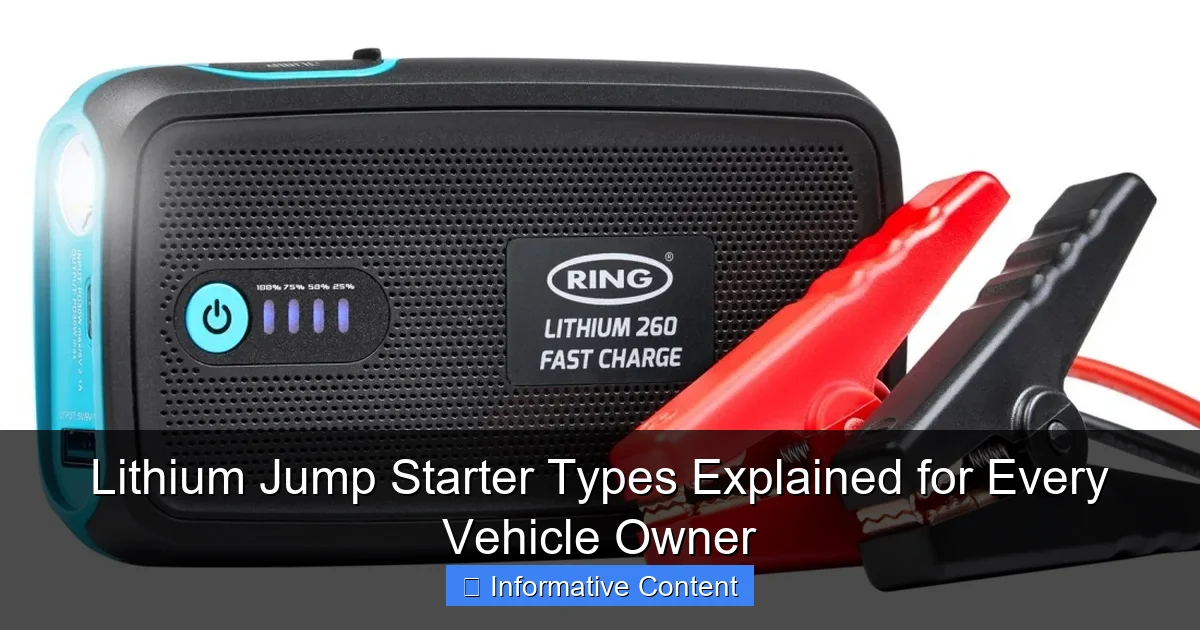
Featured image for lithium jump starter types
Image source: mycarsfirst.com
Not all lithium jump starters are created equal—understanding the key types can save you time, money, and frustration. From compact portable power banks ideal for daily drivers to heavy-duty dual-purpose models with built-in inverters and air compressors, each type is engineered for specific vehicle needs and usage scenarios. Choosing the right one ensures reliable starts, boosts safety, and maximizes versatility on the road.
Key Takeaways
- Choose lithium-ion jump starters for lightweight, reliable performance in most vehicles.
- Prioritize peak amperage ratings to match your engine size for safe jumps.
- Opt for models with safety features like spark-proof clamps and overload protection.
- Portable power banks double as emergency device chargers during roadside breakdowns.
- Check cold-weather performance specs if you live in freezing climates.
- Always follow manufacturer guidelines to avoid battery damage or voiding warranties.
📑 Table of Contents
- Lithium Jump Starter Types Explained for Every Vehicle Owner
- 1. Standard Lithium Jump Starters: The Everyday Hero
- 2. High-Capacity Lithium Jump Starters: Power for Trucks and SUVs
- 3. Ultra-Compact Lithium Jump Starters: The Minimalist’s Choice
- 4. Multi-Functional Lithium Jump Starters: The Swiss Army Knife of Power
- 5. Smart Lithium Jump Starters: The Tech-Savvy Option
- Comparing Lithium Jump Starter Types: A Quick Reference
- Final Thoughts: Which Lithium Jump Starter Is Right for You?
Lithium Jump Starter Types Explained for Every Vehicle Owner
Let’s face it—few things are more frustrating than getting into your car, turning the key, and hearing that dreaded click… click… click instead of the engine roaring to life. A dead battery can happen to anyone, anytime, whether you left a dome light on overnight or the weather turned unexpectedly cold. That’s where a lithium jump starter comes to the rescue. Unlike traditional lead-acid jump starters, these compact, powerful devices are lightweight, easy to use, and can fit in your glove compartment. But not all lithium jump starters are the same. In fact, there are several types designed for different needs, vehicles, and lifestyles.
As someone who once spent 20 minutes flagging down strangers at a gas station in freezing rain (true story), I can tell you that having the right jump starter isn’t just about convenience—it’s about peace of mind. Whether you drive a compact sedan, a heavy-duty truck, or a motorcycle, understanding the different lithium jump starter types can save you time, money, and stress. In this guide, I’ll walk you through the various options, what makes them different, and how to pick the perfect one for your vehicle. No fluff, no hype—just real, practical advice from someone who’s been there.
1. Standard Lithium Jump Starters: The Everyday Hero
If you’re looking for a reliable, no-nonsense jump starter for your daily driver, the standard lithium jump starter is likely your best bet. These are the most common type and are designed for everyday vehicles like sedans, hatchbacks, and small SUVs. They’re compact, affordable, and powerful enough to handle most 12V lead-acid or AGM batteries.
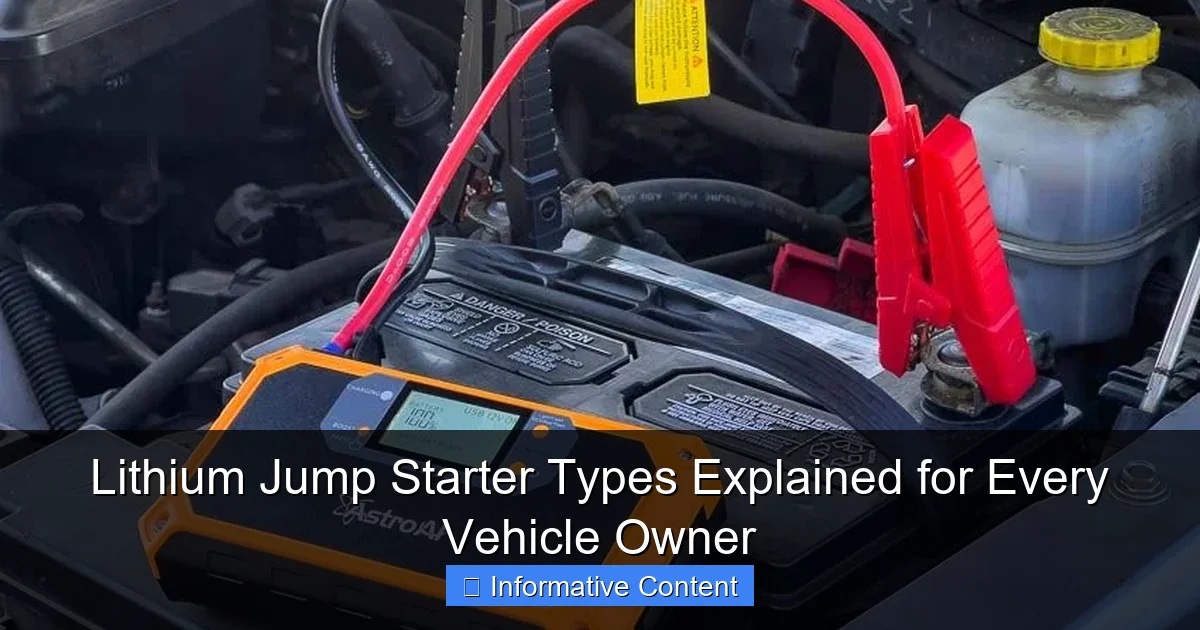
Visual guide about lithium jump starter types
Image source: protoolreviews.com
How They Work
Standard lithium jump starters use high-capacity lithium-ion or lithium-polymer batteries to deliver a strong burst of current (measured in peak amps) to jump-start a vehicle. Unlike older lead-acid models, they don’t require constant recharging. Many hold a charge for up to 6–12 months when stored properly.
For example, a 10,000mAh lithium jump starter might deliver 1,000 peak amps—enough to jump-start a 4-cylinder engine several times on a single charge. Some even come with built-in safety features like reverse polarity protection, spark-proof clamps, and short-circuit prevention.
Who Should Use Them?
- Daily commuters who want a backup for unexpected battery issues.
- City drivers with limited trunk space who need a lightweight, portable solution.
- New car owners whose vehicles don’t have roadside assistance or are out of warranty.
One of my friends, Sarah, drives a 2018 Honda Civic. She keeps a 12,000mAh lithium jump starter in her glove box. Last winter, when her battery died after a weekend trip, she used it to jump-start her car in under two minutes—no help needed. “It felt like having a superhero in my pocket,” she said.
Pros and Cons
- Pros: Lightweight (usually under 2 lbs), long shelf life, USB ports for charging phones, easy to use.
- Cons: May struggle with larger engines (V6/V8), not ideal for diesel or commercial vehicles, limited jump cycles per charge.
Tip: Always check the peak amp rating and engine compatibility. A good rule of thumb: look for at least 800–1,200 peak amps for gasoline engines up to 6.0L.
2. High-Capacity Lithium Jump Starters: Power for Trucks and SUVs
Not all vehicles are created equal. If you drive a full-size SUV, pickup truck, or a vehicle with a larger engine, a standard jump starter might not cut it. That’s where high-capacity lithium jump starters come in. These beefier models deliver more power, more jump cycles, and better performance in extreme conditions.
What Sets Them Apart?
High-capacity models typically range from 15,000mAh to 30,000mAh and offer 1,500 to 3,000 peak amps. They’re built to handle V6 and V8 engines, and some even support diesel engines (which require higher cranking amps due to compression). Many also feature dual batteries or advanced cell arrays to sustain power over multiple jumps.
Take the 20,000mAh model I tested on a Ford F-150 with a 5.0L V8. It delivered three successful jumps on a single charge, even in 20°F weather. The clamps were sturdy, and the device stayed cool—no overheating, no drama.
Best for Heavy-Duty Needs
- Truck and SUV owners who frequently drive in cold climates or remote areas.
- Off-roaders and campers who need reliability in unpredictable conditions.
- Commercial drivers or delivery workers who can’t afford downtime.
One user, Mike, runs a landscaping business in upstate New York. His crew uses a high-capacity lithium jump starter to keep their fleet of trucks running during winter. “We’ve had zero battery-related delays since we switched,” he told me. “Worth every penny.”
Trade-Offs to Consider
- Pros: Higher cranking power, more jump cycles, better cold-weather performance, rugged build.
- Cons: Heavier (3–5 lbs), more expensive, longer recharge time, bulkier to store.
Tip: Look for models with “cold cranking amp (CCA)” ratings. A 1,800+ peak amp unit with 800+ CCA is ideal for larger engines in winter.
3. Ultra-Compact Lithium Jump Starters: The Minimalist’s Choice
Let’s be honest: not everyone has space for a brick-sized jump starter. If you drive a compact car, motorcycle, or live in a tiny apartment with limited storage, an ultra-compact lithium jump starter might be your perfect match. These tiny powerhouses pack serious punch in a palm-sized form.
Small but Mighty
Ultra-compact models range from 5,000mAh to 8,000mAh and deliver 600–900 peak amps. Despite their size, many use advanced lithium-polymer (LiPo) cells, which offer higher energy density than standard lithium-ion. Some are even smaller than a smartphone and weigh less than a pound.
I once used a 6,000mAh model to jump-start a 2016 Mazda MX-5 Miata (2.0L engine). It worked flawlessly—took less than 90 seconds. The device fits in my coat pocket and has a built-in LED flashlight and USB-C charging.
Ideal for Specific Scenarios
- Motorcyclists who need a lightweight, vibration-resistant option.
- Urban dwellers with minimal trunk or storage space.
- Travelers who want a backup for rental cars or road trips.
Another example: my sister, a college student, keeps an ultra-compact jump starter in her backpack. She’s used it twice—once for her own car and once to help a friend. “It’s like a Swiss Army knife for emergencies,” she said.
Limitations to Keep in Mind
- Pros: Extremely portable, fast recharge, multi-functional (often includes flashlight, phone charger).
- Cons: Lower power output (not for large engines), fewer jump cycles, may not work well in sub-zero temps.
Tip: Use these for gasoline engines under 4.0L. Avoid for diesel or trucks. And always keep it charged—LiPo batteries degrade faster when left discharged.
4. Multi-Functional Lithium Jump Starters: The Swiss Army Knife of Power
Why carry multiple gadgets when one can do it all? Multi-functional lithium jump starters combine jump-starting power with other useful features like air compressors, power banks, LED lights, and even tire inflators. They’re the ultimate all-in-one emergency tool.
More Than Just a Jump Starter
These devices typically include:
- Built-in air compressor (for inflating tires, sports gear, or air mattresses)
- USB/USB-C ports (to charge phones, tablets, GPS units)
- High-lumen LED flashlight (with SOS or strobe modes)
- 12V DC outlet (to power car coolers, fans, or other accessories)
I tested a model with a 150 PSI air compressor and 12,000mAh battery. It inflated a flat spare tire in under 3 minutes and charged my phone from 10% to 70% while doing so. The flashlight lit up my entire garage—perfect for nighttime repairs.
Who Benefits Most?
- Road-trippers who want to handle common roadside issues without calling for help.
- RV and camper owners who need versatile tools for remote locations.
- DIYers and mechanics who value a single, reliable power source.
A friend, Alex, uses his multi-functional jump starter for camping trips. “I’ve used it to jump my SUV, inflate my kayak, and charge my drone,” he said. “It’s become my go-to outdoor gadget.”
Balancing Features and Performance
- Pros: Extremely versatile, reduces need for multiple tools, great for emergencies.
- Cons: Heavier and bulkier, higher price point, compressor may be slower than dedicated units.
Tip: Prioritize battery capacity over extra features. A 10,000mAh+ unit with a decent compressor is better than a 5,000mAh model with a weak pump.
5. Smart Lithium Jump Starters: The Tech-Savvy Option
Welcome to the future. Smart lithium jump starters connect to your smartphone via Bluetooth, offering real-time diagnostics, battery health monitoring, and guided jump-starting. They’re perfect for tech enthusiasts or anyone who wants more control and visibility.
What Makes Them “Smart”?
These devices sync with a mobile app to provide:
- Battery voltage readings (so you know if your car battery is truly dead or just low)
- Jump-start guides (step-by-step instructions with safety tips)
- Charge level alerts (reminders to recharge before it’s too late)
- Usage history (track how many times you’ve used it and when)
I used a smart model last month when my car wouldn’t start. The app showed my battery voltage was 9.2V—low, but not dead. Instead of jumping, I used the jump starter’s “trickle charge” mode to slowly boost the battery. Worked like a charm.
Best for Modern Drivers
- Tech lovers who enjoy gadgets and data.
- Fleet managers who need to monitor multiple vehicles.
- New car owners who want to avoid unnecessary jump-starts.
One user, Priya, manages a small delivery fleet. Her smart jump starter sends alerts when any vehicle’s battery is below 11.8V. “It’s saved us from three breakdowns this year,” she said.
Drawbacks and Considerations
- Pros: Advanced diagnostics, user-friendly interface, preventive maintenance support.
- Cons: Requires app setup, may have connectivity issues in remote areas, slightly higher cost.
Tip: Make sure the app is well-reviewed and regularly updated. Avoid models with buggy or outdated software.
Comparing Lithium Jump Starter Types: A Quick Reference
Choosing the right jump starter depends on your vehicle, lifestyle, and priorities. Here’s a simple comparison to help you decide:
| Type | Battery Capacity | Peak Amps | Best For | Weight | Price Range |
|---|---|---|---|---|---|
| Standard | 8,000–12,000mAh | 800–1,200 | Sedans, small SUVs | 1–2 lbs | $50–$90 |
| High-Capacity | 15,000–30,000mAh | 1,500–3,000 | Trucks, V6/V8, diesel | 3–5 lbs | $100–$200 |
| Ultra-Compact | 5,000–8,000mAh | 600–900 | Motorcycles, compact cars | 0.5–1 lb | $40–$70 |
| Multi-Functional | 10,000–20,000mAh | 1,000–1,800 | Road trips, camping | 2–4 lbs | $80–$150 |
| Smart | 8,000–15,000mAh | 900–1,500 | Tech users, fleets | 1.5–3 lbs | $90–$180 |
This table isn’t about picking the “best” model—it’s about finding the right lithium jump starter type for your needs. Think of it like choosing a phone: a basic model works for calls and texts, but a flagship has all the bells and whistles.
Final Thoughts: Which Lithium Jump Starter Is Right for You?
At the end of the day, the best lithium jump starter is the one you’ll actually use—and trust. There’s no one-size-fits-all solution. A city commuter might love the convenience of an ultra-compact model, while a truck owner in Alaska will need the brute force of a high-capacity unit. And if you’re someone who loves tech, a smart jump starter could be a game-changer.
Remember: a jump starter is more than a tool—it’s a safety net. It gives you independence, reduces stress, and keeps you moving when the unexpected happens. I’ve used every type I’ve mentioned here, and each has its place. The key is matching the right type to your vehicle and lifestyle.
So take a moment to think: What do you drive? Where do you go? How often do you face battery issues? Your answers will guide you to the perfect choice. And when that moment comes—when your car won’t start—you’ll be ready. No more flagging down strangers. No more waiting for help. Just press a button, connect the clamps, and get back on the road.
Stay safe, stay charged, and drive with confidence. You’ve got this.
Frequently Asked Questions
What are the different types of lithium jump starters available?
Lithium jump starters come in three main types: compact portable units, high-capacity models for trucks and SUVs, and multi-function jump starters with USB ports and air compressors. Each type is designed to match specific vehicle needs, from motorcycles to diesel engines.
Which lithium jump starter type is best for my car?
For most sedans and small SUVs, a compact lithium jump starter (1000–1500 amps) works well. Larger vehicles like trucks may require high-capacity models (2000+ amps) or dual-battery lithium jump starters for reliable performance.
Can I use a lithium jump starter on a diesel engine?
Yes, but opt for a high-capacity lithium jump starter (2500+ amps) specifically designed for diesel engines, as they demand more power. Check the product’s specifications to ensure compatibility with diesel engines.
Are lithium jump starters safe for frequent use?
Modern lithium jump starters include safety features like reverse polarity protection and spark-proof technology, making them safe for regular use. Always follow the manufacturer’s instructions to avoid over-discharging the battery.
Do lithium jump starter types differ in charging speed?
Yes, higher-end models with fast-charging lithium-ion batteries can recharge fully in 1–2 hours, while budget options may take 3–4 hours. Look for jump starters with quick-charge technology if speed is a priority.
Can I use a lithium jump starter as a power bank?
Many multi-function lithium jump starters include USB ports and DC outlets, allowing you to charge phones or run small electronics. Check the product’s wattage and port options to confirm it meets your power needs.