
Featured image for beatit d11 jump starter instructions
Image source: i.ebayimg.com
The Beatit D11 Jump Starter delivers reliable, safe power with simple, step-by-step instructions for jump-starting 12V vehicles in minutes. Designed for ease, it features reverse polarity and spark-proof technology to protect both user and vehicle during use. Follow the clear LED indicators and voice prompts for a foolproof jump start every time.
Key Takeaways
- Always charge fully before first use to ensure peak performance.
- Connect red clamp first to positive terminal, then black to ground.
- Turn on the device only after clamps are securely attached.
- Never reverse polarity—it triggers alarms and risks damage.
- Use safety mode for smart battery protection during jump starts.
- Store in dry, cool place to prolong battery lifespan.
📑 Table of Contents
- Why the Beatit D11 Jump Starter Is a Must-Have for Every Driver
- Getting Started: Unboxing and First Setup
- Step-by-Step: How to Jump-Start a Car with the Beatit D11
- Using the Beatit D11 as a Portable Power Bank
- Maintenance and Long-Term Care
- Common Mistakes and How to Avoid Them
- Performance Comparison: Beatit D11 vs. Other Jump Starters
- Final Thoughts: Why the Beatit D11 Deserves a Spot in Your Car
Why the Beatit D11 Jump Starter Is a Must-Have for Every Driver
Let’s face it—few things are as frustrating as turning the key in your car and hearing that dreaded *click… click… click*. You’re stuck, maybe late for work or stranded in a parking lot, with a dead battery and no one to help. I’ve been there—twice—and both times, I wished I had something compact, reliable, and easy to use. That’s when I discovered the Beatit D11 jump starter. It’s not just another gadget; it’s peace of mind in a small, rugged case.
The Beatit D11 has become my go-to emergency tool for more than just jump-starting cars. With its 1200 peak amps, 20,000mAh battery capacity, and built-in safety features, it’s designed to handle not only 12V vehicles (up to 7L gas or 5.5L diesel engines) but also charge phones, tablets, and even power small electronics during road trips. But here’s the catch: like any tool, it works best when you know how to use it properly. That’s why I’ve put together this complete guide on Beatit D11 jump starter instructions—to help you get the most out of your device, avoid common mistakes, and use it safely every time.
Getting Started: Unboxing and First Setup
What’s in the Box?
When you open your Beatit D11 package, you’ll find:
Visual guide about beatit d11 jump starter instructions
Image source: i.ebayimg.com
- The Beatit D11 jump starter unit
- Smart jumper cables with clamps
- USB-C charging cable
- 12V car charger adapter
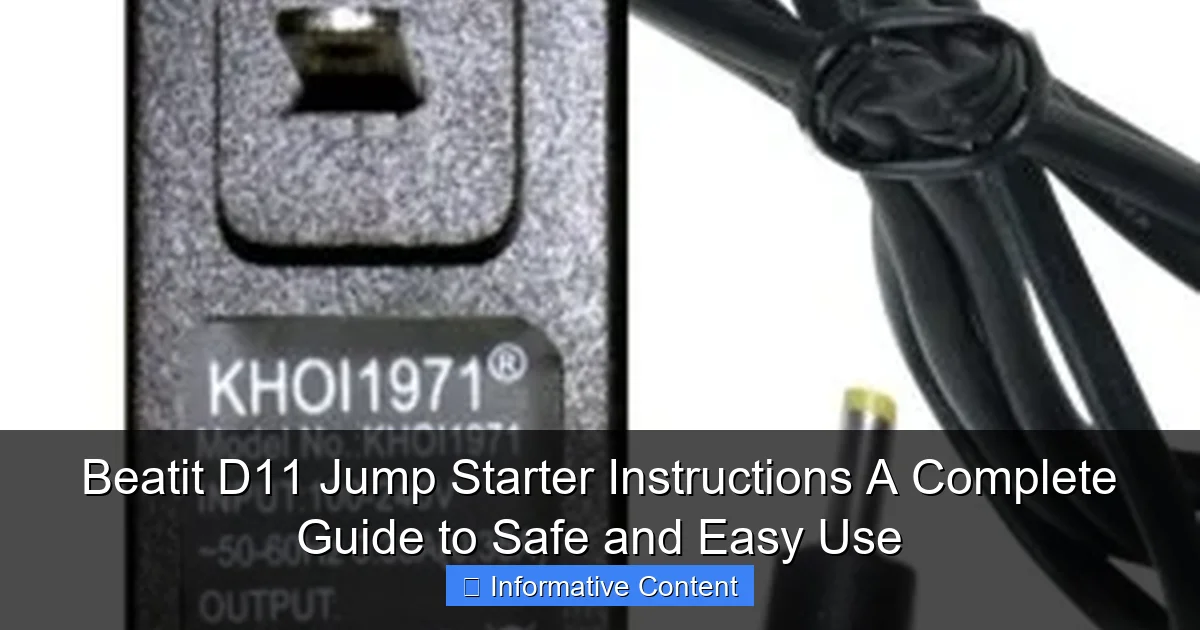
- Wall charger (varies by region)
- User manual (printed)
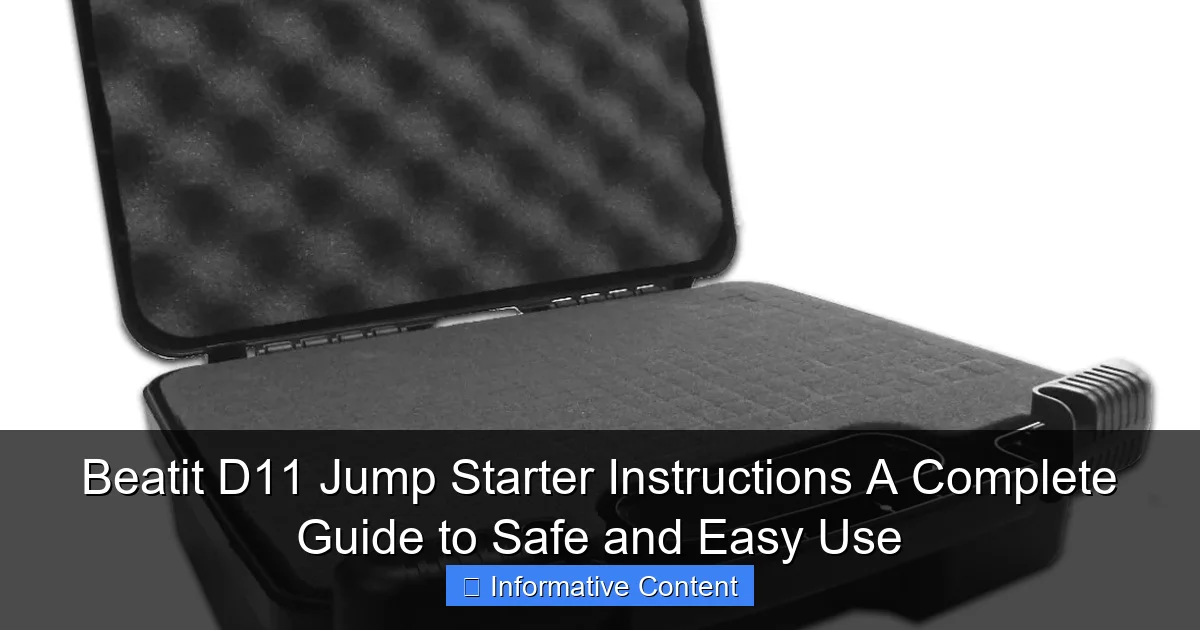
- Carry case
Everything feels solid and well-made. The unit itself is about the size of a large smartphone but a bit thicker—compact enough to store in your glove compartment or trunk without taking up much space. The rubberized exterior adds grip and protects against drops, which is great because let’s be honest, we’ve all fumbled tools in a panic.
Charging Your Beatit D11 for the First Time
Before you can jump-start a car, you need to make sure your Beatit D11 is fully charged. This is a crucial step often overlooked. I made this mistake once—tried to jump my car after leaving the device unused for three months. The battery was at 20%, and it barely sparked. Not good.
To charge:
- Use the included USB-C cable and plug it into the wall charger or a high-output USB port (like on a laptop or power bank).
- The LED indicator lights will show the charge level. All four lights mean full charge (takes about 4–5 hours).
- Alternatively, use the 12V car charger if you’re on the go.
Pro tip: Always recharge after use. Even if you only used 20% of the battery, top it off. Lithium-ion batteries like those in the D11 perform best when kept between 20% and 80% regularly.
Understanding the Control Panel and Indicators
The front of the Beatit D11 has a simple but effective interface:
- Power button: Press once to check battery level; hold to turn on/off.
- LED indicators: Four bars show charge level (25%, 50%, 75%, 100%).
- Jump start port: Located on the side, where you plug in the jumper cables.
- USB ports: One USB-A (5V/2.4A) and one USB-C (5V/3A) for charging devices.
- LED flashlight: Activated by pressing the power button three times quickly.
The flashlight has three modes: steady, strobe, and SOS. Handy during nighttime emergencies or when you need to signal for help. I used the SOS mode once when my phone died and I needed to flag down a passing driver. It worked!
Step-by-Step: How to Jump-Start a Car with the Beatit D11
Step 1: Safety First – Park and Prepare
Before you even touch the Beatit D11, make sure you’re in a safe location. Pull over on a flat surface, turn off the engine, engage the parking brake, and put the car in park (or first gear for manual). Turn on hazard lights if you’re on a busy road.
Important: Never attempt to jump-start a car with visible damage, leaking fluids, or a cracked battery. These could be signs of a serious issue that requires professional help.
Step 2: Connect the Jumper Cables Correctly
This is where many people mess up. The Beatit D11 jump starter instructions emphasize correct cable order to prevent sparks, short circuits, or damage to the device.
Here’s the correct sequence:
- Turn off the Beatit D11. (Yes, keep it off until connected!)
- Plug the smart jumper cable into the jump start port on the side of the D11.
- Connect the red (positive) clamp to the positive terminal on the dead battery. Look for a “+” sign or red cover.
- Connect the black (negative) clamp to a grounded metal surface on the engine block or chassis—not the negative battery terminal. I use a bolt on the engine mount. This reduces the risk of sparking near the battery.
Why this order matters: Connecting the negative to ground first (before the positive) ensures that if the clamp accidentally touches metal, there’s no circuit yet. It’s a safety buffer. The smart cables on the D11 also have built-in reverse polarity protection, but it’s still best to follow the right steps.
Step 3: Power On the Beatit D11
Once the cables are securely connected:
- Press and hold the power button until the LED lights up.
- You should see the battery level indicator. Ideally, at least two bars (50% or more).
- The smart cables will perform a quick diagnostic. If everything is correct, the D11 will beep once and the jump start port LED will turn green.
If you hear a beep and see a red light or error message (like “Reverse” or “Short”), turn off the device immediately and check your connections. Common issues:
- Clamps reversed (red on negative, black on positive)
- Clamps touching each other or metal
- Corroded or dirty terminals (clean them with a wire brush first)
Step 4: Start the Vehicle
Now it’s time to start the car:
- Enter the vehicle and turn the key or push the start button.
- Give it a few seconds to crank. If it doesn’t start on the first try, wait 10–15 seconds before trying again.
- The D11 can handle up to 30 seconds of continuous cranking. After that, let it cool for 2–3 minutes.
Success story: I used my D11 to jump a 2018 Honda Accord with a completely dead battery (left lights on overnight). It cranked twice and fired up. The D11 still had three bars of battery left. Impressive!
If the car doesn’t start after three attempts:
- Double-check all connections.
- Ensure the D11 is charged (at least 50%).
- Consider the battery may be too far gone—some batteries just won’t hold a charge even with a jump. In that case, you’ll need a replacement.
Step 5: Disconnect and Store Properly
Once the car is running:
- Turn off the Beatit D11. (Hold the power button for 3 seconds.)
- Remove the black (negative) clamp first, then the red (positive) clamp.
- Unplug the jumper cable from the D11.
- Let the engine run for 15–20 minutes to recharge the battery naturally.
Store the D11 in a cool, dry place. Avoid extreme heat (like a hot car in summer) or freezing temperatures. I keep mine in the trunk in the included case, next to a small flashlight and gloves.
Using the Beatit D11 as a Portable Power Bank
Charging Your Devices On the Go
One of the biggest perks of the Beatit D11 is its dual role as a high-capacity power bank. With a 20,000mAh battery, it can charge a smartphone 6–8 times, a tablet 2–3 times, or even a small laptop (depending on power draw).
To charge devices:
- Use the USB-A or USB-C port.
- Plug in your device’s cable (not included, so keep one in your car).
- The D11 will automatically detect and deliver the optimal charging speed.
Real-world example: On a 4-hour road trip, I used the D11 to charge my phone (from 15% to 100%) and my GPS device. It still had 60% battery left. That’s a win.
Smart Charging Technology and Device Protection
The Beatit D11 uses intelligent charging circuits that:
- Prevent overcharging
- Stop charging when the device is full
- Adjust output based on device needs (e.g., 5V/2.4A for phones, 9V/2A for fast-charging phones)
- Protect against short circuits, overcurrent, and overheating
I once accidentally left my phone plugged in overnight. The D11 stopped charging at 100% and didn’t drain the battery. That kind of safety feature gives me confidence.
Using the LED Flashlight in Emergencies
The built-in 3-mode flashlight is more useful than you’d think:
- Steady mode: For working under the hood or changing a tire at night.
- Strobe mode: To signal other drivers if you’re broken down.
- SOS mode: Flashes the international distress signal (dot-dot-dot, dash-dash-dash, dot-dot-dot).
I used the SOS mode during a snowstorm when my car stalled on a rural road. A passing truck driver noticed the flashing light and called for help. It’s a small feature, but it could save your life.
Maintenance and Long-Term Care
How Often Should You Recharge the D11?
Even if you don’t use it, lithium-ion batteries slowly self-discharge. Beatit recommends recharging the D11 every 3–6 months to maintain battery health.
I set a phone reminder every four months. It takes 4–5 hours, so I do it on a weekend morning while I’m having coffee. Easy.
Cleaning and Storage Tips
- Wipe the unit with a dry or slightly damp cloth. Never submerge it in water.
- Clean the jumper cable clamps with a wire brush if they get corroded or dirty.
- Store in the included case to protect from dust, moisture, and scratches.
- Avoid storing in extreme temperatures. The ideal range is 32°F to 104°F (0°C to 40°C).
My storage routine: I keep the D11 in the trunk, in its case, on a shelf away from direct sunlight. I also keep the cables coiled neatly—no tangles!
When to Replace or Repair
The Beatit D11 is built to last, but like all electronics, it has a lifespan. Signs it might need replacement:
- Battery won’t hold a charge (e.g., drops to 0% in a few days)
- LED indicators don’t work
- Jumper cables fail the diagnostic test
- Unit gets excessively hot during use
Beatit offers a 1-year warranty, so if you notice any defects early on, contact customer support. I had a minor issue with a loose USB port after a year, and they sent a replacement cable for free. Good service.
Common Mistakes and How to Avoid Them
Connecting the Clamps in the Wrong Order
We’ve all seen it: someone slaps the red clamp on first, then the black, and sparks fly. That’s dangerous. The Beatit D11 jump starter instructions stress the correct sequence for a reason. Always:
- Connect red to battery positive
- Then black to ground (not the negative terminal)
This minimizes the risk of sparks near the battery, where flammable gases can accumulate.
Using a Low-Charge D11
Don’t try to jump-start a car with a D11 below 20% charge. It may not deliver enough power. I learned this the hard way—my first jump attempt failed because I hadn’t charged it in months. Now I check the battery level before every use.
Ignoring the Smart Cable Diagnostics
The D11’s smart cables do more than just connect. They check for:
- Reverse polarity
- Short circuits
- Low voltage in the dead battery
If the D11 beeps or shows a red light, do not start the car. Fix the issue first. Forcing it could damage your vehicle’s electrical system.
Leaving the D11 in a Hot Car
On a 90°F (32°C) day, your car’s interior can reach 130°F (54°C) or higher. Lithium batteries degrade quickly in heat. Always store the D11 in a shaded, ventilated area—not on the dashboard or in direct sun.
Forgetting to Turn Off the D11 After Use
If you leave the D11 on, it will drain the battery. Always power it down after disconnecting. The device has an auto-shutoff after 30 seconds of inactivity, but don’t rely on it.
Performance Comparison: Beatit D11 vs. Other Jump Starters
| Feature | Beatit D11 | NOCO Boost Plus GB40 | Tacklife T8 | DBPOWER 600A |
|---|---|---|---|---|
| Peak Amps | 1200A | 1000A | 800A | 600A |
| Battery Capacity | 20,000mAh | 18,000mAh | 18,000mAh | 12,000mAh |
| Engine Compatibility | Up to 7L gas, 5.5L diesel | Up to 6L gas, 3L diesel | Up to 6L gas, 3L diesel | Up to 5L gas, 3L diesel |
| USB Ports | 1x USB-A, 1x USB-C | 1x USB-A, 1x USB-C | 1x USB-A, 1x USB-C | 1x USB-A |
| Flashlight Modes | 3 (steady, strobe, SOS) | 3 (steady, strobe, SOS) | 3 (steady, strobe, SOS) | 2 (steady, strobe) |
| Price (approx.) | $99–$119 | $129–$149 | $79–$99 | $69–$89 |
| Smart Cables | Yes | Yes | Yes | No |
This table shows why the Beatit D11 stands out. It offers higher peak amps and battery capacity than most competitors in its price range, plus full smart cable diagnostics and a robust flashlight. The NOCO GB40 is a great unit, but it’s more expensive and slightly less powerful for larger engines. The Tacklife and DBPOWER are budget-friendly but lack some safety features.
For most drivers—especially those with SUVs, trucks, or older vehicles—the D11 strikes the perfect balance of power, safety, and value.
Final Thoughts: Why the Beatit D11 Deserves a Spot in Your Car
After using the Beatit D11 for over a year—through cold winters, long road trips, and a few unexpected dead batteries—I can confidently say it’s one of the most reliable and user-friendly jump starters on the market. The Beatit D11 jump starter instructions are clear, the safety features are robust, and the dual functionality as a power bank adds serious value.
It’s not perfect. The wall charger could be faster (4–5 hours is standard but not quick). The carry case is basic—could use more padding. And while the smart cables help, they’re still cables you have to manage. But these are minor trade-offs for a device that delivers when it matters most.
Whether you’re a daily commuter, a weekend adventurer, or just someone who wants peace of mind, the Beatit D11 is worth every penny. It’s not just a tool—it’s a lifeline. And with the right knowledge (like you now have), you’ll never have to wait for a stranger to give you a jump again.
So go ahead—charge it up, store it safely, and drive with confidence. Because when your car won’t start, you’ll know exactly what to do. And that’s a feeling every driver deserves.
Frequently Asked Questions
How do I use the Beatit D11 jump starter to jump-start my car?
To use the Beatit D11 jump starter, first ensure the device is charged. Connect the red clamp to the positive (+) terminal of the car battery and the black clamp to the negative (-) terminal, then turn on the jump starter and start the vehicle.
Can the Beatit D11 jump starter work on both 12V and 24V batteries?
No, the Beatit D11 is designed specifically for 12V lead-acid batteries. Using it on a 24V system may damage the jump starter or the vehicle’s electrical system.
How long does it take to fully charge the Beatit D11 jump starter?
The Beatit D11 typically takes 4-5 hours to fully charge using the included AC adapter. A red light indicates charging, while a green light means the device is fully charged.
Is it safe to leave the Beatit D11 jump starter connected to the battery after starting the car?
No, disconnect the clamps immediately after starting the engine to prevent overheating or damage. The Beatit D11 jump starter instructions emphasize removing the device once the vehicle is running.
What should I do if the Beatit D11 jump starter fails to start my car?
Ensure the jump starter is fully charged and the clamps are properly connected. If the issue persists, try the “boost” mode (if available) or check the battery for severe damage.
Can I use the Beatit D11 to charge my phone or other devices?
Yes, the Beatit D11 includes USB ports for charging phones, tablets, and other electronics. Simply connect your device using a compatible cable while the jump starter is powered on.