
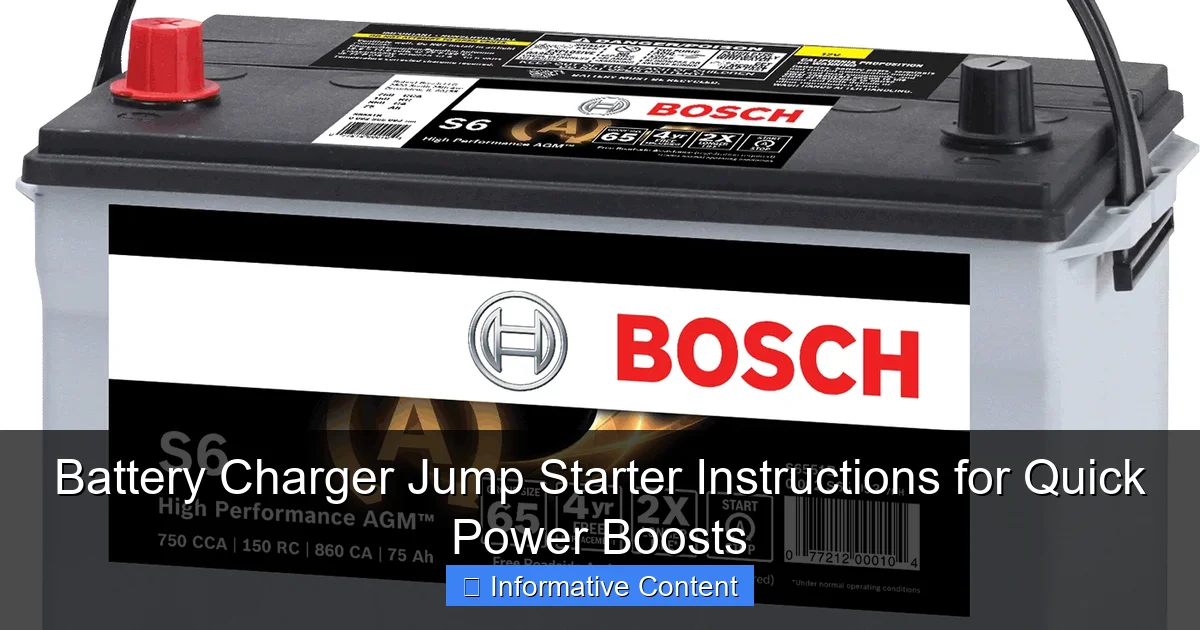
Featured image for battery charger jump starter instructions
Image source: pngimg.com
Always connect the red clamp to the positive (+) terminal first and the black clamp to a grounded metal surface—never the negative battery post—to ensure a safe, spark-free jump start. Follow your battery charger jump starter’s manual precisely, verifying voltage compatibility and charge level before use to avoid damage. Quick, correct connections mean faster engine starts and extended battery life.
Key Takeaways
- Always check polarity: Match red to positive (+) and black to negative (−) terminals.
- Charge fully before use: Ensure the jump starter has 100% battery for reliable performance.
- Turn off electronics: Deactivate lights and accessories before connecting to avoid surges.
- Wait 3–5 seconds: Allow time for the charger to stabilize before starting the engine.
- Disconnect promptly: Remove clamps immediately after engine starts to prevent damage.
- Store properly: Keep in a cool, dry place to prolong battery life.
📑 Table of Contents
- Why You Need a Battery Charger Jump Starter (And How to Use One)
- How a Battery Charger Jump Starter Works (The Simple Science)
- Step-by-Step: How to Use a Battery Charger Jump Starter
- Pro Tips to Maximize Performance and Safety
- Troubleshooting Common Issues (And How to Avoid Them)
- Data Table: Jump Starter Specs vs. Vehicle Types
- Final Thoughts: Be Prepared, Not Scared
Why You Need a Battery Charger Jump Starter (And How to Use One)
Ever been stuck in a parking lot with a car that won’t start, the engine clicking weakly as you pray for a miracle? I’ve been there—twice. Once in the middle of a snowstorm, and another time while rushing to a job interview. Both times, a battery charger jump starter saved the day. These compact, powerful devices are no longer just for mechanics or roadside assistance teams. They’re now essential tools for everyday drivers.
Unlike traditional jumper cables that rely on another car, a battery charger jump starter is a self-contained unit with a built-in battery. It’s like carrying a portable power bank for your car. Whether your battery dies from leaving the lights on, extreme weather, or just age, these devices deliver a quick jolt to get you back on the road—no second vehicle required. But here’s the catch: if you don’t know how to use them properly, you could risk damage to your vehicle, the device, or even yourself. That’s why understanding battery charger jump starter instructions is so important. It’s not just about pressing a button; it’s about safety, timing, and knowing your device inside and out.
How a Battery Charger Jump Starter Works (The Simple Science)
Inside the Box: What Makes It Tick
Think of a battery charger jump starter like a superhero with multiple powers. It’s not just a one-trick pony. At its core, it has a high-capacity lithium-ion or lead-acid battery (usually 12V, matching your car). But it also includes smart circuitry, safety features, and often USB ports to charge your phone or tablet. Some even come with LED flashlights, air compressors, or digital displays.
Visual guide about battery charger jump starter instructions
Image source: openclipart.org
When you connect the jump starter’s clamps to your car battery, it sends a burst of current through the engine’s starter motor. This “wakes up” the battery just enough to ignite the engine. The key is delivering enough power quickly—without overloading your car’s electrical system. That’s where built-in protections like reverse polarity alerts, spark-proof clamps, and overload sensors come in. They’re like the device’s brain, preventing mistakes before they happen.
Why It’s Better Than Traditional Jumper Cables
Let’s be honest: jumper cables can be a pain. You need another car, someone willing to help, and perfect alignment to connect them safely. I once waited 45 minutes for a stranger to pull over in the rain—only to realize my cables were too short. A battery charger jump starter eliminates all that hassle. It’s:
- Portable: Fits in your trunk or glove compartment.
- Self-sufficient: No need for another vehicle.
- Safer: Built-in protections reduce the risk of sparks or damage.
- Multifunctional: Often includes USB ports, flashlights, or tire inflators.
For example, I keep my jump starter in my backpack when I travel. Last summer, it charged my phone at a campsite *and* revived my rental car after a long hike. Talk about a multitasker! For a detailed comparison of portable vs traditional models, see our guide on portable jump starters.
Step-by-Step: How to Use a Battery Charger Jump Starter
Step 1: Safety First (Before You Touch Anything)
Before you even open the box, take a breath. Safety isn’t just a buzzword—it’s critical. Here’s what to do:
- Park on a flat surface and turn off the engine. Engage the parking brake.
- Wear safety glasses (yes, really). Battery acid and sparks are no joke.
- Inspect the car battery for cracks, leaks, or corrosion. If you see any, do not proceed. Call a pro instead.
- Check the jump starter’s charge level. Most have indicator lights. If it’s below 50%, charge it first (more on this later).
Pro tip: I keep a pair of disposable nitrile gloves in my jump starter kit. They protect your hands from battery acid and make cleanup easier.
Step 2: Connecting the Clamps (The Right Way)
This is where many people panic. But it’s simpler than you think. Follow this sequence:
- Red (Positive) Clamp First: Attach it to the car battery’s positive terminal (+). It’s usually marked with a red cover or “+” symbol.
- Black (Negative) Clamp Second: Connect it to a bare metal surface on the engine block, away from the battery. I use a bolt or bracket near the alternator. Never connect it to the battery’s negative terminal if your jump starter has reverse polarity protection—it might trigger a warning.
- Double-check connections: Ensure clamps are secure and not touching each other or other metal.
Why this order? It reduces the risk of sparks near the battery, where hydrogen gas (explosive!) can accumulate. I learned this the hard way after a minor spark singed my glove. Not fun.
Step 3: Powering Up and Starting the Engine
Now the moment of truth:
- Turn on the jump starter. Some models have a power button; others activate automatically when connected.
- Wait 2-3 minutes. Let the device “prime” the car battery. This is crucial for older or deeply discharged batteries.
- Start the engine. Turn the key (or push the start button). If it doesn’t start, wait another 30 seconds and try again. Do not crank the engine continuously for more than 5 seconds. Overheating can damage the starter motor.
My first time using a jump starter, I got impatient and cranked the engine for 10 seconds straight. The jump starter shut off automatically—a safety feature—and I had to wait 5 minutes to try again. Lesson learned!
Step 4: Disconnecting and Storing
Once the engine runs, disconnect in reverse order:
- Remove the black (negative) clamp first.
- Remove the red (positive) clamp.
- Turn off the jump starter. Store it in its case to protect the clamps.
Important: Let the engine run for at least 15-20 minutes to recharge the car battery. If possible, drive for 30+ minutes. A jump start is a temporary fix—the alternator needs time to restore full charge.
Pro Tips to Maximize Performance and Safety
Charge It Regularly (Even When You Don’t Use It)
Jump starters lose charge over time—even when stored. I check mine monthly and recharge if it’s below 70%. Here’s a simple schedule:
- After every use: Recharge immediately.
- Every 3 months: Top off the charge, even if unused.
- Before long trips: Fully charge and test it.
Why? Lithium-ion batteries degrade faster when deeply discharged. One winter, I ignored this rule, and my jump starter wouldn’t hold a charge when I needed it. Now I set a phone reminder.
Know Your Device’s Limits
Not all jump starters are created equal. Check the specs:
- Peak Amps: For large engines (trucks, SUVs), look for 1,500+ amps. Small cars (1.6L engines) can use 800-1,000 amps.
- Compatibility: Some models work with diesel engines or ATVs. Read the manual!
- Low-Temp Performance: If you live in a cold climate, choose a model rated for sub-zero temperatures.
Example: My first jump starter was a budget model rated for 800 amps. It struggled with my SUV but worked fine for my compact car. I upgraded to a 1,800-amp model—now I can jump-start my neighbor’s pickup truck too.
Use the Extra Features (But Don’t Overdo It)
Many jump starters have USB ports, LED lights, or air compressors. These are great, but:
- Don’t drain the battery: Charging a phone while jump-starting a car can overload the system. Use one function at a time.
- Store accessories properly: Keep USB cables and air hoses coiled to avoid tangles.
I once left my air compressor running to inflate a bike tire. By the time I tried to jump-start my car, the jump starter’s battery was too low. Always prioritize jump-starting over secondary functions.
Troubleshooting Common Issues (And How to Avoid Them)
“The Jump Starter Isn’t Working—Now What?”
Don’t panic. Try these fixes:
- Check connections: Loose clamps are the #1 cause of failure. Clean battery terminals with a wire brush if they’re corroded.
- Verify charge level: If the jump starter’s lights are off, it’s likely dead. Charge it first.
- Reset the device: Some models have a reset button (usually a small pinhole). Press it for 5 seconds.
- Test with another car: If your neighbor’s car starts with the jump starter, the issue is likely your battery—not the device.
Real-life example: Last winter, my jump starter wouldn’t power on. I panicked—until I realized the USB cable I used to charge it was faulty. A different cable fixed it in minutes.
When to Call a Pro (Instead of DIY)
Jump starters aren’t magic. Call a mechanic if:
- The engine cranks but won’t start: Could be fuel, spark plugs, or a bad alternator.
- The jump starter overheats or smokes: Turn it off immediately. It may have a short circuit.
- The car battery is swollen or leaking: Replace it ASAP. Jumping a damaged battery risks explosion.
I once ignored a swollen battery because I was in a hurry. The jump starter triggered a safety shutdown, and I ended up stranded. A new battery (and a lesson learned) cost $120.
Data Table: Jump Starter Specs vs. Vehicle Types
| Vehicle Type | Recommended Peak Amps | Jump Starter Size | Key Features to Look For |
|---|---|---|---|
| Compact Car (e.g., Honda Civic) | 800–1,000 amps | Pocket-sized | USB ports, LED light |
| Mid-Size Sedan (e.g., Toyota Camry) | 1,000–1,500 amps | Handheld | Reverse polarity protection, LCD display |
| SUV/Truck (e.g., Ford F-150) | 1,500–2,000+ amps | Large (luggage-sized) | Diesel compatibility, air compressor |
| Diesel Engine | 2,000+ amps | Extra-large | Heavy-duty clamps, low-temp operation |
| Motorcycle | 300–500 amps | Ultra-compact | Lightweight, vibration-resistant |
Note: Always refer to your vehicle’s manual for specific requirements.
Final Thoughts: Be Prepared, Not Scared
Let’s face it: a dead battery is stressful. But with a battery charger jump starter and these instructions, you’re not just prepared—you’re empowered. I keep mine in my car year-round, and it’s saved me (and my friends) more times than I can count. It’s not about being a mechanic; it’s about having a reliable backup plan.
Remember, the key to success is practice. Try using your jump starter at home (with a working battery) to get comfortable with the steps. Keep the manual in the case. And never, ever skip the safety checks. A few minutes of caution can save hours of frustration—or worse.
So, whether you’re a daily commuter, a road-trip warrior, or just someone who hates being stranded, a jump starter is a small investment for huge peace of mind. As my dad always says, “It’s better to have it and not need it than to need it and not have it.” Now, go charge that device, check those clamps, and drive with confidence. Your future self will thank you.
Frequently Asked Questions
How do I use a battery charger jump starter safely?
Always follow the manufacturer’s battery charger jump starter instructions: connect the clamps to the correct terminals (red to positive, black to negative), ensure the device is powered off during connection, and never touch the clamps together. Safety checks prevent sparks and damage to the vehicle or jump starter.
Can I leave my jump starter connected to the battery while charging?
Most modern jump starters have built-in protections and can be left connected during charging, but always verify in your battery charger jump starter instructions. Overcharging may reduce battery lifespan or cause overheating in older models.
Why won’t my jump starter power on or hold a charge?
This may indicate a drained internal battery or connection issue. Try recharging the jump starter fully per the instructions, and inspect clamps/cables for damage. If problems persist, consult the warranty or customer support.
What’s the difference between jump-starting and regular charging?
Jump-starting delivers a high burst of power to start a dead engine, while regular charging slowly replenishes the battery. Use the dedicated “jump start” mode (if available) and avoid prolonged cranking to protect the device.
How often should I recharge my portable jump starter?
Even when unused, recharge every 3–6 months to maintain battery health, as most lithium-ion units self-discharge over time. Check your model’s instructions for specific storage and maintenance guidelines.
Can I use a jump starter on other devices like phones or laptops?
Many jump starters include USB ports for charging electronics. Use the appropriate cable and output setting, but prioritize vehicle use—draining the jump starter fully may leave you without emergency power.