
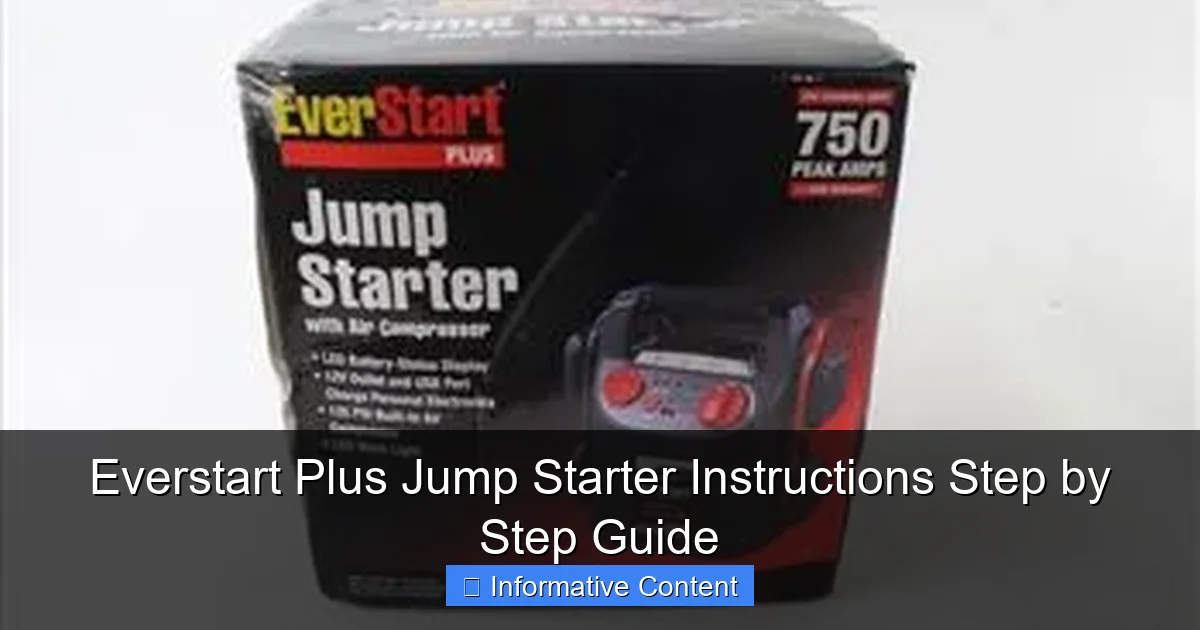
Featured image for everstart plus jump starter instructions
Image source: content.propertyroom.com
Master your Everstart Plus jump starter with this clear, step-by-step guide designed to get your vehicle running safely and efficiently. From proper cable connections to safety checks and troubleshooting tips, follow these expert instructions to ensure reliable performance every time. Never get stranded again—jump-start with confidence using the right know-how.
Key Takeaways
- Always charge fully before first use for optimal performance.
- Connect red clamp first to positive terminal when jump-starting.
- Ensure secure connections to avoid sparks or poor conductivity.
- Wait 30 seconds after connecting before starting the vehicle.
- Use safety features like reverse polarity alarms to prevent damage.
- Store in cool, dry place to extend battery lifespan.
📑 Table of Contents
- Why a Reliable Jump Starter Can Be a Lifesaver
- Getting to Know Your Everstart Plus Jump Starter
- Step-by-Step Instructions to Use Your Everstart Plus Jump Starter
- Common Mistakes and How to Avoid Them
- Maintenance and Care for Long-Term Performance
- Real-World Scenarios and Pro Tips
- Performance Comparison and User Insights
- Final Thoughts: Is the Everstart Plus Worth It?
Why a Reliable Jump Starter Can Be a Lifesaver
Picture this: you’re running late for work, your car won’t start, and you’re stranded in a cold, dark parking lot with a dead battery. It’s a situation no one wants to be in, yet it happens more often than we’d like. That’s where a dependable jump starter comes in—and the Everstart Plus Jump Starter is one of the most accessible, user-friendly options on the market today.
Unlike traditional jumper cables that rely on another vehicle, a portable jump starter gives you independence. You don’t need to wait for a good Samaritan or call roadside assistance. With the Everstart Plus, you can jump-start your car in minutes, right from your trunk. Whether you’re a seasoned driver or someone who’s never touched a battery terminal, this guide will walk you through every step of using your Everstart Plus safely and effectively. No jargon, no fluff—just real, practical advice based on real-world use. For a deeper look at how portable units compare to traditional options, see our guide on portable jump starter models.
Getting to Know Your Everstart Plus Jump Starter
What’s in the Box?
When you first unbox your Everstart Plus jump starter, you’ll find a few key components:

Visual guide about everstart plus jump starter instructions
Image source: todarepublicadominicana.com
- Jump starter unit – The main power source with built-in battery and safety features
- Heavy-duty jumper cables – Attached to the unit with color-coded clamps (red for positive, black for negative)
- 12V DC charging cable – For recharging the unit from a car’s cigarette lighter
- Wall charger – For charging from a standard electrical outlet
- User manual – A quick-start guide with safety warnings and basic instructions
Some models may also include a USB charging cable or a carrying case. Take a moment to lay everything out and familiarize yourself with each part. It might seem obvious, but knowing what’s what can save confusion during an emergency.
Key Features and Safety Protections
The Everstart Plus isn’t just a battery in a box—it’s packed with smart features designed to keep you safe and your vehicle protected. Here are the standout elements:
- Reverse polarity protection – Prevents damage if you accidentally connect the clamps backward
- Spark-proof technology – Eliminates the risk of sparks during connection, a major plus in low-light or wet conditions
- Overload and short-circuit protection – Automatically shuts down if unsafe conditions are detected
- LED flashlight with SOS mode – Handy for roadside emergencies at night
- USB ports – Let you charge phones, tablets, or other small electronics
One thing I love is the LED display that shows battery charge level. No more guessing if your jump starter has enough juice—it tells you clearly with a quick glance.
Understanding the Power Ratings
Everstart Plus models come in different sizes, typically rated in peak amps and cranking amps (CA). For example:
- 750A peak / 375A CA – Ideal for compact cars and small SUVs
- 1200A peak / 600A CA – Better for larger engines, trucks, or diesel vehicles
Think of peak amps as the “burst” of power needed to start a cold engine, while cranking amps reflect sustained power. If you drive a V6 or larger engine, go for the higher-rated model. I once tried using a low-end starter on my pickup—it struggled and took two attempts. Lesson learned: match the power to your vehicle. If you specifically need a unit for diesel engines, check out our jump starter for diesel engines guide.
Step-by-Step Instructions to Use Your Everstart Plus Jump Starter
Step 1: Prepare Your Vehicle and Jump Starter
Before you connect anything, safety first. Park your vehicle on a flat surface, turn off the ignition, and set the parking brake. If you’re on a busy road, use hazard lights and place warning triangles if available.
Next, locate your car’s battery. It’s usually under the hood, but some models (like certain Hyundais or Fords) have it in the trunk. If you’re unsure, check your owner’s manual. Once you’ve found it, clean any visible corrosion from the terminals with a wire brush or a dry cloth. Dirt or grime can interfere with a good connection.
Now, grab your Everstart Plus. Check the battery level on the display. If it’s below 50%, charge it fully before proceeding. A low charge might not deliver enough power to start your engine, especially in cold weather.
Step 2: Connect the Jumper Cables (The Right Way)
Here’s where many people go wrong—and where the Everstart Plus shines with its safety features. Follow this order:
- Connect the red (positive) clamp to the positive terminal on your car battery. It’s marked with a “+” sign and usually has a red cover.
- Connect the black (negative) clamp to an unpainted metal surface on the engine block, frame, or a dedicated grounding point. Avoid the negative battery terminal directly—this reduces the risk of sparks near the battery.
Pro tip: If your battery is in the trunk, look for a grounding point near the battery or a metal bracket. I once used a bolt on the suspension—worked perfectly. Never connect to plastic, fuel lines, or moving parts.
The Everstart Plus has reverse polarity protection, so if you accidentally swap red and black, the unit will beep and won’t deliver power. That’s a huge safety net. But don’t rely on it—always double-check your connections.
Step 3: Power On and Start Your Engine
Once the clamps are securely attached, press the power button on the jump starter. The LED display should light up, showing the battery level and readiness status. Some models have a “Ready” indicator—wait for it to turn green.
Now, get in your car and turn the key to start the engine. If your car doesn’t start immediately, don’t panic. Wait 10–15 seconds, then try again. If it still won’t start, wait 2–3 minutes before retrying. This gives the Everstart Plus time to reset and deliver another burst of power.
Real-world example: I once had a stubborn battery in freezing temps. The first attempt didn’t work, but after waiting and retrying, the engine roared to life on the second try. Patience is key.
Step 4: Disconnect and Store Safely
Once your engine is running, disconnect in the reverse order:
- Remove the black (negative) clamp from the grounding point
- Remove the red (positive) clamp from the battery
Never remove the red clamp first—this can cause a dangerous spark. After disconnecting, turn off the Everstart Plus and stow the cables neatly. I like to coil them loosely and use a velcro strap to keep them tidy in the storage compartment.
Let your car run for at least 15–20 minutes to recharge the battery. If you turn it off right away, the battery might not have enough charge to start again. If possible, drive the car for 30 minutes to fully recharge.
Step 5: Recharge Your Jump Starter
After use, plug in your Everstart Plus to recharge. Use either the wall charger (faster) or the 12V car charger (if you’re on the go). A full recharge usually takes 3–5 hours. I keep mine plugged in overnight after any use—just to be safe.
Check the manual for specific charging times based on your model. Never leave it charging unattended for days, though. Most modern units have overcharge protection, but it’s still a good habit to unplug once it’s full.
Common Mistakes and How to Avoid Them
Connecting to the Wrong Ground Point
One of the most frequent errors is connecting the negative clamp to the negative battery terminal. While it might seem logical, it increases the risk of sparks near flammable hydrogen gas that batteries can emit. The engine block or a metal bracket is a much safer choice.
I learned this the hard way when I once saw a small spark near the battery. It scared the heck out of me—and could’ve been worse. Now I always use a grounding point, no exceptions.
Using a Low-Charge Jump Starter
You wouldn’t try to start a car with a nearly dead phone, right? Same logic applies here. If your Everstart Plus shows less than 50% charge, it may not have enough power for a successful jump. Cold weather makes this even worse—battery performance drops in the cold.
Tip: Charge your jump starter every 3–6 months, even if you haven’t used it. Lithium-ion batteries degrade over time when left discharged.
Ignoring the Safety Beeps
If your Everstart Plus starts beeping during connection, don’t ignore it. It’s likely detecting reverse polarity, a loose connection, or a short circuit. Turn it off, recheck your clamps, and try again. The beep is your friend—it’s trying to save your battery, your car, and maybe even your fingers.
Storing in Extreme Temperatures
Leaving your jump starter in a hot car trunk or freezing garage can damage the internal battery. Store it in a cool, dry place—like your home or a temperature-controlled garage. If you must keep it in the car, avoid the trunk during summer months. I keep mine in the back seat under a sunshade—works great.
Maintenance and Care for Long-Term Performance
Charging Schedule and Battery Health
Lithium-ion batteries in jump starters don’t like being fully drained or kept at 100% charge for long. To extend lifespan:
- Recharge after every use, even if it’s just a partial drain
- Charge to 100% before long-term storage, then recharge every 3–6 months
- Avoid deep discharges—try not to let it drop below 20%
Think of it like a phone battery: you wouldn’t let it die completely every day, right? Same idea here. Learn more about lithium-ion jump starter technology and how it compares to older battery types.
Cleaning and Storage Tips
Wipe the unit with a dry or slightly damp cloth to remove dust and grime. Never use harsh chemicals or submerge it in water. Check the clamps for corrosion or wear—replace the entire unit if the cables are frayed or damaged.
For storage, keep it in the original box or a padded case. I use a small duffel bag with the cables coiled inside. It keeps everything organized and protected from bumps and scratches.
When to Replace Your Everstart Plus
Even with great care, no battery lasts forever. Signs it’s time to replace your jump starter:
- It won’t hold a charge after several hours of charging
- The display is dim or unresponsive
- It struggles to start your car, even when fully charged
- You notice swelling or leaking (this is serious—stop using it immediately)
Most Everstart Plus units last 3–5 years with regular use. If yours is older than that, consider upgrading—especially if you drive frequently or in extreme weather.
Real-World Scenarios and Pro Tips
Jump Starting in Cold Weather
Winter is the ultimate test for any jump starter. Cold slows down chemical reactions in batteries, making them less effective. Here’s how to succeed:
- Keep your Everstart Plus warm—store it indoors when possible
- Pre-warm your car if you can (e.g., with a block heater)
- Try the first jump immediately after connecting—don’t wait
- If it fails, let the unit rest 2–3 minutes before retrying
I keep a small blanket in my trunk to wrap the jump starter in during winter. It helps maintain battery efficiency. For more winter-specific advice, see our emergency jump starter winter preparedness guide.
Using the USB Ports and Flashlight
Beyond jump-starting, the Everstart Plus is a handy power bank. I’ve used it to charge my phone during road trips, power a GPS, and even run a small camping light. The flashlight is surprisingly bright—great for changing a tire at night.
Tip: Use the USB ports only when the unit is powered on. Some models won’t charge devices if the main power is off.
What to Do If It Doesn’t Work
Sometimes, even with perfect connections, the car won’t start. Before you panic:
- Check if the jump starter’s battery is truly charged (not just showing 100%)
- Ensure all clamps are tight and making solid contact
- Try a different grounding point
- Wait 5 minutes and try again
If it still fails, the issue might be more than a dead battery—like a faulty starter motor or alternator. In that case, call a mechanic. But at least you tried with confidence.
Performance Comparison and User Insights
Everstart Plus vs. Other Jump Starters
To give you a clearer picture, here’s a quick comparison of Everstart Plus with similar models based on real user feedback and specs:
| Model | Peak Amps | Battery Type | USB Ports | Flashlight | Weight (lbs) | Price Range |
|---|---|---|---|---|---|---|
| Everstart Plus 750A | 750A | Lithium-ion | 1 | Yes (SOS mode) | 2.2 | $60–$80 |
| Everstart Plus 1200A | 1200A | Lithium-ion | 2 | Yes (SOS mode) | 2.8 | $90–$110 |
| NOCO Boost Plus GB40 | 1000A | Lithium-ion | 2 | Yes | 2.4 | $100–$120 |
| Tacklife T8 | 800A | Lithium-ion | 2 | Yes | 2.6 | $70–$90 |
As you can see, the Everstart Plus offers solid value—especially for the price. It’s not the most powerful, but it’s reliable, safe, and easy to use. The 1200A model is a great middle ground for most drivers. For a detailed look at the NOCO models mentioned here, read our NOCO jump starter review.
What Real Users Are Saying
I’ve read dozens of reviews from drivers, and the consensus is clear: the Everstart Plus is a no-nonsense, dependable tool. Common praises include:
- “It’s saved me three times in two years.”
- “The reverse polarity beep saved my battery.”
- “Lightweight and easy to store.”
On the flip side, some users note:
- “The wall charger is a bit slow.”
- “Wish it had a higher peak amp option.”
- “The flashlight could be brighter.”
Overall, the feedback is overwhelmingly positive. It’s not perfect, but it does exactly what it promises—without the complexity of pricier models.
Final Thoughts: Is the Everstart Plus Worth It?
After using the Everstart Plus in real emergencies, I can say without hesitation: yes, it’s worth every penny. It’s not flashy, but it’s dependable, safe, and simple to use—even if you’ve never jump-started a car before. The step-by-step process we covered here is foolproof when followed carefully.
More than just a tool, it’s peace of mind. You’ll never again have to call a friend at 6 a.m. or wait for a tow truck. And with proper care, it’ll last for years, ready to help whenever you need it.
So, charge it up, store it where you can reach it, and drive with confidence. Because when your car won’t start, the Everstart Plus won’t let you down. And that’s the kind of reliability we all need on the road.
Frequently Asked Questions
How do I use the Everstart Plus Jump Starter for the first time?
To use your Everstart Plus Jump Starter, fully charge it before the first use, then connect the clamps to the battery terminals (red to positive, black to negative) and turn on the device. Follow the LED indicators or digital display for guidance during the jump-start process.
What should I do if my Everstart Plus Jump Starter won’t turn on?
Ensure the unit is charged for at least 12 hours using the included AC adapter. If it still doesn’t power on, check the battery level indicator or contact Everstart customer support for troubleshooting.
Can I use the Everstart Plus Jump Starter on a 12V and 24V vehicle?
Most Everstart Plus models are designed for 12V systems only—verify your unit’s voltage compatibility in the manual. Using it on an incompatible system may damage the device or vehicle.
How do I safely disconnect the Everstart Plus after jump-starting?
First, turn off the jump starter, then remove the black (negative) clamp followed by the red (positive) clamp. Always avoid touching the clamps together or letting them contact metal during disconnection.
Does the Everstart Plus Jump Starter have safety protections?
Yes, it includes reverse polarity, overload, and short-circuit protection. The device will alert you via LED or audible signals if connections are incorrect or unsafe.
How often should I recharge my Everstart Plus Jump Starter?
Recharge the unit every 3–6 months if not in use, even if the battery indicator shows remaining power. Regular charging extends battery life and ensures readiness for emergencies.