
Featured image for topvision jump starter instructions
Image source: everstartjumpstarter.com
Always follow the Topvision jump starter instructions carefully to ensure safe, effective vehicle jump-starting every time. This complete guide walks you through proper connection, usage, and troubleshooting to prevent damage to your vehicle or device. Keep it handy for emergencies and maximize battery life with correct charging and storage practices.
Key Takeaways
- Always check battery levels before use to ensure sufficient power.
- Connect clamps correctly: red to positive, black to negative.
- Turn off devices before jump-starting to avoid power surges.
- Wait 30 seconds after connection before attempting ignition.
- Store in a cool, dry place to maintain battery longevity.
- Use safety gloves to protect hands during the process.
📑 Table of Contents
- Why Every Driver Should Have a Jump Starter (And How to Use It Right)
- Understanding Your Topvision Jump Starter: Features and Components
- Step-by-Step Topvision Jump Starter Instructions for Safe Use
- Common Mistakes to Avoid (And How to Troubleshoot)
- Maintaining and Charging Your Topvision Jump Starter
- Real-World Use Cases: When a Topvision Jump Starter Saves the Day
- Final Thoughts: Your Roadside Lifesaver Is Only as Good as Your Knowledge
Why Every Driver Should Have a Jump Starter (And How to Use It Right)
Remember that sinking feeling when your car won’t start? The headlights flicker, the engine groans, and suddenly you’re stranded in a parking lot, late for work, with a dead battery. I’ve been there—more than once. And that’s exactly why I now keep a Topvision jump starter in my trunk. It’s not just a tool; it’s peace of mind. Unlike traditional jumper cables that require another vehicle, a jump starter gives you independence. No waiting for a kind stranger. No risky roadside connections. Just you, your device, and a fully revived engine in minutes.
But here’s the thing: a jump starter is only as good as your knowledge of how to use it. I learned this the hard way when I once tried to jump my SUV with a low-charge device and ended up with a smoking battery and a very confused mechanic. That’s why I’m writing this guide—to help you avoid rookie mistakes and use your Topvision jump starter safely, effectively, and with confidence. Whether you’re a new driver, a weekend warrior, or a seasoned road tripper, understanding your device is the first step toward roadside readiness.
Understanding Your Topvision Jump Starter: Features and Components
What’s Inside the Box?
When you unbox your Topvision jump starter, you’ll typically find more than just the main unit. Most models come with:
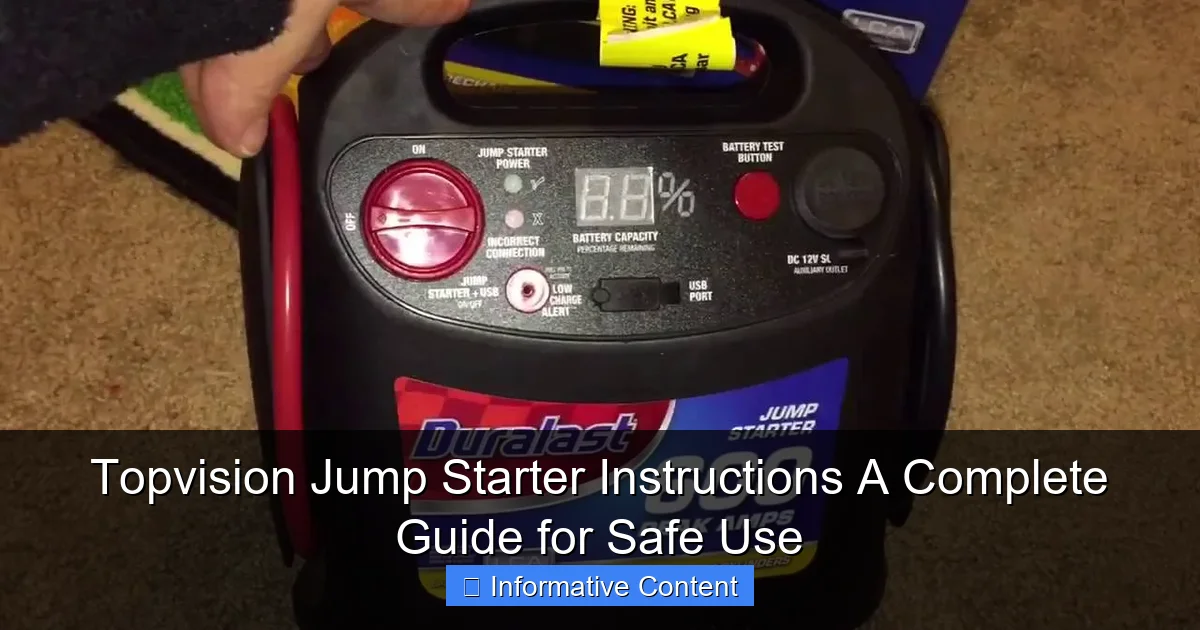
Visual guide about topvision jump starter instructions
Image source: i.ytimg.com
- The jump starter power bank itself
- Smart jumper cables (clamps with built-in safety features)
- A USB-C charging cable
- A wall adapter and car charger
- A carrying case or pouch
- A user manual (don’t skip this!)
One thing I love about Topvision is that their packaging is intuitive. The cables are clearly labeled—red for positive (+), black for negative (–)—and the clamps feel sturdy. No flimsy plastic here. The main unit is compact, about the size of a thick paperback book, making it easy to store under a seat or in a glove box.
Key Features That Set Topvision Apart
Topvision isn’t just another generic jump starter. It’s packed with features designed for safety and versatility:
- High Peak Current (1500A–3000A depending on model): Enough to start cars, trucks, motorcycles, and even some RVs.
- Smart Clamp Technology: Prevents reverse polarity, short circuits, and sparks. If you connect the clamps wrong, it won’t let you proceed.
- LED Flashlight with SOS Mode: Super handy if you’re stuck at night or need to signal for help.
- USB Ports (2–3): Charge your phone, GPS, or tablet while you wait for the engine to start.
- Built-in Battery Management System (BMS): Protects against overcharge, over-discharge, and overheating.
- Jump-Start Indicator: A clear LED screen or light that shows whether the device is ready to jump.
I once used my Topvision to jump a friend’s diesel pickup—something I was nervous about. But the 2000A peak current handled it like a champ. And when the engine roared to life, I felt like a roadside superhero.
Understanding the Power Rating
Topvision models come in different capacities, measured in peak amps (A) and milliamp-hours (mAh). Here’s a quick breakdown:
- 1500A models: Ideal for compact cars and sedans (1.6L–3.0L engines)
- 2000A models: Great for SUVs, crossovers, and mid-size trucks
- 3000A models: Best for full-size trucks, diesel engines, and larger vehicles
Don’t be fooled by mAh alone. A 10,000mAh battery might sound impressive, but if the peak current is low, it won’t start a big engine. Always match your device to your vehicle. I drive a 3.5L V6 SUV, so I went with the 2000A model—perfect balance of power and portability.
Step-by-Step Topvision Jump Starter Instructions for Safe Use
Step 1: Pre-Use Checks and Safety Precautions
Before you even touch the clamps, do a quick safety check:
- Ensure the jump starter is charged (ideally 75% or higher)
- Inspect the clamps and cables for fraying or damage
- Turn off the vehicle and remove the key
- Park on a flat, dry surface—no hills or wet pavement
- Put on safety gloves and glasses (optional but smart)
I learned the hard way that a frayed cable can spark. One time, I didn’t check, and a tiny spark near the battery made me jump—literally. Now, I make it a habit. Also, never place the jump starter on or near the battery. Heat and fumes can damage the unit or worse, cause a fire.
Step 2: Connecting the Clamps (The Right Way)
This is where most people make mistakes. Follow these steps precisely:
- Open the hood and locate the battery. Look for the positive (+) and negative (–) terminals.
- Attach the red clamp to the positive (+) terminal of the dead battery.
- Attach the black clamp to an unpainted metal surface on the engine block or frame—not the negative battery terminal. This reduces sparking risk.
- Double-check: Red to positive, black to ground. No exceptions.
Here’s a pro tip: I use a clean, bolt on the engine bracket as my ground point. It’s solid, unpainted, and far from the battery. Topvision’s smart clamps will flash a warning light if you’ve connected incorrectly. If that happens, disconnect and try again. Never force it.
Step 3: Powering On and Starting the Engine
Once the clamps are secure:
- Turn on the jump starter (usually a power button on the side or top).
- Wait for the green “Ready” light or indicator on the screen.
- Enter the vehicle, close the door, and turn the key to “Start.”
- Let the engine crank. If it doesn’t start immediately, wait 10–15 seconds and try again. Most Topvision models allow 3–4 attempts.
When I first used mine, I panicked because the engine didn’t start on the first try. But the manual says to wait—so I did. On the second crank, it fired up. The device has a cool-down period between attempts to prevent overheating, so patience is key.
Step 4: Disconnecting and Post-Start Care
Once the engine is running:
- Turn off the jump starter.
- Remove the black clamp first, then the red.
- Close the hood and let the vehicle idle for 5–10 minutes to recharge the battery.
- Recharge your Topvision as soon as possible (more on that later).
Important: Never leave the clamps connected while driving. The jump starter isn’t a permanent battery charger. And always store the clamps in the case to avoid accidental short circuits.
Common Mistakes to Avoid (And How to Troubleshoot)
“I Connected It Right, But It Won’t Start”
This is one of the most common complaints. Here’s what to check:
- Low charge: If the jump starter is below 50%, it may not deliver enough power. Recharge it fully before use.
- Corroded terminals: Clean the battery posts with a wire brush or baking soda and water. Poor contact = no juice.
- Wrong ground point: If the black clamp is on a painted or rusty surface, the circuit won’t complete. Find clean metal.
- Engine size too big: A 1500A model might not handle a 6.0L diesel. Know your limits.
I once tried to jump a friend’s old F-250 with a 1500A unit. It cranked, but the engine barely turned. We ended up using a 3000A model from another friend. Lesson learned: match the power to the vehicle.
Overheating and Safety Warnings
Topvision jump starters have built-in protections, but you still need to be cautious:
- Never use the device in rain or standing water.
- Don’t attempt more than 3–4 starts in a row without a 5-minute cooldown.
- If the device gets hot or emits a burning smell, stop immediately.
- Avoid using near flammable materials (gasoline, oil, rags).
One winter, I used my jump starter in a snowstorm. It worked, but the cold drained the battery faster. Now, I keep it in an insulated bag in the car during winter months.
Reverse Polarity: What Happens and How to Avoid It
Connecting the clamps backward is a big no-no. But thanks to Topvision’s smart clamps, this is rare. If you reverse the connection:
- The device will flash a red warning light
- It won’t supply power (safety first!)
- You’ll hear a beep or see an error code
If this happens, disconnect the clamps, wait 10 seconds, and reconnect correctly. Never bypass the safety features. I’ve seen people try to “fix” a faulty connection by forcing the clamps—don’t do it. It can damage your car’s electronics or the jump starter.
Maintaining and Charging Your Topvision Jump Starter
How Often Should You Charge It?
Topvision recommends charging every 3–6 months, even if you don’t use it. Lithium batteries degrade when left uncharged for too long. Here’s my routine:
- After every use: Charge to 100%
- Every 3 months: Top up to 50–75% (ideal for storage)
- Before long trips: Full charge
I set a reminder on my phone every 90 days. It takes about 3–4 hours to charge via wall adapter, or 5–6 hours with a car charger. The LED screen shows the exact battery percentage—super helpful.
Storage Tips to Extend Lifespan
Proper storage keeps your device ready when you need it:
- Store in a cool, dry place (not the trunk in summer)
- Keep away from direct sunlight and heat sources
- Use the included case to prevent dust and damage
- Avoid extreme temperatures (below -4°F or above 140°F)
I used to leave mine in the trunk year-round. Then I read that heat can reduce battery life. Now, I store it in the cabin during summer and use a thermal sleeve in winter.
When to Replace the Jump Starter
Even the best devices don’t last forever. Signs it’s time for a new one:
- Charge lasts less than 1–2 jumps
- Clamps feel loose or don’t grip well
- Device powers on but won’t jump-start (even with full charge)
- Physical damage (cracks, water exposure)
Topvision jump starters typically last 3–5 years with proper care. Mine is 4 years old and still going strong—knock on wood.
Real-World Use Cases: When a Topvision Jump Starter Saves the Day
Scenario 1: The Cold Winter Morning
It’s 15°F outside. Your car won’t start because the battery is frozen. You grab your Topvision, connect it, and—voilà—the engine starts. No waiting for AAA. No frozen fingers from jumper cables. The device’s low-temperature performance is a game-changer. Learn more about winter preparedness and roadside safety.
Scenario 2: The Remote Roadside Emergency
You’re hiking in the mountains, and your car battery dies. No cell service. No other cars. Your Topvision has a built-in flashlight and SOS mode. You jump the car, signal for help, and get back to civilization. It’s not just a jump starter—it’s a survival tool.
Scenario 3: Charging Your Phone While You Wait
You’re stuck at a rest stop with a dead battery. Instead of panicking, you jump the car, then use the USB port to charge your phone while you wait for the engine to warm up. Topvision doubles as a power bank—handy when you need it most.
Data Table: Topvision Model Comparison
| Model | Peak Current | Battery Capacity | USB Ports | Flashlight | Best For |
|---|---|---|---|---|---|
| Topvision 1500A | 1500A | 12,000mAh | 2 (USB-A, USB-C) | Yes (3 modes) | Compact cars, sedans |
| Topvision 2000A | 2000A | 18,000mAh | 3 (2x USB-A, 1x USB-C) | Yes (SOS mode) | SUVs, trucks, crossovers |
| Topvision 3000A | 3000A | 25,000mAh | 3 (2x USB-A, 1x USB-C) | Yes (SOS + strobe) | Diesel engines, large trucks |
Choosing the right model depends on your vehicle and needs. I recommend the 2000A for most drivers—it’s versatile and powerful without being bulky.
Final Thoughts: Your Roadside Lifesaver Is Only as Good as Your Knowledge
Having a Topvision jump starter in your car is like having a personal mechanic on standby. But it’s not magic. It works best when you know how to use it—safely, correctly, and with confidence. From pre-use checks to proper storage, every step matters. And while Topvision makes it easy with smart clamps and clear indicators, your attention to detail is what makes the difference.
I’ve used my jump starter in rain, snow, and desert heat. It’s never let me down. But I’ve also seen others panic when things didn’t go perfectly—because they didn’t read the manual or practice beforehand. Don’t be that person. Take 10 minutes to review these Topvision jump starter instructions, charge your device, and do a dry run in your driveway. It could save you hours (and embarrassment) on the road.
Remember: a dead battery doesn’t have to mean a ruined day. With the right tool—and the right knowledge—you’re always in control. Stay safe, stay prepared, and happy driving.
Frequently Asked Questions
How do I use the Topvision jump starter for the first time?
To use your Topvision jump starter, first ensure it’s fully charged. Connect the clamps to your car battery (red to positive, black to negative), then turn on the jump starter and start your vehicle. Always follow the safety guidelines in the manual.
What safety precautions should I follow with Topvision jump starter instructions?
Always wear protective gear and ensure the jump starter is off before connecting clamps. Avoid touching the clamps together and keep the device away from water to prevent short circuits. Refer to the Topvision jump starter instructions for model-specific warnings.
Can I charge my phone with the Topvision jump starter?
Yes, most Topvision jump starters have USB ports for charging devices. Simply connect your phone using a USB cable while the jump starter is powered on, but avoid using it while jump-starting a vehicle.
Why is my Topvision jump starter not holding a charge?
This could be due to prolonged inactivity or extreme temperatures. Recharge it fully and store it in a cool, dry place. If the issue persists, consult the troubleshooting section of the Topvision jump starter instructions.
How long does the Topvision jump starter take to fully charge?
Charging time varies by model but typically takes 4-6 hours via the included AC adapter. Always use the provided charger to avoid damaging the device. Check the manual for exact specifications.
Is the Topvision jump starter compatible with diesel engines?
Yes, many Topvision models support diesel engines, but verify your model’s compatibility in the instructions. Diesel engines require higher cranking amps, so ensure your jump starter meets the vehicle’s requirements.