
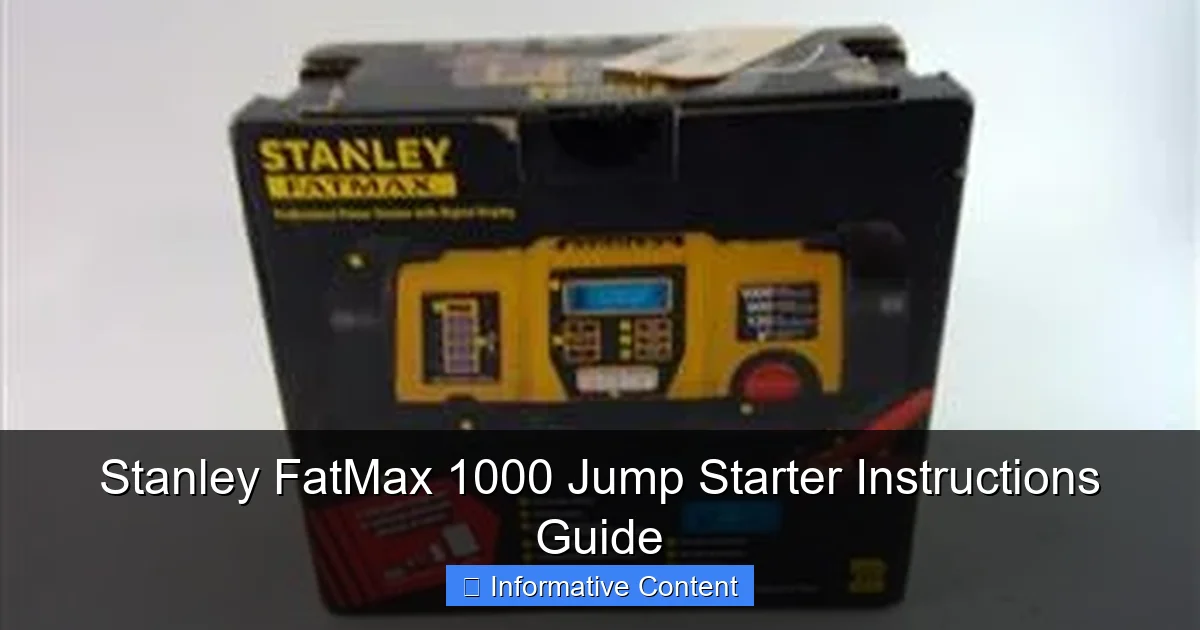
Featured image for stanley fatmax 1000 jump starter instructions
Image source: content.propertyroom.com
Master your Stanley FatMax 1000 jump starter in minutes with this clear, step-by-step guide to safe and effective use. From jump-starting 12V vehicles to using the built-in USB and LED light features, follow the manufacturer’s instructions to avoid damage and ensure peak performance every time.
Key Takeaways
- Always charge fully before first use for optimal performance.
- Connect red clamp first to positive terminal when jump-starting.
- Use 12V mode only for vehicles—never exceed 1000 peak amps.
- Check battery status via LED indicators before each use.
- Store in cool, dry place to prolong battery life and safety.
- Enable safety switch to prevent sparks during incorrect connections.
📑 Table of Contents
- Why You Need a Reliable Jump Starter in Your Car
- What’s in the Box: Unboxing the Stanley FatMax 1000
- Step-by-Step: How to Use the Stanley FatMax 1000 Jump Starter
- Common Mistakes and How to Avoid Them
- Beyond Jump-Starting: Other Useful Features
- Maintenance and Troubleshooting
- Final Thoughts: Is the Stanley FatMax 1000 Worth It?
Why You Need a Reliable Jump Starter in Your Car
Picture this: it’s a cold winter morning. You’re running late for work, and the moment you turn the key in your car’s ignition, all you hear is a faint click. Your heart sinks—the battery’s dead. Again. You’ve got jumper cables, but no one’s around to help. Sound familiar? That’s when a portable jump starter like the Stanley FatMax 1000 Jump Starter becomes your best friend. No more waiting for a kind stranger, no more awkward roadside favors. Just you, your jump starter, and the confidence to get back on the road in minutes.
But here’s the thing—owning a jump starter isn’t enough. If you don’t know how to use it properly, you could damage your vehicle, the device, or worse, hurt yourself. That’s why I’ve put together this Stanley FatMax 1000 Jump Starter instructions guide—to walk you through every step, from setup to troubleshooting. Whether you’re a first-time owner or just need a refresher, this guide will make sure you’re ready when your battery decides to quit. And trust me, after years of using portable jump starters, I’ve learned a thing or two about what works (and what doesn’t).
What’s in the Box: Unboxing the Stanley FatMax 1000
When you first open the Stanley FatMax 1000 Jump Starter box, it’s like opening a survival kit for your car. Here’s what you’ll find:
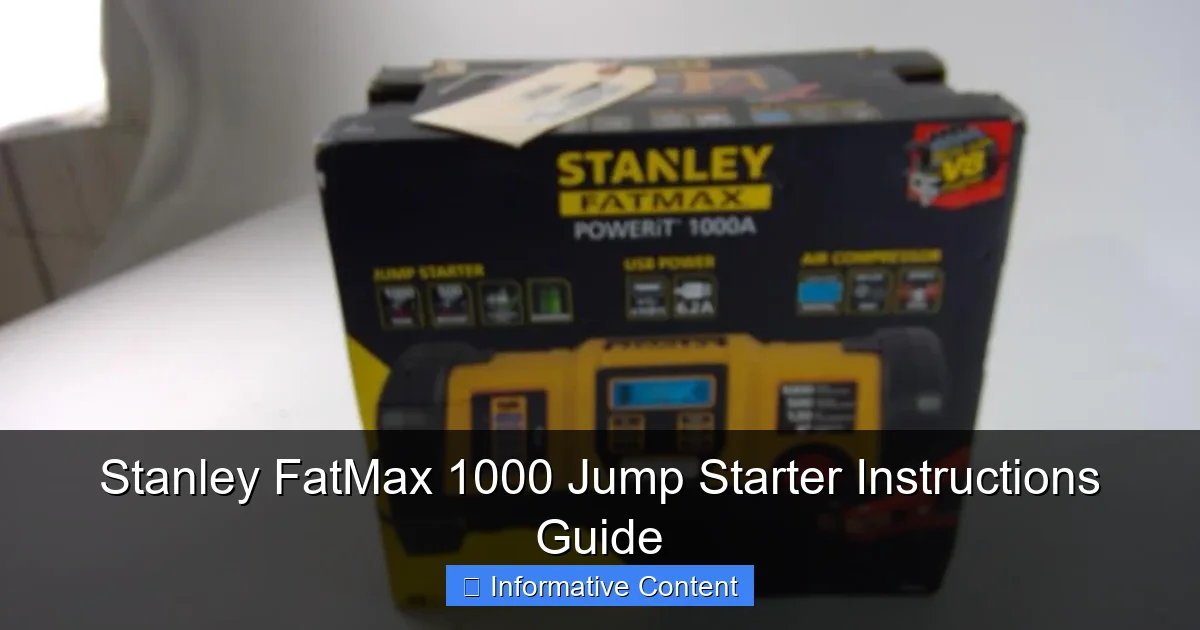
Visual guide about stanley fatmax 1000 jump starter instructions
Image source: content.propertyroom.com
- Jump starter unit (the main device with built-in battery)
- Smart jumper cables with reverse polarity protection
- 12V DC charging cable (for charging the unit via your car’s cigarette lighter)
- AC wall charger (for home charging)
- USB charging cable (for powering phones and small devices)
- User manual (yes, keep it—it’s more helpful than you think)
- Carrying case (optional, but included in most kits)
First Impressions and Design
The first thing you’ll notice is how rugged the Stanley FatMax 1000 feels. It’s built like a tank—durable plastic casing, rubberized grips, and a built-in LED flashlight on the side. At about 3.5 pounds, it’s not exactly light, but it’s compact enough to fit in your trunk or under a seat. The unit has three main ports: a 12V DC input for charging, a USB-A port for charging devices, and a 12V output for jump-starting. The front panel has a simple LED battery indicator (4 bars) and a power button. Simple, functional, and no unnecessary gimmicks.
Initial Charging: Why It’s Critical
Before your first use, fully charge the jump starter. Stanley recommends at least 12 hours of initial charging. I learned this the hard way once—I tried to use a partially charged unit on a cold morning, and it barely had enough juice to crank the engine. Plug in the AC charger and let it charge overnight. The LED indicator will flash during charging and stay solid when full. A fully charged unit should hold power for up to 6 months, but I recommend topping it off every 2-3 months, especially if you live in extreme climates.
Step-by-Step: How to Use the Stanley FatMax 1000 Jump Starter
Using the Stanley FatMax 1000 is straightforward, but skipping steps can lead to problems. Here’s the exact process I follow every time:
Step 1: Safety First
- Park your car on a flat surface and turn off the ignition.
- Engage the parking brake and put the transmission in “Park” (or first gear for manual).
- Turn off all lights, radio, and accessories. A power draw during jump-starting can confuse the system.
- Wear safety glasses if you have them—better safe than sorry.
Step 2: Connect the Jumper Cables
Here’s where most people make mistakes. The Stanley FatMax 1000 uses “smart” cables with built-in protection, but you still need to connect them in the right order:
- Connect the red (positive) clamp to the positive (+) terminal of the car’s battery. It’s usually marked with a “+” and has a red cover or cable.
- Connect the black (negative) clamp to an unpainted metal surface on the engine block or frame. Never connect it to the negative battery terminal if the battery is damaged or leaking—this could cause sparks or a fire.
- Double-check that the clamps are secure and not touching each other.
Pro tip: If you’re unsure about the negative connection, look for a thick bolt on the engine block. I always use the alternator mounting bracket—it’s solid metal and easy to find.
Step 3: Power On and Jump-Start
- Turn on the jump starter using the power button. The LED battery indicator will light up.
- Wait 30 seconds. This gives the internal circuitry time to stabilize.
- Get in the car and try to start the engine. If it doesn’t start on the first try, wait 20 seconds before retrying. Repeated attempts without a pause can overheat the unit.
- Once the engine starts, let it run for 1-2 minutes to recharge the battery.
Step 4: Disconnect Safely
Reverse the connection order:
- Turn off the jump starter.
- Remove the black (negative) clamp first.
- Remove the red (positive) clamp second.
- Store the cables neatly in the included case to prevent damage.
Real-life example: Last winter, my neighbor’s SUV wouldn’t start. I used the FatMax 1000 and followed this exact process. The engine roared to life on the second try. She was amazed—and I didn’t have to wait for roadside assistance.
Common Mistakes and How to Avoid Them
Even with a simple device like the Stanley FatMax 1000, mistakes happen. Here are the most common ones—and how to avoid them:
Mistake #1: Connecting Clamps in the Wrong Order
Connecting the black clamp to the negative battery terminal (instead of the engine block) is a big no-no. If the battery is damaged, it can release hydrogen gas, which might ignite from a spark. Always connect the negative clamp to a grounded metal surface.
Tip: If you’re working in a tight engine bay, use a small mirror to check clamp placement. I keep a pocket mirror in my car tool kit for this exact reason.
Mistake #2: Using a Low-Charge Jump Starter
A jump starter with less than 50% charge might not have enough power, especially in cold weather. Always check the LED indicator before use. If only 1-2 bars are lit, charge it first.
Pro tip: Keep the unit in a warm place (like your garage) during winter. Cold temperatures reduce battery efficiency.
Mistake #3: Forgetting to Turn Off the Jump Starter
Leaving the jump starter on after disconnecting can drain its battery. Always turn it off and store it with the cables properly coiled. I once left mine on overnight, and the battery was dead the next day—lesson learned.
Mistake #4: Using Damaged Cables
Inspect the cables regularly for fraying, loose clamps, or corrosion. If the insulation is cracked, stop using them immediately. Damaged cables can cause short circuits or shocks.
Mistake #5: Ignoring the 20-Second Rule
If the engine doesn’t start on the first try, wait 20 seconds before retrying. This prevents overheating. I’ve seen people panic and spam the ignition—it never helps.
Beyond Jump-Starting: Other Useful Features
The Stanley FatMax 1000 isn’t just for jump-starting. It’s a multi-tool for roadside emergencies and everyday use.
USB Charging: Power Your Devices
The built-in USB-A port delivers 5V/2.1A—enough to charge smartphones, tablets, and GPS devices. I use it all the time during road trips. My phone died once in a remote area, and the FatMax 1000 saved me. Just connect your device with a USB cable and press the power button. The LED indicator will show the remaining charge.
Tip: Charge the jump starter fully before a trip. A single full charge can power an iPhone 12 about 3-4 times.
12V DC Power: For In-Car Devices
The 12V DC output can power small car accessories like air compressors, coolers, or vacuum cleaners. I’ve used it to run a portable air pump when I had a flat tire. Just plug in the 12V cable and turn on the unit. Note: The FatMax 1000 isn’t designed for high-draw devices like car fridges (over 100W), but it works great for low-power tools.
LED Flashlight: A Lifesaver at Night
The built-in LED flashlight has three modes: steady, flashing, and SOS. It’s bright enough to light up your engine bay or signal for help. I used the SOS mode once when I got stranded at night—a passing driver saw the light and stopped to help. The flashlight runs for about 8 hours on a full charge.
Reverse Polarity Protection: Your Safety Net
If you accidentally connect the clamps backwards, the FatMax 1000 won’t activate. The LED will flash red, and you’ll hear a beep. This feature saved me when I was in a rush and mixed up the clamps. Just correct the connection and try again.
Maintenance and Troubleshooting
To keep your Stanley FatMax 1000 in top shape, follow these maintenance tips:
Charging Schedule
Charge the unit every 2-3 months, even if you’re not using it. Lithium-ion batteries degrade over time. Store it in a cool, dry place—avoid direct sunlight or extreme heat.
Cleaning and Storage
- Wipe the unit with a dry cloth after use. Avoid water or solvents.
- Store cables neatly to prevent tangling. I use a small zip-top bag for the cables and keep the unit in its case.
- Check the battery indicator every 30 days. If it’s below 50%, charge it.
Troubleshooting Common Issues
| Issue | Possible Cause | Solution |
|---|---|---|
| Unit won’t turn on | Battery is completely drained | Charge for at least 12 hours |
| LED flashes red | Reverse polarity or short circuit | Check clamp connections |
| Engine doesn’t start | Low charge or poor connection | Recharge unit; check clamps |
| USB port not working | Low battery or faulty cable | Charge unit; try another cable |
| Unit overheats | Repeated jump attempts | Let it cool for 30 minutes |
When to Replace the Unit
The Stanley FatMax 1000 should last 3-5 years with proper care. Replace it if:
- The battery won’t hold a charge (dies within 1-2 months)
- The clamps are damaged or loose
- The USB or 12V ports stop working
- You notice physical damage (cracks, leaks)
Final Thoughts: Is the Stanley FatMax 1000 Worth It?
After using the Stanley FatMax 1000 for over a year, I can confidently say it’s one of the most reliable jump starters I’ve owned. It’s not perfect—the weight can be a bit much for some, and the charging time is longer than newer models—but it delivers where it counts: starting dead batteries in all conditions. The reverse polarity protection, USB charging, and flashlight add real value, making it more than just a jump starter.
Follow the Stanley FatMax 1000 Jump Starter instructions carefully, maintain it regularly, and you’ll have a dependable tool for years. Whether you’re a daily driver, weekend warrior, or just want peace of mind, this device is worth every penny. And remember: the best time to test it is when you don’t need it. Charge it, check the cables, and practice the steps. That way, when your battery finally dies, you’ll be ready—no stress, no panic, just a quick jump and you’re on your way.
So, the next time you hear that dreaded click, don’t sweat it. You’ve got the Stanley FatMax 1000—and now you know exactly how to use it.
Frequently Asked Questions
How do I use the Stanley FatMax 1000 Jump Starter for the first time?
Before first use, fully charge the Stanley FatMax 1000 Jump Starter using the included AC adapter. To jump-start, connect the clamps to the battery (red to positive, black to negative), turn the unit on, and start your vehicle.
Can the Stanley FatMax 1000 Jump Starter power other devices?
Yes, this model features a 12V DC outlet and USB ports to charge phones, tablets, and other small electronics. Ensure the device’s power requirements don’t exceed the jump starter’s 1000 peak amps.
How long does the Stanley FatMax 1000 take to fully charge?
The Stanley FatMax 1000 Jump Starter typically requires 24–30 hours for a full charge via the AC adapter. A built-in LED indicator shows charging progress.
What safety features does the Stanley FatMax 1000 have?
It includes reverse polarity, overcurrent, and short-circuit protection to prevent damage. The LED indicators alert you to incorrect clamp connections or system errors.
How do I maintain my Stanley FatMax 1000 Jump Starter?
Recharge the unit every 3–6 months during storage and avoid extreme temperatures. Store in a dry place to prolong battery life and performance.
Why won’t my Stanley FatMax 1000 Jump Starter turn on?
Ensure the unit is sufficiently charged—if the LED doesn’t light, recharge it first. If issues persist, check for loose connections or contact Stanley customer support.