
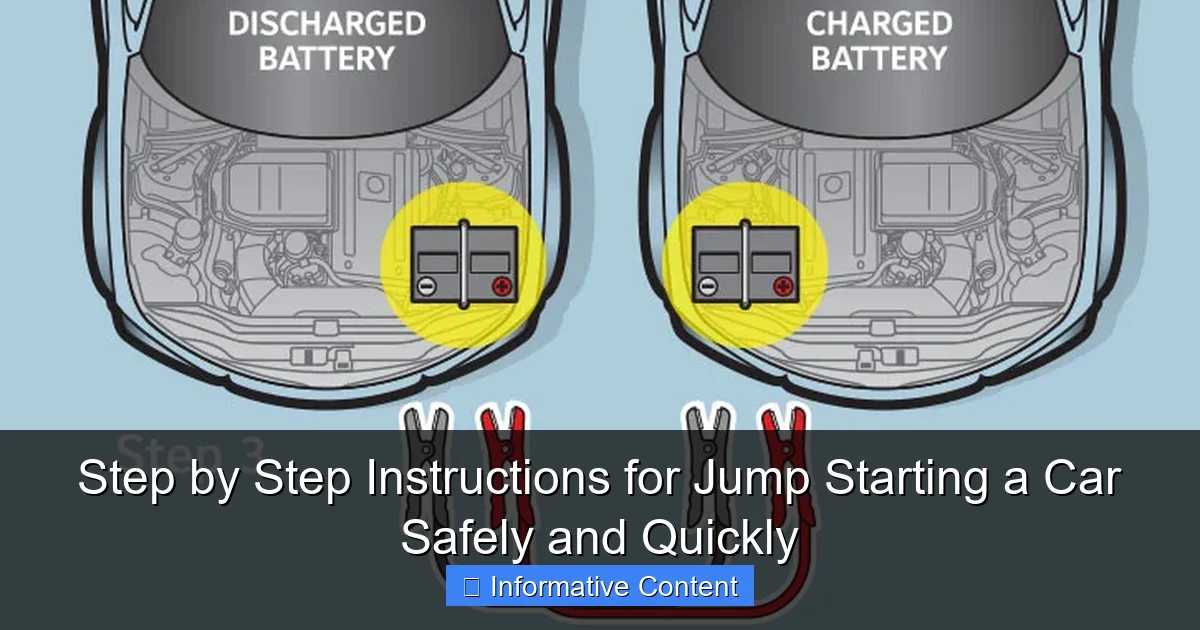
Featured image for instructions for jump starting a car
Image source: useast2prodbrandsites.blob.core.windows.net
Always connect the jumper cables in the correct order—red to dead battery’s positive terminal, black to a grounded metal surface on the dead car—to avoid sparks and damage. Start the working vehicle, let it charge the dead battery for a few minutes, then attempt to start the stalled car; if it doesn’t turn over, wait longer or check connections. Once running, disconnect cables in reverse order and drive the revived car for at least 15 minutes to fully recharge the battery.
Key Takeaways
- Park safely: Turn off both cars and set brakes before connecting cables.
- Check battery: Inspect for damage or corrosion before jump starting.
- Connect red first: Attach positive (red) clamp to dead battery’s positive terminal.
- Ground the black: Clamp negative (black) to unpainted metal, not the dead battery.
- Start donor car: Let it run for 2–3 minutes before attempting ignition.
- Disconnect in reverse: Remove black then red clamps after successful start.
- Drive immediately: Run the jumped car for 15+ minutes to recharge.
📑 Table of Contents
Why Jump Starting a Car is a Lifesaving Skill
Let’s face it—there’s nothing more frustrating than hopping into your car on a cold morning, turning the key, and hearing that dreaded click-click-click instead of the engine roaring to life. A dead battery can strike at the worst possible moment: before work, during a road trip, or when you’re rushing to pick up the kids. But here’s the good news: jump starting a car is easier than you think, and with the right steps, you can get back on the road in minutes.
I remember the first time I had to jump start my car. I was in a parking lot with no one around, panic rising as I stared at my phone, wondering if I should call a tow truck or brave the jumper cables. After fumbling through a YouTube tutorial and a few false starts, I got it right—and it felt like I’d unlocked a superpower. Now, I want to share that same confidence with you. Whether you’re a seasoned driver or a new car owner, knowing how to safely jump start a car can save you time, money, and stress. And yes, it’s totally doable—even if you’ve never touched a battery before.
What You Need Before Jump Starting a Car
Essential Tools and Safety Gear
Before you even pop the hood, make sure you have the right tools. Here’s what you’ll need:
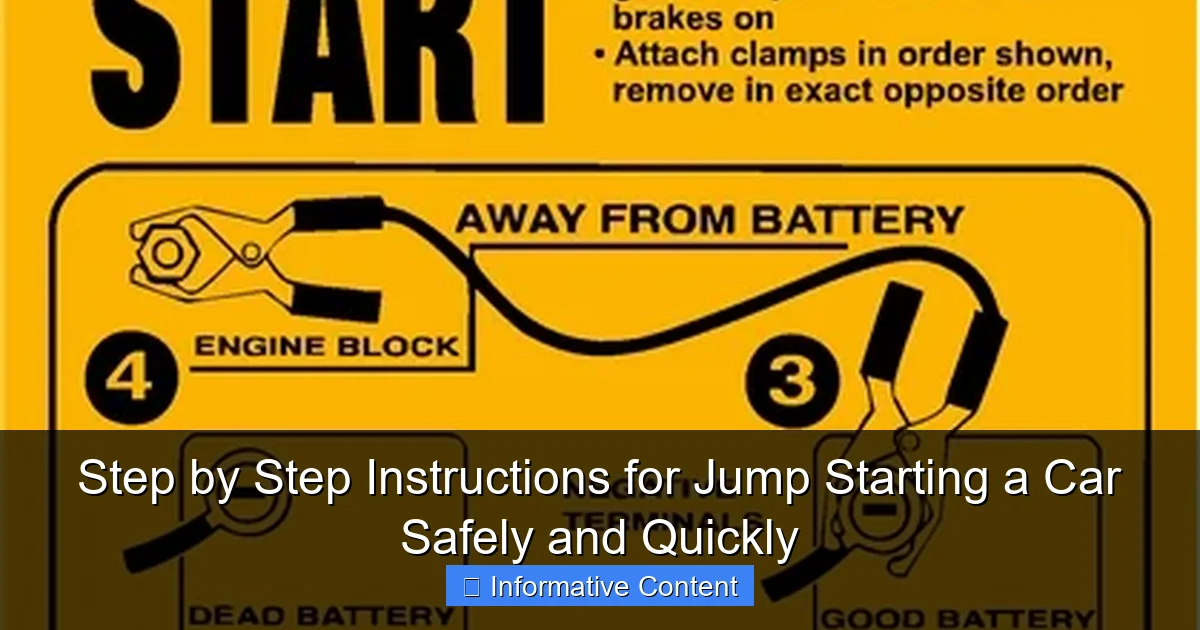
Visual guide about instructions for jump starting a car
Image source: militarystencils.com
- Jumper cables: Look for heavy-duty cables (4-6 gauge) with at least 10-15 feet of length. The thicker the cables, the better the current flow. Avoid cheap, thin cables—they can overheat or fail when you need them most.
- A working car: This seems obvious, but you’ll need another vehicle with a healthy battery to provide the jump. Make sure both cars are parked close enough for the cables to reach, but not touching.
- Safety gloves and glasses: While batteries are generally safe, sparks can fly during a jump start. A pair of rubber gloves and safety glasses protect your hands and eyes from acid or debris.
- Owner’s manual: Some cars have specific jump starting instructions (e.g., remote jump points under the hood). Check your manual to avoid surprises.
Pro tip: Keep a set of jumper cables in your trunk at all times. I keep mine in a small storage bin with a flashlight and a multi-tool—it’s a “just in case” kit that’s already saved me twice.
Common Mistakes to Avoid
Even with the right tools, mistakes happen. Here are three common pitfalls:
- Using damaged cables: Frayed wires, cracked clamps, or loose connections can cause sparks or short circuits. Inspect your cables before use.
- Jumping a damaged battery: If your battery is cracked, leaking, or frozen, do not jump it. The risk of explosion or acid leaks is real. Replace the battery instead.
- Ignoring polarity: Connecting the cables backward (positive to negative) can fry your car’s electrical system. Always double-check the colors and symbols.
Real-life example: A friend once tried to jump start her car with cables that had a loose red clamp. Sparks flew, and the clamp melted onto the battery post. Not only did it fail, but she ended up needing a tow. Lesson learned: inspect your tools first.
Step-by-Step Jump Starting Process
Step 1: Position the Cars Correctly
Park the working car as close as possible to the dead car, but don’t let them touch. Align the batteries so the jumper cables can easily reach both. Turn off both engines and set the parking brakes. Put both cars in “Park” (automatic) or “Neutral” (manual).
Why this matters: If the cars touch, you risk creating a ground loop, which can damage electrical systems. I once saw a guy accidentally bump his car into the donor vehicle while positioning it—the jolt caused a spark, and his battery died completely.
Step 2: Attach the Jumper Cables in Order
Follow this sequence exactly:
- Connect red (positive) to dead battery’s positive terminal: Look for the “+” symbol on the battery. The clamp should grip the metal post (not the plastic casing).
- Connect red (positive) to working battery’s positive terminal: Same process—secure the clamp on the “+” post.
- Connect black (negative) to working battery’s negative terminal: Attach to the “-” post.
- Connect black (negative) to a bare metal ground on the dead car: This is critical. Don’t attach it to the dead battery’s negative post. Instead, find a clean, unpainted metal surface—like a bolt, engine block, or bracket. This reduces the risk of sparks near the battery.
Pro tip: If you’re unsure where to ground the cable, look for a thick metal rod or engine mount. Avoid plastic, rubber, or painted surfaces.
Step 3: Start the Working Car and Let It Charge
Start the working car’s engine and let it run for 3-5 minutes. Rev the engine slightly (to 1,500–2,000 RPM) to boost the charging rate. This gives the dead battery time to absorb the charge.
Why revving helps: A dead battery has low voltage. The donor car’s alternator needs to push more current into it, which requires higher RPM. Think of it like giving the battery a “jumpstart” of energy.
Step 4: Start the Dead Car
After 3-5 minutes, try starting the dead car. If it doesn’t start, wait another 2 minutes and try again. If it still won’t start, check your cable connections and try revving the working car’s engine higher (2,500 RPM).
What to watch for: If the dead car starts but sputters, let it idle for a few minutes. The alternator needs time to recharge the battery fully. Don’t rev the engine—just let it run.
Step 5: Disconnect the Cables in Reverse Order
Once the dead car is running, disconnect the cables in reverse order:
- Remove black (negative) from the ground on the dead car.
- Remove black (negative) from the working battery.
- Remove red (positive) from the working battery.
- Remove red (positive) from the dead battery.
Why reverse order? It prevents accidental grounding of the positive cable, which could cause a spark. Always keep the clamps from touching each other or metal surfaces while disconnecting.
Special Cases and Troubleshooting
Jump Starting Modern Cars with Electronic Systems
Modern cars (especially hybrids, EVs, and vehicles with start-stop technology) have sensitive electronics. Here’s what to know:
- Use a battery pack (not another car): Many newer cars have “jump start ports” under the hood. These bypass the main battery and connect directly to the starter circuit. Use a portable jump starter or a battery pack designed for your model.
- Check the manual: Some cars (e.g., BMW, Mercedes) require you to turn off specific systems (like the climate control) before jumping. Skipping this can overload the system.
- Avoid cheap cables: Thin cables can’t handle the high current demands of modern alternators. Use 4-gauge or thicker cables.
Example: A friend tried to jump start his hybrid with standard cables. The car started, but the infotainment system froze, and the check-engine light came on. A mechanic later found that the voltage spike from the jump had fried a control module—$800 repair. Lesson: Always check your manual first.
What If the Car Still Won’t Start?
If you’ve followed the steps and the car won’t start, the issue might not be the battery. Try these fixes:
- Check the battery terminals: Corrosion (white/green crust) can block the connection. Clean them with a wire brush and baking soda/water mix.
- Test the alternator: If the car starts but dies quickly, the alternator might not be charging. Use a multimeter to check battery voltage (should be 13.5–14.5V while running).
- Look for loose cables: A loose ground cable can mimic a dead battery. Inspect the wiring under the hood.
- Call for help: If all else fails, call roadside assistance. Some auto clubs (like AAA) will bring a battery tester and diagnose the issue.
Pro tip: Keep a multimeter in your glove compartment. It costs $10–$20 and can tell you if your battery is truly dead or just needs a charge.
Safety First: Risks and Precautions
Battery Explosions and Acid Leaks
Car batteries contain sulfuric acid and hydrogen gas. A single spark near the battery can ignite the gas, causing an explosion. Here’s how to stay safe:
- Never smoke or use open flames: I know it sounds obvious, but people do it. A friend once lit a cigarette while jumping a car—the spark from the lighter ignited hydrogen gas, and the battery cover blew off.
- Wear protective gear: Rubber gloves and safety glasses are non-negotiable. If acid splashes, rinse with water immediately.
- Keep the area ventilated: Hydrogen gas is flammable. Don’t jump start in a closed garage.
Real-life story: A mechanic once told me about a guy who jumped a car with a leaking battery. The acid dripped onto the cables, creating a short circuit. The battery exploded, spraying acid everywhere. The guy was hospitalized with burns. Scary? Yes. Preventable? Absolutely.
Protecting Your Car’s Electronics
Jumping a car can send voltage spikes through the electrical system, damaging sensitive components. To minimize risk:
- Turn off all electronics: Lights, radio, AC, phone chargers—everything. This reduces the load on the alternator.
- Use a voltage regulator: Some portable jump starters have built-in surge protection. They’re worth the extra cost.
- Avoid rapid revving: Sudden RPM changes can stress the alternator. Rev the engine gradually.
Example: A reader emailed me after his car’s ECU (engine control unit) failed post-jump. A mechanic traced it to a voltage surge from the donor car. He now uses a battery pack instead of cables.
After the Jump: What to Do Next
Drive the Car to Recharge the Battery
After a successful jump, drive the car for at least 20–30 minutes to let the alternator recharge the battery fully. Avoid short trips—they don’t give the alternator enough time to charge.
Pro tip: If you can’t drive, run the engine for 10–15 minutes, then turn it off for 5 minutes. Repeat 2–3 times. This “cycling” helps the battery absorb the charge.
Test the Battery and Charging System
Don’t assume the battery is fine after a jump. Test it:
- Use a multimeter: Check voltage at the battery terminals. A healthy battery reads 12.6V (off) and 13.5–14.5V (running).
- Visit an auto parts store: Most stores (like AutoZone, O’Reilly) offer free battery and alternator testing.
Example: I once jumped my car and drove to work, only to have it die again the next day. A battery test revealed a bad cell—the battery needed replacement, not just a charge.
When to Replace the Battery
Most car batteries last 3–5 years. If your battery is old or fails the test, replace it. Here’s a quick guide:
| Battery Age | Likely Action |
|---|---|
| Less than 1 year | Test the charging system; battery may be fine |
| 1–3 years | Replace if voltage is below 12.4V |
| 3+ years | Replace proactively; risk of failure is high |
Pro tip: If your battery is under warranty, save the receipt. Many brands (like Optima, DieHard) offer free replacement within 3 years.
Final Thoughts: Confidence Comes with Practice
Jump starting a car isn’t magic—it’s a skill that anyone can learn. I’ve seen nervous new drivers, seasoned mechanics, and even my grandma (at 78!) do it safely. The key is preparation: keep the right tools, know the steps, and prioritize safety. Every time you jump a car, you’re not just fixing a problem; you’re gaining independence. Next time your battery dies, you won’t panic. You’ll pop the hood, grab your cables, and get back on the road.
And here’s a bonus tip: practice with a friend. Have them walk you through the steps once, even if your car is working. It’s like a fire drill—when the real emergency hits, you’ll react instinctively. Because when it comes to car troubles, knowledge is the ultimate power. Stay safe, stay prepared, and happy driving!
Frequently Asked Questions
What are the correct steps for jump starting a car safely?
To jump start a car safely, first park the donor vehicle close (without touching), turn off both engines, and connect the red clamp to the dead battery’s positive (+) terminal. Attach the other red clamp to the donor battery’s positive (+) terminal, then the black clamp to the donor’s negative (-) terminal, and the final black clamp to an unpainted metal surface on the dead car’s engine block.
Can I jump start a car with a completely dead battery?
Yes, but ensure the dead battery isn’t damaged or leaking. Follow proper instructions for jump starting a car—sometimes a battery below 10 volts may need longer charging time before the engine turns over.
How long should I let the donor car run before attempting to start?
Let the donor car idle for 3–5 minutes to transfer charge to the dead battery. For severely drained batteries, wait up to 10–15 minutes while keeping both engines off to maximize power transfer.
Is it safe to jump start a car in the rain?
Yes, as long as jumper cables stay dry and connections are secure. Avoid standing in water, and ensure clamps don’t spark near the battery, as hydrogen gas emissions can ignite—follow standard instructions for jump starting a car with extra caution.
Why won’t my car start even after jump starting?
If the engine doesn’t turn over, check cable connections for corrosion or looseness. The issue might be a faulty alternator, starter, or battery beyond recovery—have a mechanic inspect the charging system.
Do I need to drive my car after a jump start?
Yes, drive for at least 20–30 minutes to recharge the battery. Short trips may not fully restore charge, and repeated jump starts could indicate an underlying electrical problem.